THE ADVENTURE COLLECTIVE® · Independent discovery and booking for outdoor travel

Walk ancient streets preserved by Vesuvius on a full-day small-group tour from Sorrento. Visit Pompeii’s wide avenues and Herculaneum’s carbonized wooden doors with a licensed archaeologist and included entry tickets.
Walk ancient streets preserved by Vesuvius on a full-day small-group tour from Sorrento. Visit Pompeii’s wide avenues and Herculaneum’s carbonized wooden doors with a licensed archaeologist and included entry tickets.
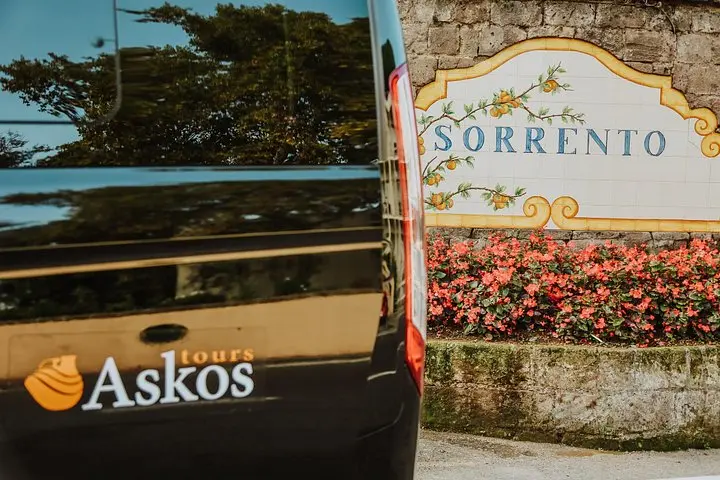
A pale morning light spreads across the Bay of Naples as a small minivan eases out of Piazza Angelina Lauro and threads Sorrento’s cliff-top streets. Mount Vesuvius keeps a steady, watchful presence on the horizon while the road drops toward the low plains where two Roman towns were frozen in volcanic time.
Verified experiences and guided adventures in the surrounding area.
Operated by Askos Tours · Pompeii, Campania
A pale morning light spreads across the Bay of Naples as a small minivan eases out of Piazza Angelina Lauro and threads Sorrento’s cliff-top streets. Mount Vesuvius keeps a steady, watchful presence on the horizon while the road drops toward the low plains where two Roman towns were frozen in volcanic time.
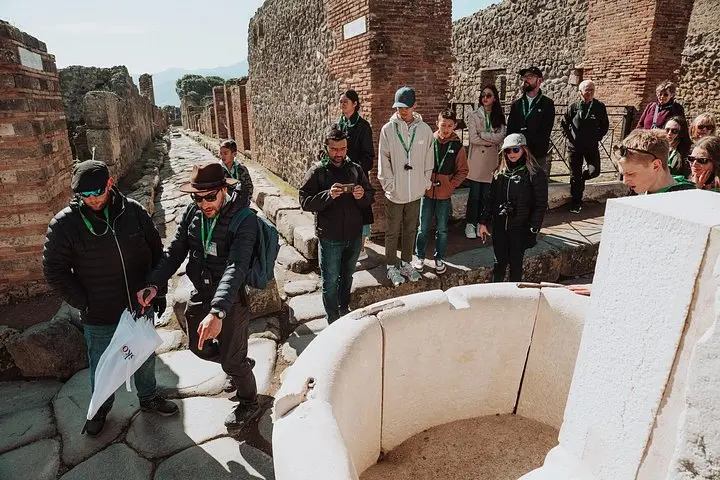
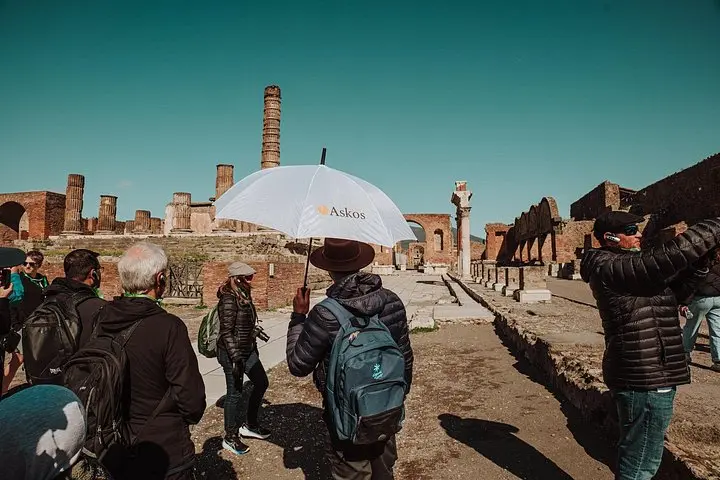
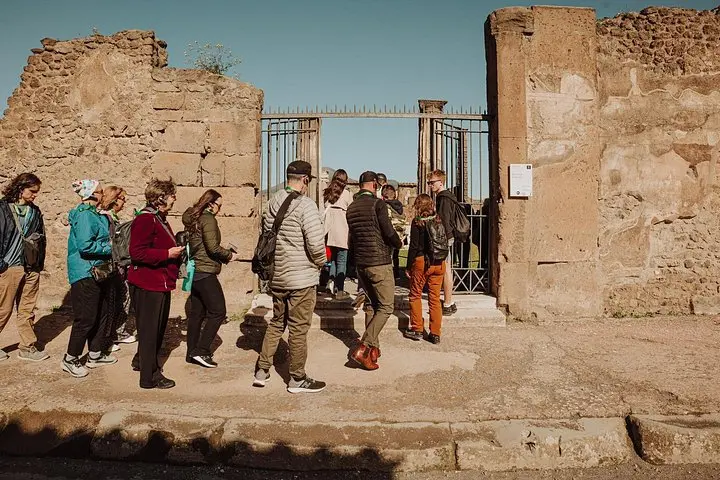
The tour stitches together Pompeii’s broad urban grid and Herculaneum’s compact, well-preserved townhouses. Pompeii’s Via dell’Abbondanza advances like a living artery—marble thresholds, collapsed shops, the open portico where merchants once counted coins—while Herculaneum reveals carbonized wooden doors and frescoed interiors preserved under hardened pyroclastic material. Geology and history meet here: the 79 AD eruption of Vesuvius produced both ash that buried streets and denser flows that sealed organic materials, giving archaeologists an unusually sharp window into Roman daily life.
Culturally the sites map Roman civic rituals—public baths, theaters, and altars—alongside intimate domestic spaces decorated with frescoes and mosaics. Local guides, often archaeologists, translate technical finds into human stories: homeowners, merchants, and magistrates who moved amid these same stones.
Practical guidance: expect roughly 6–8 hours door-to-door with walking on uneven, sometimes steep surfaces. Bring sturdy shoes, sun protection, and a small daypack. The excursion uses an air-conditioned minivan, includes entry tickets and headsets, and offers a short shopping break at Maximall Pompeii. Arrive a few minutes early at the Sorrento meeting point, and note that the tour is not recommended for wheelchair users due to site terrain. Timing visits for morning light and avoiding peak heat will make frescoes and street layouts easier to study and photograph.
The excursion is about 8 hours total, departing from and returning to central Sorrento; it includes transport in an air-conditioned minivan, Pompeii and Herculaneum entry tickets, a licensed archaeologist guide, headsets, and a welcome kit with a discount card for Maximall Pompeii.
No; both archaeological parks have uneven terrain, steps, and limited wheelchair access—this tour is not recommended for wheelchair or stroller users.
Yes—entry to both Pompeii and Herculaneum is included in the excursion price as stated in the inclusions.
The operator advises leaving large suitcases at a luggage deposit in town or at the station since minivans may lack a luggage compartment; small backpacks are fine.
Askos Tours operates guided outdoor trips and adventures with an emphasis on safety, stewardship, and memorable experiences.
A pale morning light spreads across the Bay of Naples as a small minivan eases out of Piazza Angelina Lauro and threads Sorrento’s cliff-top streets. Mount Vesuvius keeps a steady, watchful presence on the horizon while the road drops toward the low plains where two Roman towns were frozen in volcanic time.
A pale morning light spreads across the Bay of Naples as a small minivan eases out of Piazza Angelina Lauro and threads Sorrento’s cliff-top streets. Mount Vesuvius keeps a steady, watchful presence on the horizon while the road drops toward the low plains where two Roman towns were frozen in volcanic time.
The tour stitches together Pompeii’s broad urban grid and Herculaneum’s compact, well-preserved townhouses. Pompeii’s Via dell’Abbondanza advances like a living artery—marble thresholds, collapsed shops, the open portico where merchants once counted coins—while Herculaneum reveals carbonized wooden doors and frescoed interiors preserved under hardened pyroclastic material. Geology and history meet here: the 79 AD eruption of Vesuvius produced both ash that buried streets and denser flows that sealed organic materials, giving archaeologists an unusually sharp window into Roman daily life.
Culturally the sites map Roman civic rituals—public baths, theaters, and altars—alongside intimate domestic spaces decorated with frescoes and mosaics. Local guides, often archaeologists, translate technical finds into human stories: homeowners, merchants, and magistrates who moved amid these same stones.
Practical guidance: expect roughly 6–8 hours door-to-door with walking on uneven, sometimes steep surfaces. Bring sturdy shoes, sun protection, and a small daypack. The excursion uses an air-conditioned minivan, includes entry tickets and headsets, and offers a short shopping break at Maximall Pompeii. Arrive a few minutes early at the Sorrento meeting point, and note that the tour is not recommended for wheelchair users due to site terrain. Timing visits for morning light and avoiding peak heat will make frescoes and street layouts easier to study and photograph.