THE ADVENTURE COLLECTIVE® · Independent discovery and booking for outdoor travel

In one day you can walk Pompeii’s Roman streets with an expert guide, then ascend Vesuvius to peer into its crater and across the Bay of Naples. This compact shore excursion pairs history, geology, and regional food for a complete Campania experience.
In one day you can walk Pompeii’s Roman streets with an expert guide, then ascend Vesuvius to peer into its crater and across the Bay of Naples. This compact shore excursion pairs history, geology, and regional food for a complete Campania experience.
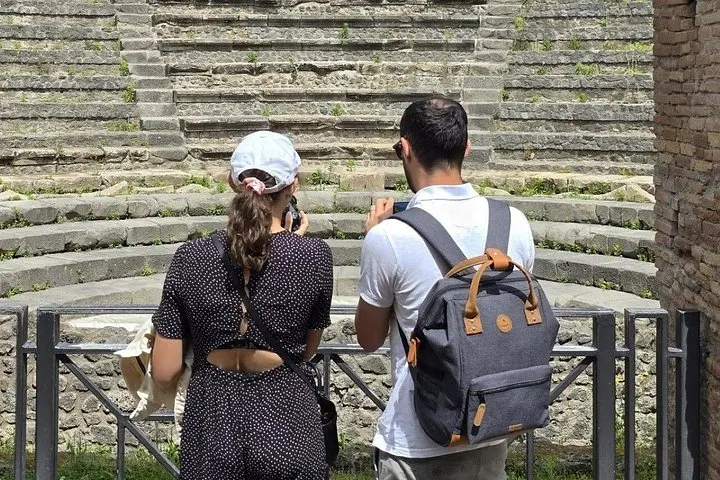
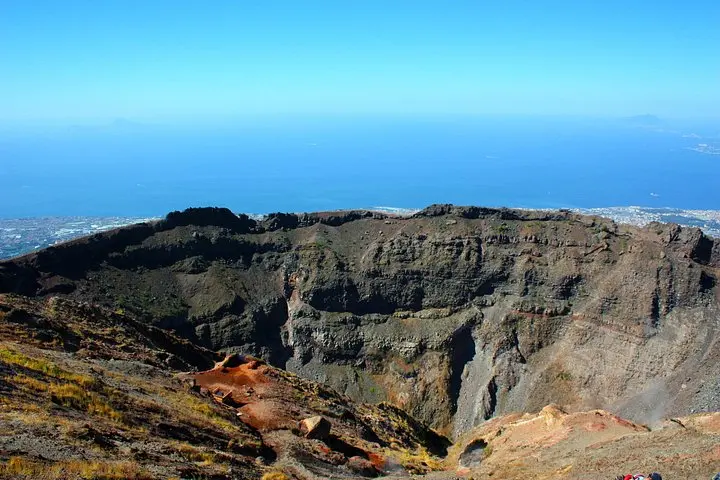
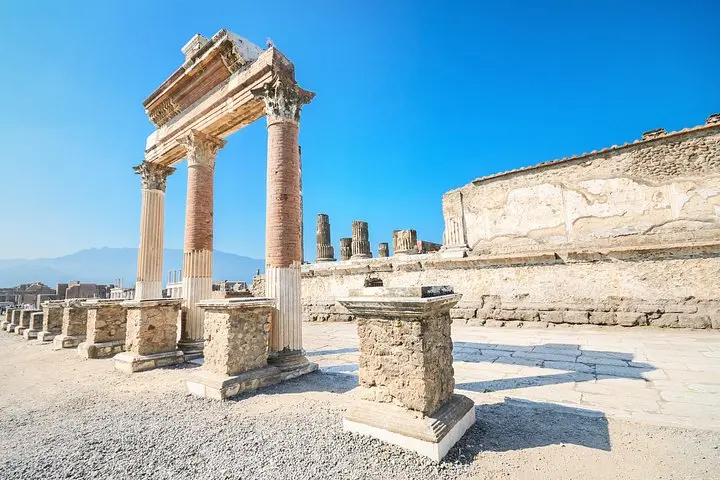
You step off the bus into a sun-dried Roman street: stone worn smooth by millennia, dust rising in the wake of the group as an archaeological guide begins to narrate lives frozen in ash. Later, the volcano reappears — Vesuvius looms, its slopes blackened and scrubby, the crater rim daring you to climb and look back over the Bay of Naples.
Verified experiences and guided adventures in the surrounding area.
Operated by Worldtours · Pompeii, Campania
You step off the bus into a sun-dried Roman street: stone worn smooth by millennia, dust rising in the wake of the group as an archaeological guide begins to narrate lives frozen in ash. Later, the volcano reappears — Vesuvius looms, its slopes blackened and scrubby, the crater rim daring you to climb and look back over the Bay of Naples.
Pompeii and Vesuvius share a single dramatic story: the AD 79 eruption that entombed an entire town and reshaped a coastline. Geologically, Vesuvius is a stratovolcano whose last major explosions left steep pyroclastic deposits and a summit at roughly 1,281 m; the crater is a compact, walkable amphitheater of volcanic rock. Culturally, this day pairs urban excavation with rural flavors — expect a regional lunch or wine tasting that highlights Campania’s tomatoes, buffalo mozzarella, and Aglianico or Lacryma Christi wines.
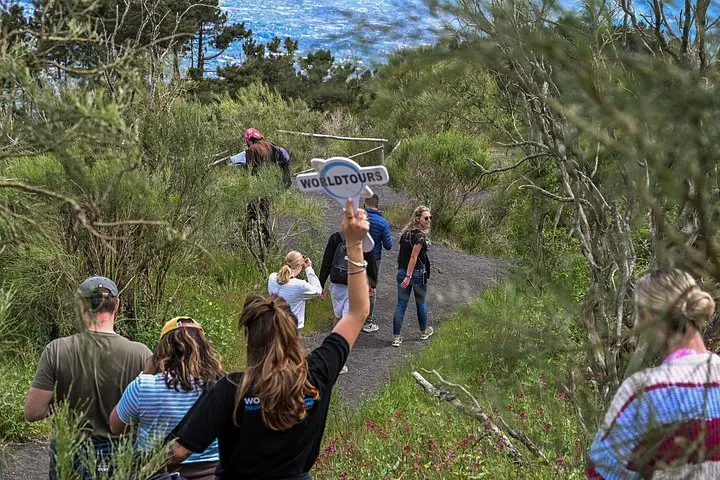
Practically, the tour bundles a 2‑hour guided walk through Pompeii’s paved streets and public spaces (roughly 1.5–2 km of on-foot touring) with about 1.0–1.5 km of uphill walking at Vesuvius from the parking/visitor area to the crater rim, gaining roughly 200–300 m in 20–40 minutes depending on pace. Trails are stony and exposed; shade is limited. If summit access is closed, guides provide alternative viewpoints and local insights.
Bring sturdy footwear, sun protection, and water; moderate fitness makes the day comfortable. Timing matters — mornings are cooler and quieter in the ruins, while late mornings often work best for combining visits and returning to port by mid-afternoon. The mix of archaeology and raw volcanic landscape makes this compact excursion a balanced, sensory way to experience Campania’s past and present.
Yes—this tour includes tickets for both Pompeii and the Vesuvius visitor area as noted in the itinerary.
From the visitor parking area expect about 1.0–1.5 km of uphill walking to the crater rim, typically 20–40 minutes depending on pace and stops.
Yes—the tour offers port pickup and drop-off for cruise passengers; confirm your embarkation point when booking.
Children can join but the activity involves uneven surfaces and uphill walking; travelers with limited mobility may find parts of Pompeii and the Vesuvius approach challenging.
Worldtours operates guided outdoor trips and adventures with an emphasis on safety, stewardship, and memorable experiences.
You step off the bus into a sun-dried Roman street: stone worn smooth by millennia, dust rising in the wake of the group as an archaeological guide begins to narrate lives frozen in ash. Later, the volcano reappears — Vesuvius looms, its slopes blackened and scrubby, the crater rim daring you to climb and look back over the Bay of Naples.
You step off the bus into a sun-dried Roman street: stone worn smooth by millennia, dust rising in the wake of the group as an archaeological guide begins to narrate lives frozen in ash. Later, the volcano reappears — Vesuvius looms, its slopes blackened and scrubby, the crater rim daring you to climb and look back over the Bay of Naples.
Pompeii and Vesuvius share a single dramatic story: the AD 79 eruption that entombed an entire town and reshaped a coastline. Geologically, Vesuvius is a stratovolcano whose last major explosions left steep pyroclastic deposits and a summit at roughly 1,281 m; the crater is a compact, walkable amphitheater of volcanic rock. Culturally, this day pairs urban excavation with rural flavors — expect a regional lunch or wine tasting that highlights Campania’s tomatoes, buffalo mozzarella, and Aglianico or Lacryma Christi wines.
Practically, the tour bundles a 2‑hour guided walk through Pompeii’s paved streets and public spaces (roughly 1.5–2 km of on-foot touring) with about 1.0–1.5 km of uphill walking at Vesuvius from the parking/visitor area to the crater rim, gaining roughly 200–300 m in 20–40 minutes depending on pace. Trails are stony and exposed; shade is limited. If summit access is closed, guides provide alternative viewpoints and local insights.
Bring sturdy footwear, sun protection, and water; moderate fitness makes the day comfortable. Timing matters — mornings are cooler and quieter in the ruins, while late mornings often work best for combining visits and returning to port by mid-afternoon. The mix of archaeology and raw volcanic landscape makes this compact excursion a balanced, sensory way to experience Campania’s past and present.