THE ADVENTURE COLLECTIVE® · Independent discovery and booking for outdoor travel

Bring history to life with a children-focused, skip-the-line tour of Pompeii led by an archaeologist. In two hours your family will explore baths, the Forum and plaster casts while avoiding ticket queues.
Bring history to life with a children-focused, skip-the-line tour of Pompeii led by an archaeologist. In two hours your family will explore baths, the Forum and plaster casts while avoiding ticket queues.
You step under a sun-baked arch and the layer of volcanic ash that froze a city feels close enough to touch. Children’s footsteps echo through a grid of streets where an archaeologist-guide holds up plaster casts and points to the traces of daily life—bakeries, baths, a theater—turning ruins into a story that moves at a kid’s rhythm.
Verified experiences and guided adventures in the surrounding area.
Operated by Italy Tours For Kids · Pompeii, Campania
You step under a sun-baked arch and the layer of volcanic ash that froze a city feels close enough to touch. Children’s footsteps echo through a grid of streets where an archaeologist-guide holds up plaster casts and points to the traces of daily life—bakeries, baths, a theater—turning ruins into a story that moves at a kid’s rhythm.
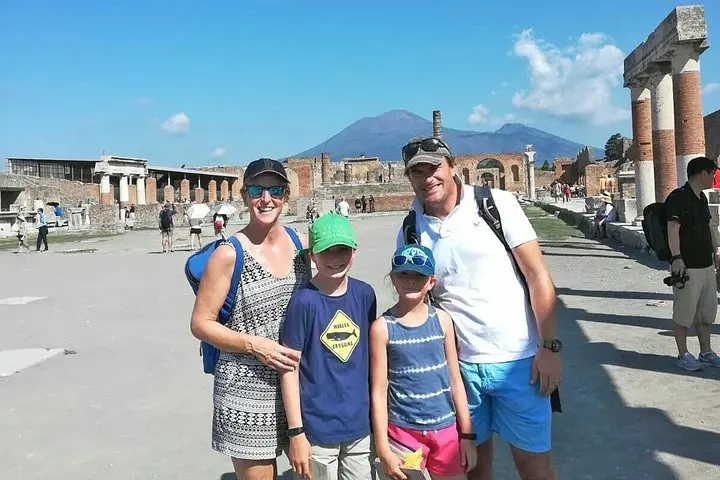
Pompeii was buried by Mount Vesuvius in AD 79; the ash that entombed it preserved buildings, frescoes and footprints, giving an unparalleled window into Roman urban life. The grey pumice and volcanic tuff around the site are reminders that geology wrote Pompeii’s final chapter quickly, and conservators still work to protect frescoes and mosaics exposed to weather and visitors.
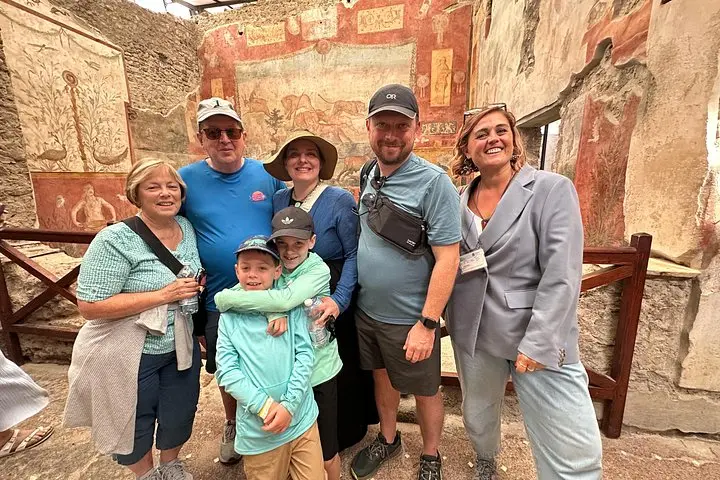
Culturally, the site reads like a street-level textbook of Roman society: public forums, thermal baths, and houses with painted rooms. Local guides focus on how people ate, played and worked here, which helps children connect names and artifacts with real lives rather than abstract history.
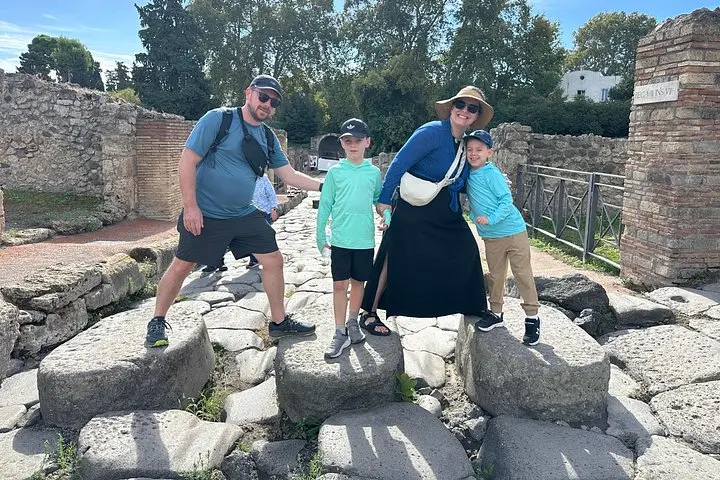
Practical guidance: tours run about two hours inside the archaeological park with skip-the-line admission and small-group or private options. Wear closed-toe walking shoes—paved roads and uneven basalt stepping stones are the norm—bring sun protection, water and a light pack. Expect lots of walking and intermittent standing; plan bathroom breaks before entering. The meeting point is usually near the park entrance and a valid passport is required on the day. Morning slots avoid the hottest hours and give fresher light on frescoes, while an archaeologist-led tour keeps explanations tactile and age-appropriate for kids 5 and up.
Yes—this tour is designed for children aged 5 and up; kids must be accompanied by an adult.
Yes; admission tickets are included and the guide provides skip-the-line entry to the archaeological park.
Expect about two hours of moderate walking on uneven surfaces with stops for explanations and viewing highlights.
Many paths are uneven and narrow; a sturdy all-terrain stroller may work in some areas but carrying younger children is often easier.
Italy Tours For Kids operates guided outdoor trips and adventures with an emphasis on safety, stewardship, and memorable experiences.
You step under a sun-baked arch and the layer of volcanic ash that froze a city feels close enough to touch. Children’s footsteps echo through a grid of streets where an archaeologist-guide holds up plaster casts and points to the traces of daily life—bakeries, baths, a theater—turning ruins into a story that moves at a kid’s rhythm.
You step under a sun-baked arch and the layer of volcanic ash that froze a city feels close enough to touch. Children’s footsteps echo through a grid of streets where an archaeologist-guide holds up plaster casts and points to the traces of daily life—bakeries, baths, a theater—turning ruins into a story that moves at a kid’s rhythm.
Pompeii was buried by Mount Vesuvius in AD 79; the ash that entombed it preserved buildings, frescoes and footprints, giving an unparalleled window into Roman urban life. The grey pumice and volcanic tuff around the site are reminders that geology wrote Pompeii’s final chapter quickly, and conservators still work to protect frescoes and mosaics exposed to weather and visitors.
Culturally, the site reads like a street-level textbook of Roman society: public forums, thermal baths, and houses with painted rooms. Local guides focus on how people ate, played and worked here, which helps children connect names and artifacts with real lives rather than abstract history.
Practical guidance: tours run about two hours inside the archaeological park with skip-the-line admission and small-group or private options. Wear closed-toe walking shoes—paved roads and uneven basalt stepping stones are the norm—bring sun protection, water and a light pack. Expect lots of walking and intermittent standing; plan bathroom breaks before entering. The meeting point is usually near the park entrance and a valid passport is required on the day. Morning slots avoid the hottest hours and give fresher light on frescoes, while an archaeologist-led tour keeps explanations tactile and age-appropriate for kids 5 and up.