THE ADVENTURE COLLECTIVE® · Independent discovery and booking for outdoor travel

Walk Pompeii’s preserved streets, climb Vesuvius’ volcanic slopes, then taste wines grown on ash-rich soils—this private day tour from Naples or Sorrento combines active exploration with archaeology and local flavors.
Walk Pompeii’s preserved streets, climb Vesuvius’ volcanic slopes, then taste wines grown on ash-rich soils—this private day tour from Naples or Sorrento combines active exploration with archaeology and local flavors.
You arrive by private vehicle as the coastline slips away, the Bay of Naples shrinking behind ribboned cliffs. Pompeii’s broken streets open like a page of history—shadows of households, frescoed walls and a stone amphitheater that still remembers voices. Later, the road climbs Vesuvius’ scoria slopes; the volcano holds a slow breath, the crater rim offering a raw, wind-scoured panorama of the city below.
Verified experiences and guided adventures in the surrounding area.
Operated by D&D Travelling Sorrento · Pompeii, Campania
You arrive by private vehicle as the coastline slips away, the Bay of Naples shrinking behind ribboned cliffs. Pompeii’s broken streets open like a page of history—shadows of households, frescoed walls and a stone amphitheater that still remembers voices. Later, the road climbs Vesuvius’ scoria slopes; the volcano holds a slow breath, the crater rim offering a raw, wind-scoured panorama of the city below.
Pompeii is an archaeological map of Roman life frozen after the 79 AD eruption that buried towns across the bay. Vesuvius’ geology is equally dramatic: a stratovolcano built from layered lava, ash and pumice, its cone still active and studied for insights into explosive eruptions. Cultural threads tie both sites—local viticulture that thrives on volcanic soils, and village life shaped by the mountain’s presence.
Expect mixed-terrain walking: paved ancient streets in Pompeii and loose, volcanic scree on Vesuvius’ final ascent. The tour typically includes private transport, a guided walk through the excavations, time at the Vesuvius lookout, and a visit to a family-run winery for tastings and a light lunch.
Plan for sun, dust and uneven footing: bring sturdy shoes, refillable water, sun protection and a light layer for the summit breeze. Photography windows vary with crowds and light—early departures reduce heat and traffic. Visitor numbers and weather affect crater access, so remain flexible. For a day that pairs archaeology with raw geology and local flavors, this private connection between Pompeii and Vesuvius delivers both context and real-world adventure.
Admission is typically not included by default for all operators—confirm with your booking whether site tickets are covered.
The final climb is a steep, loose-gravel walk of 20–40 minutes; it’s manageable for most but can be tiring in heat.
Yes—wineries on Vesuvius produce wines from volcanic soils and tastings usually feature estate bottles paired with simple local foods.
Private transport options commonly offer pickup from both cities—confirm your pickup point and timing when booking.
D&D Travelling Sorrento operates guided outdoor trips and adventures with an emphasis on safety, stewardship, and memorable experiences.
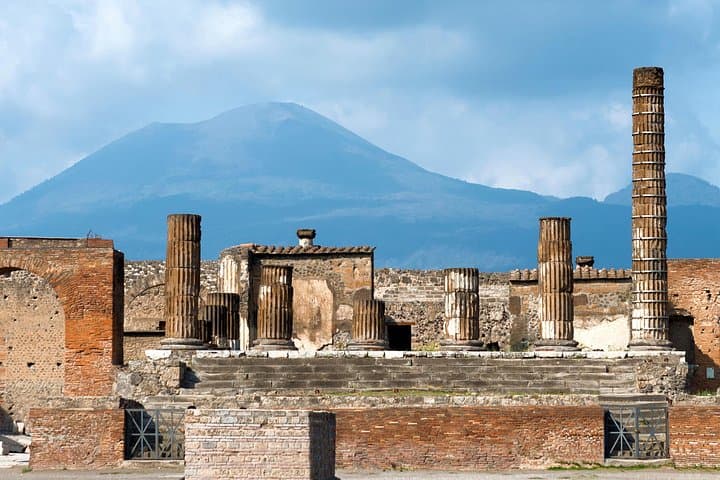



You arrive by private vehicle as the coastline slips away, the Bay of Naples shrinking behind ribboned cliffs. Pompeii’s broken streets open like a page of history—shadows of households, frescoed walls and a stone amphitheater that still remembers voices. Later, the road climbs Vesuvius’ scoria slopes; the volcano holds a slow breath, the crater rim offering a raw, wind-scoured panorama of the city below.
You arrive by private vehicle as the coastline slips away, the Bay of Naples shrinking behind ribboned cliffs. Pompeii’s broken streets open like a page of history—shadows of households, frescoed walls and a stone amphitheater that still remembers voices. Later, the road climbs Vesuvius’ scoria slopes; the volcano holds a slow breath, the crater rim offering a raw, wind-scoured panorama of the city below.
Pompeii is an archaeological map of Roman life frozen after the 79 AD eruption that buried towns across the bay. Vesuvius’ geology is equally dramatic: a stratovolcano built from layered lava, ash and pumice, its cone still active and studied for insights into explosive eruptions. Cultural threads tie both sites—local viticulture that thrives on volcanic soils, and village life shaped by the mountain’s presence.
Expect mixed-terrain walking: paved ancient streets in Pompeii and loose, volcanic scree on Vesuvius’ final ascent. The tour typically includes private transport, a guided walk through the excavations, time at the Vesuvius lookout, and a visit to a family-run winery for tastings and a light lunch.
Plan for sun, dust and uneven footing: bring sturdy shoes, refillable water, sun protection and a light layer for the summit breeze. Photography windows vary with crowds and light—early departures reduce heat and traffic. Visitor numbers and weather affect crater access, so remain flexible. For a day that pairs archaeology with raw geology and local flavors, this private connection between Pompeii and Vesuvius delivers both context and real-world adventure.