THE ADVENTURE COLLECTIVE® · Independent discovery and booking for outdoor travel

Cruise the dramatic limestone headland of Ponta da Piedade from Lagos and pass through narrow sea caves, arches and secluded coves. This 90-minute tour pairs close-up geology with chances to swim, spot dolphins and photograph golden cliffs from the water.
Cruise the dramatic limestone headland of Ponta da Piedade from Lagos and pass through narrow sea caves, arches and secluded coves. This 90-minute tour pairs close-up geology with chances to swim, spot dolphins and photograph golden cliffs from the water.
You push off from Lagos' small marina and the town slides into a line of white roofs behind you. Salt and limestone mix in the air as the boat threads a corridor of ochre cliffs, each arch and pillar cut by the Atlantic into a jagged coastline that seems to change with every turn.
Verified experiences and guided adventures in the surrounding area.
Operated by Lagos Boat Tours · Lagos, Faro District
You push off from Lagos' small marina and the town slides into a line of white roofs behind you. Salt and limestone mix in the air as the boat threads a corridor of ochre cliffs, each arch and pillar cut by the Atlantic into a jagged coastline that seems to change with every turn.
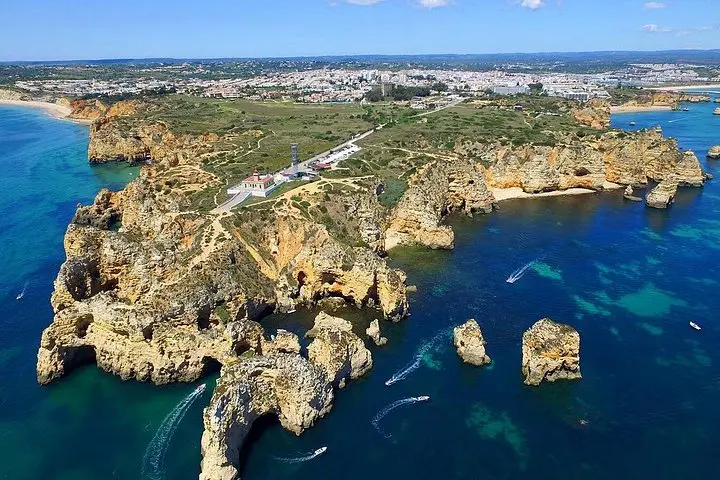
Ponta da Piedade is a geological classroom: layered Miocene limestone carved by waves and wind into grottoes, stacks and natural arches. Centuries of fishing and maritime trade shaped nearby Lagos, while local names—Dona Ana, Camilo, Potato Beach—reference human stories and small-scale uses of the shore.
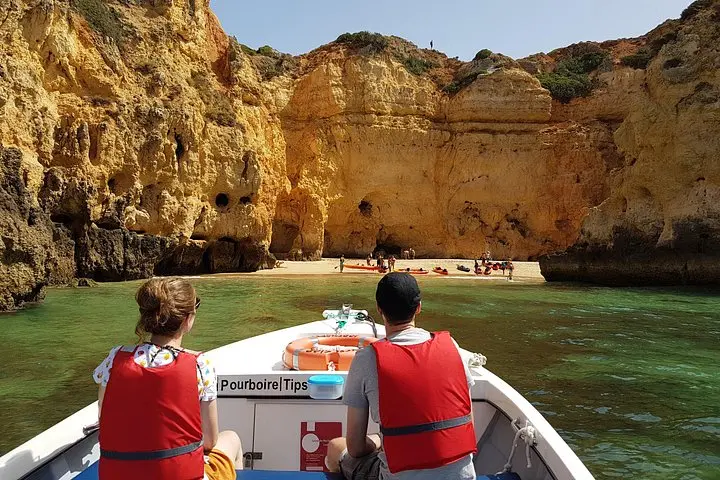
On a 90-minute coastal cruise you'll pass through narrow channels and glide beneath caverns with skylights, seeing features called the Cathedral, the Kitchen and the Corridor from the water where erosion is most visible. Guides typically point out how winter storms sculpt the headland and where cooler currents gather sea life; dolphins are a common sight if luck is on your side. The trip also offers short stops for a swim in protected coves when sea conditions allow.
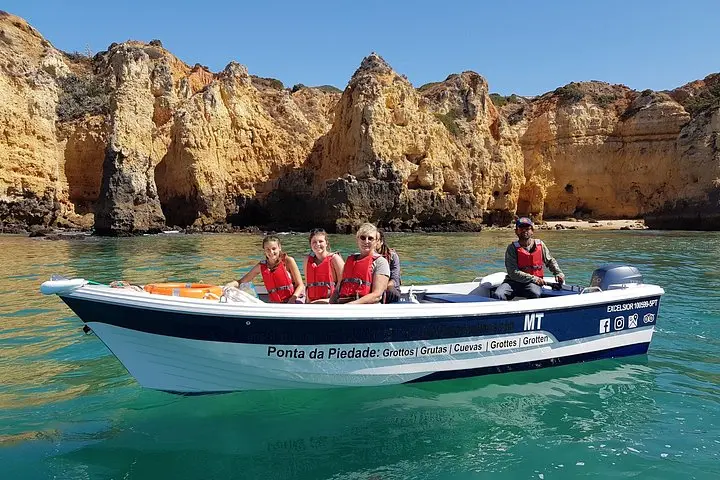
Practical note: boats are modern with padded seating but movement on deck requires balance—wear non-slip shoes. Morning departures often mean calmer seas and clearer light for photography; late-afternoon runs give warm, golden tones against the cliffs. Bring reef-safe sunscreen, a wind layer, and a small dry bag for your essentials. The tour is accessible to most travelers but expect some steps when boarding and careful footing if you explore shorelines after disembarking. It’s a compact, high-reward way to read the coastline’s story from the water.
Many operators allow short swim stops in sheltered coves when sea conditions and tides permit—bring a towel and be prepared to climb back aboard a ladder.
Larger vessels may pass the outer features but only smaller boats can enter the narrowest grottoes and corridors safely.
Yes; the cruise is family‑friendly but boarding involves steps and movement on deck—supervise children and ask staff for assistance if needed.
Common dolphins are frequently sighted, along with seabirds like gulls and cormorants; sightings are never guaranteed but more likely in calmer conditions.
Lagos Boat Tours operates guided outdoor trips and adventures with an emphasis on safety, stewardship, and memorable experiences.
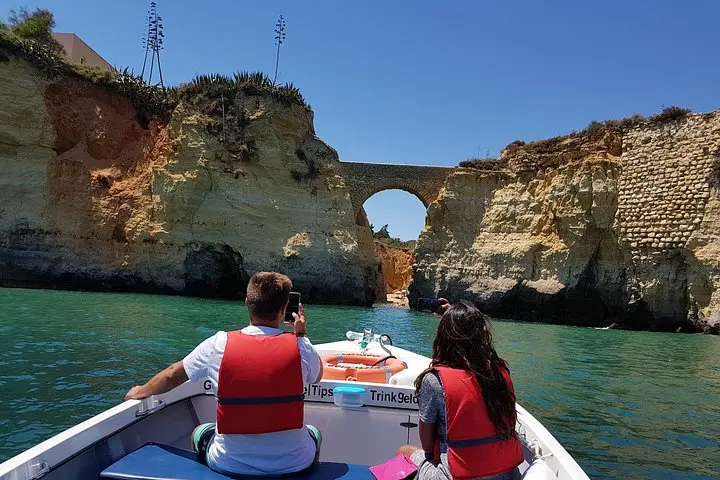
You push off from Lagos' small marina and the town slides into a line of white roofs behind you. Salt and limestone mix in the air as the boat threads a corridor of ochre cliffs, each arch and pillar cut by the Atlantic into a jagged coastline that seems to change with every turn.
You push off from Lagos' small marina and the town slides into a line of white roofs behind you. Salt and limestone mix in the air as the boat threads a corridor of ochre cliffs, each arch and pillar cut by the Atlantic into a jagged coastline that seems to change with every turn.
Ponta da Piedade is a geological classroom: layered Miocene limestone carved by waves and wind into grottoes, stacks and natural arches. Centuries of fishing and maritime trade shaped nearby Lagos, while local names—Dona Ana, Camilo, Potato Beach—reference human stories and small-scale uses of the shore.
On a 90-minute coastal cruise you'll pass through narrow channels and glide beneath caverns with skylights, seeing features called the Cathedral, the Kitchen and the Corridor from the water where erosion is most visible. Guides typically point out how winter storms sculpt the headland and where cooler currents gather sea life; dolphins are a common sight if luck is on your side. The trip also offers short stops for a swim in protected coves when sea conditions allow.
Practical note: boats are modern with padded seating but movement on deck requires balance—wear non-slip shoes. Morning departures often mean calmer seas and clearer light for photography; late-afternoon runs give warm, golden tones against the cliffs. Bring reef-safe sunscreen, a wind layer, and a small dry bag for your essentials. The tour is accessible to most travelers but expect some steps when boarding and careful footing if you explore shorelines after disembarking. It’s a compact, high-reward way to read the coastline’s story from the water.