THE ADVENTURE COLLECTIVE® · Independent discovery and booking for outdoor travel

A compact, high‑value trek from Pokhara to Poon Hill that delivers one of the Himalaya’s best sunrise panoramas. Over six days you’ll pass Gurung villages, rhododendron forests and reach a 3,210 m viewpoint—ideal for trekkers seeking dramatic mountain views with cultural stops.
A compact, high‑value trek from Pokhara to Poon Hill that delivers one of the Himalaya’s best sunrise panoramas. Over six days you’ll pass Gurung villages, rhododendron forests and reach a 3,210 m viewpoint—ideal for trekkers seeking dramatic mountain views with cultural stops.
Morning breaks cold and electric on the narrow ridge above Ghorepani: headlamps bob as groups push toward Poon Hill, and an ocean of peaks sharpens from indigo to gold. The summit at ~3,210 m rewards a 360º coronation of the Annapurna range—Annapurna I, Dhaulagiri and the knife‑edge Machapuchare—each peak staking its claim as the sun climbs.
Verified experiences and guided adventures in the surrounding area.
Operated by Namaste Nepal Trekking & Research Hub Pvt. Ltd. · Pokhara, Gandaki Province
Morning breaks cold and electric on the narrow ridge above Ghorepani: headlamps bob as groups push toward Poon Hill, and an ocean of peaks sharpens from indigo to gold. The summit at ~3,210 m rewards a 360º coronation of the Annapurna range—Annapurna I, Dhaulagiri and the knife‑edge Machapuchare—each peak staking its claim as the sun climbs.
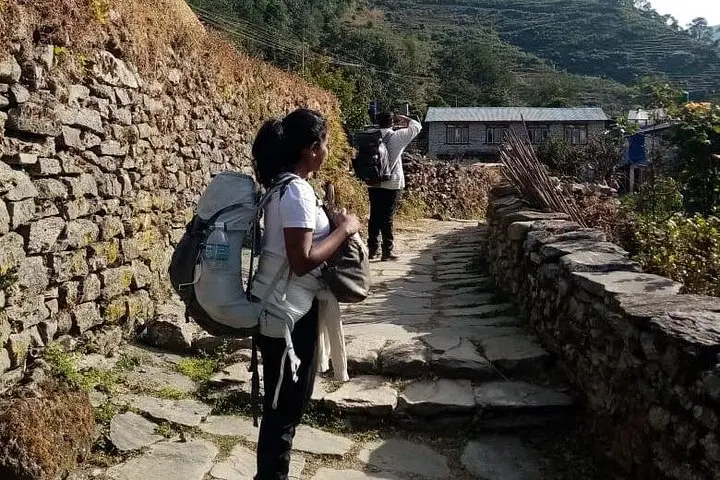
This classic Annapurna trek follows age‑old mule trails and seasonal routes used by Gurung and Magar traders; the geology is folded, uplifted Himalayan thrusts that heave metamorphic rocks into serrated ridgelines. Rhododendron and oak forests dominate lower slopes, giving way to tussock and alpine meadows closer to Poon Hill. Villages like Ulleri and Ghandruk retain traditional stone houses and Gurung cultural practices—museums, chanted prayers and warm teahouses are part of the route.
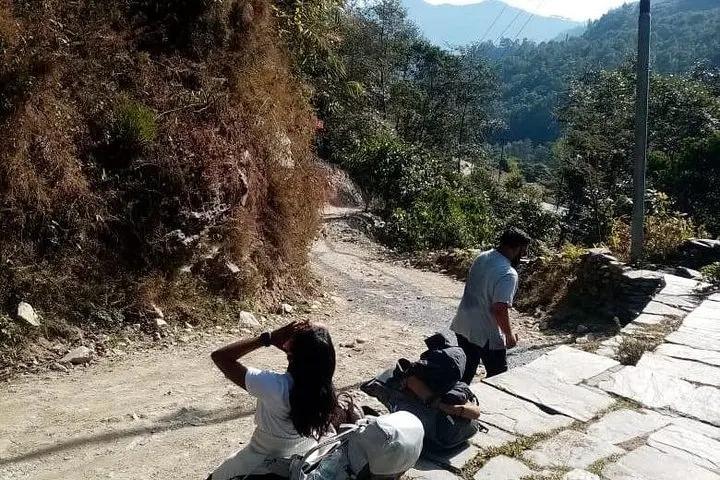
Expect 4–6 hours of walking most days with sustained stair sections and stone steps; total elevation gain from Pokhara (820 m) to Poon Hill (≈3,210 m) is roughly 2,300 m spread over several days to aid acclimatization. Trails vary from compacted dirt and stone steps to muddy stretches in monsoon; footwear with ankle support and trekking poles make steep descents manageable.
Practical: rise well before dawn for the Poon Hill sunrise, carry cash (limited ATMs), and pack layers — nights are cold, daytime can be warm. Stay hydrated, pace hikes to limit altitude effects, and respect guesthouse routines (limited hot water and electricity). With planning, the six‑day loop balances cultural contact and mountain scenery into an accessible, high‑reward trek.
Yes—both the Annapurna Conservation Area Permit (ACAP) and a TIMS card are required; your operator typically arranges these with passport details.
The itinerary is graded moderate; highest point (~3,210 m) can cause mild altitude effects—pace yourself, hydrate, and inform your guide of any symptoms.
Simple teahouses with basic dormitory or private rooms, shared bathrooms, limited hot water and electricity—meals are mostly local and filling.
Technically yes, but fall and spring offer the best weather and views; monsoon brings rain and winter brings cold and possible snow at higher elevations.
Namaste Nepal Trekking & Research Hub Pvt. Ltd. operates guided outdoor trips and adventures with an emphasis on safety, stewardship, and memorable experiences.
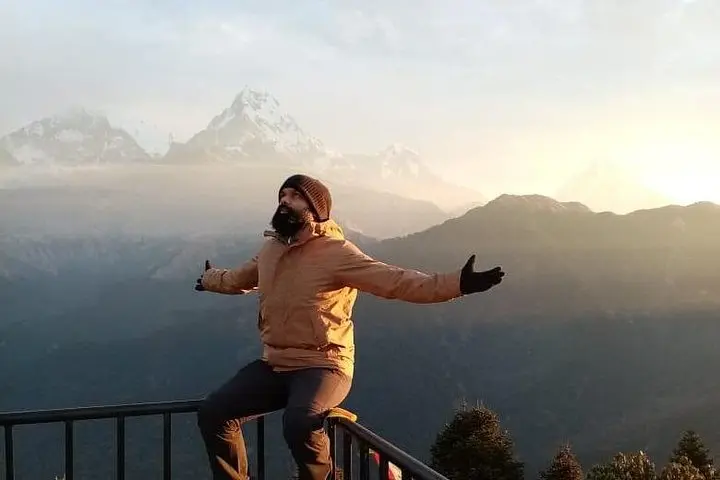
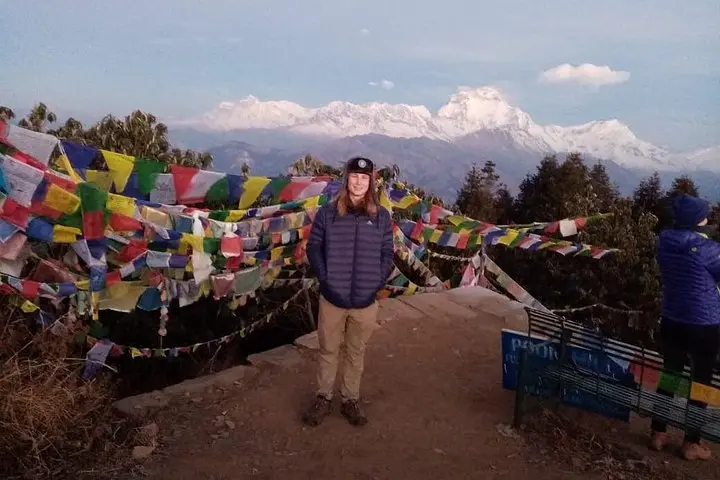
Morning breaks cold and electric on the narrow ridge above Ghorepani: headlamps bob as groups push toward Poon Hill, and an ocean of peaks sharpens from indigo to gold. The summit at ~3,210 m rewards a 360º coronation of the Annapurna range—Annapurna I, Dhaulagiri and the knife‑edge Machapuchare—each peak staking its claim as the sun climbs.
Morning breaks cold and electric on the narrow ridge above Ghorepani: headlamps bob as groups push toward Poon Hill, and an ocean of peaks sharpens from indigo to gold. The summit at ~3,210 m rewards a 360º coronation of the Annapurna range—Annapurna I, Dhaulagiri and the knife‑edge Machapuchare—each peak staking its claim as the sun climbs.
This classic Annapurna trek follows age‑old mule trails and seasonal routes used by Gurung and Magar traders; the geology is folded, uplifted Himalayan thrusts that heave metamorphic rocks into serrated ridgelines. Rhododendron and oak forests dominate lower slopes, giving way to tussock and alpine meadows closer to Poon Hill. Villages like Ulleri and Ghandruk retain traditional stone houses and Gurung cultural practices—museums, chanted prayers and warm teahouses are part of the route.
Expect 4–6 hours of walking most days with sustained stair sections and stone steps; total elevation gain from Pokhara (820 m) to Poon Hill (≈3,210 m) is roughly 2,300 m spread over several days to aid acclimatization. Trails vary from compacted dirt and stone steps to muddy stretches in monsoon; footwear with ankle support and trekking poles make steep descents manageable.
Practical: rise well before dawn for the Poon Hill sunrise, carry cash (limited ATMs), and pack layers — nights are cold, daytime can be warm. Stay hydrated, pace hikes to limit altitude effects, and respect guesthouse routines (limited hot water and electricity). With planning, the six‑day loop balances cultural contact and mountain scenery into an accessible, high‑reward trek.