THE ADVENTURE COLLECTIVE® · Independent discovery and booking for outdoor travel

Watch the Annapurna range ignite from Poon Hill, then continue through rhododendron forests to Mardi Himal’s high camps. This combined trek pairs short, steep days with teahouse nights and big mountain panoramas.
Watch the Annapurna range ignite from Poon Hill, then continue through rhododendron forests to Mardi Himal’s high camps. This combined trek pairs short, steep days with teahouse nights and big mountain panoramas.
Dawn arrives cold and bright on Poon Hill: the sky hardens from indigo to pale gold, and the jagged teeth of Annapurna and Dhaulagiri light up first. Trekkers stand on stone steps and low rhododendron ridgelines, breath visible, as the mountain arc pushes color across the horizon and the valley below seems to wake.
Verified experiences and guided adventures in the surrounding area.
Operated by Nepal Adventure Team · Pokhara, Gandaki Province
Dawn arrives cold and bright on Poon Hill: the sky hardens from indigo to pale gold, and the jagged teeth of Annapurna and Dhaulagiri light up first. Trekkers stand on stone steps and low rhododendron ridgelines, breath visible, as the mountain arc pushes color across the horizon and the valley below seems to wake.
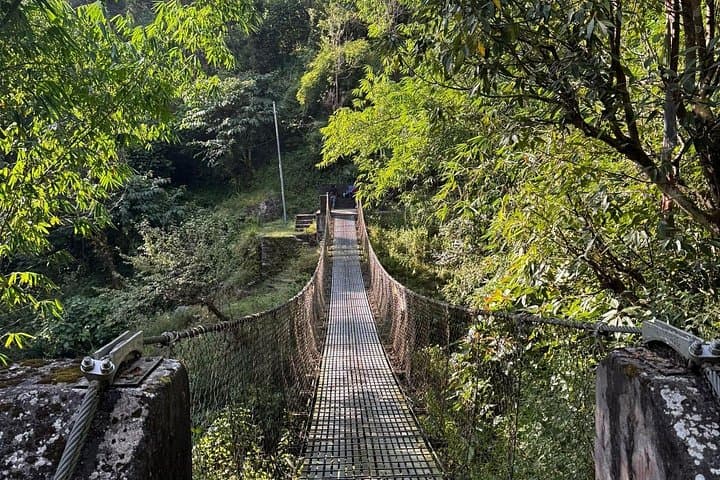
This combined Poon Hill–Mardi Himal route threads Gurung villages, terraced farmland and high oak-rhododendron forest before opening onto alpine meadows and steep moraine trails. The Annapurna massif is part of the young Himalayan uplift—folded schist and granite quarried by glaciers—so expect stony steps, steep gullies and occasional scree. Gurung culture remains visible in stone homes, mani walls and terraced fields; the area falls inside the Annapurna Conservation Area, managed for community tourism and habitat protection.
Practically: most itineraries run 10–14 days door-to-door with 4–7 hour walking days, highest altitudes between Poon Hill (~3,210 m) and high camps toward Mardi Himal (route-dependent, commonly 3,500–4,500 m). Terrain alternates packed earth, long stone stairways and narrow ridge tracks; wear stiff-soled boots and use poles for steep descents. Hydrate proactively, carry water purification tabs, and plan acclimatization days—altitude is the main challenge. Teahouse accommodation is basic but reliable; bring cash for meals, hot showers and tips. Spring (March–May) and autumn (September–November) give the clearest mountain views; monsoon can make trails slippery and winter brings snow at higher camps. Leave no trace, register with ACAP/TIMS, and be prepared to alter plans for weather or acclimatization.
Yes—ACAP (Annapurna Conservation Area Project) permit and a TIMS card are required; guides commonly arrange these at Pokhara or trail entry points.
Expect highest camps or viewpoints between about 3,200 m (Poon Hill) and 3,500–4,500 m toward Mardi Himal, depending on how far you push to high camps or base areas.
Yes—basic teahouse lodges provide rooms, meals and often hot showers for a fee; bring cash and modest expectations for comfort.
Spring (March–May) and autumn (September–November) offer the best balance of clear views, stable weather and active teahouse services.
Nepal Adventure Team operates guided outdoor trips and adventures with an emphasis on safety, stewardship, and memorable experiences.
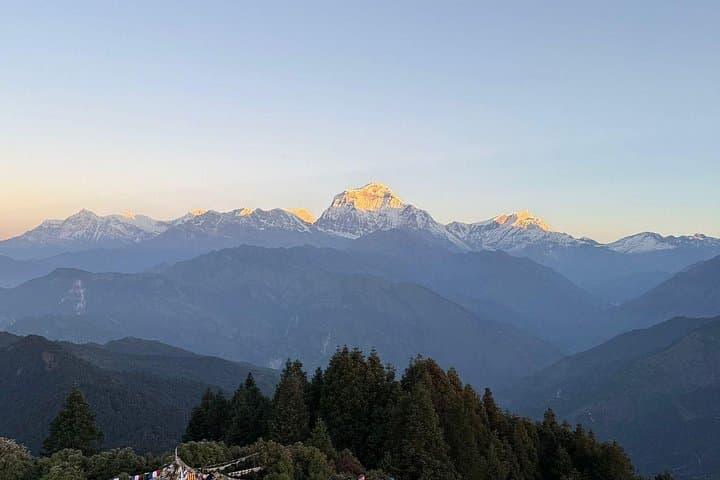
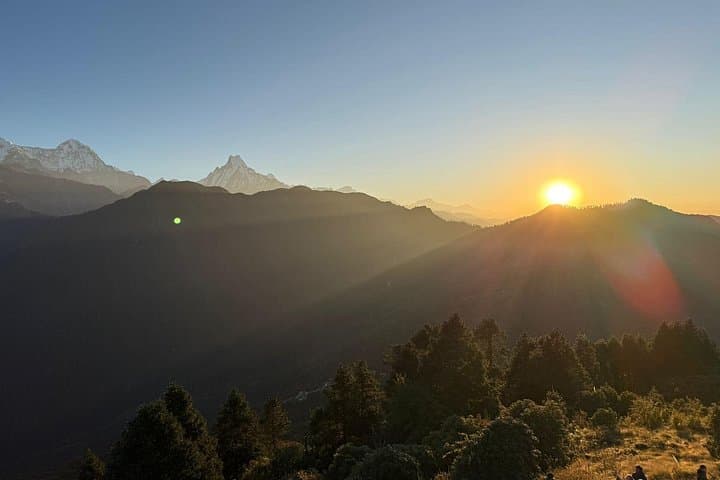

Dawn arrives cold and bright on Poon Hill: the sky hardens from indigo to pale gold, and the jagged teeth of Annapurna and Dhaulagiri light up first. Trekkers stand on stone steps and low rhododendron ridgelines, breath visible, as the mountain arc pushes color across the horizon and the valley below seems to wake.
Dawn arrives cold and bright on Poon Hill: the sky hardens from indigo to pale gold, and the jagged teeth of Annapurna and Dhaulagiri light up first. Trekkers stand on stone steps and low rhododendron ridgelines, breath visible, as the mountain arc pushes color across the horizon and the valley below seems to wake.
This combined Poon Hill–Mardi Himal route threads Gurung villages, terraced farmland and high oak-rhododendron forest before opening onto alpine meadows and steep moraine trails. The Annapurna massif is part of the young Himalayan uplift—folded schist and granite quarried by glaciers—so expect stony steps, steep gullies and occasional scree. Gurung culture remains visible in stone homes, mani walls and terraced fields; the area falls inside the Annapurna Conservation Area, managed for community tourism and habitat protection.
Practically: most itineraries run 10–14 days door-to-door with 4–7 hour walking days, highest altitudes between Poon Hill (~3,210 m) and high camps toward Mardi Himal (route-dependent, commonly 3,500–4,500 m). Terrain alternates packed earth, long stone stairways and narrow ridge tracks; wear stiff-soled boots and use poles for steep descents. Hydrate proactively, carry water purification tabs, and plan acclimatization days—altitude is the main challenge. Teahouse accommodation is basic but reliable; bring cash for meals, hot showers and tips. Spring (March–May) and autumn (September–November) give the clearest mountain views; monsoon can make trails slippery and winter brings snow at higher camps. Leave no trace, register with ACAP/TIMS, and be prepared to alter plans for weather or acclimatization.