THE ADVENTURE COLLECTIVE® · Independent discovery and booking for outdoor travel

Watch Annapurna erupt with light from Poon Hill, wander rhododendron forests and end the loop with a natural hot-spring soak. This 4–5 day circuit from Pokhara combines Gurung culture, manageable daily distances and close-up Himalayan panoramas.
Watch Annapurna erupt with light from Poon Hill, wander rhododendron forests and end the loop with a natural hot-spring soak. This 4–5 day circuit from Pokhara combines Gurung culture, manageable daily distances and close-up Himalayan panoramas.
Pre-dawn cold bites the ridge as you climb the stone steps toward Poon Hill; headlamps pick out rhododendron trunks and the silhouette of Annapurna rising like a serrated wall. By sunrise the valley fills with light and the layered peaks—Annapurna South, Hiunchuli and Machapuchare—push through a low cloud sea, demanding a quiet, wide-eyed pause.
Verified experiences and guided adventures in the surrounding area.
Operated by Nepal Mountain Club Pvt Ltd · Pokhara, Gandaki Province
Pre-dawn cold bites the ridge as you climb the stone steps toward Poon Hill; headlamps pick out rhododendron trunks and the silhouette of Annapurna rising like a serrated wall. By sunrise the valley fills with light and the layered peaks—Annapurna South, Hiunchuli and Machapuchare—push through a low cloud sea, demanding a quiet, wide-eyed pause.
The route follows centuries-old mountain trails used by Gurung communities and mule caravans. Geologically the Annapurna range is young and steep, carved by tectonic uplift and heavy monsoon erosion—expect talus slopes, carved river valleys and stepped fields. Culturally the trek passes Gurung villages such as Ulleri and Ghandruk, where stone houses, terraced farms and small museums tell the story of mountain life and the Gurung contributions to Gurkha regiments.
Practical guidance: the itinerary is 4–5 days of steady hiking with a high-point at 3,210 m for a sunrise view. Trails alternate stone stairways, forested singletrack and exposed ridgelines; daily sections are typically 3–6 hours of walking. Tea houses provide simple rooms and hot meals—carry cash and modest expectations for comfort. Acclimatize slowly, drink frequently, and keep an extra warm layer for pre-dawn mornings on Poon Hill.
On the last day, trade trail dust for a soak at Jhinu Hot Spring—natural, small and popular with locals. Permits (ACAP and TIMS) are required and normally included by operators. Aim for October–November or March–April for the clearest mountain views and stable weather.
Yes—this operator includes Annapurna Conservation Area Project (ACAP) and TIMS permits; bring passport copies for registration.
Daily walking ranges from 3–6 hours over steep stone steps and undulating trails; pace yourself and expect short breaks at tea houses.
Simple tea-house guest rooms with shared bathrooms and basic hot meals; standards vary between Ulleri, Ghorepani, Tadapani and Jhinu.
October–November and March–April offer the clearest skies and stable conditions; spring brings rhododendron blooms for extra color.
Nepal Mountain Club Pvt Ltd operates guided outdoor trips and adventures with an emphasis on safety, stewardship, and memorable experiences.
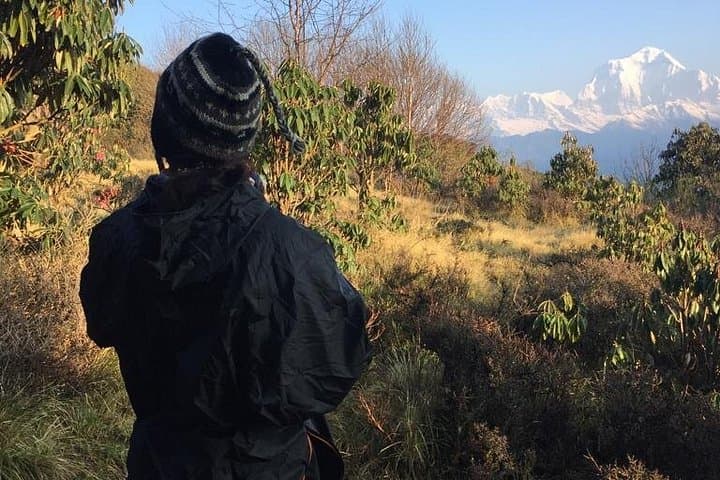


Pre-dawn cold bites the ridge as you climb the stone steps toward Poon Hill; headlamps pick out rhododendron trunks and the silhouette of Annapurna rising like a serrated wall. By sunrise the valley fills with light and the layered peaks—Annapurna South, Hiunchuli and Machapuchare—push through a low cloud sea, demanding a quiet, wide-eyed pause.
Pre-dawn cold bites the ridge as you climb the stone steps toward Poon Hill; headlamps pick out rhododendron trunks and the silhouette of Annapurna rising like a serrated wall. By sunrise the valley fills with light and the layered peaks—Annapurna South, Hiunchuli and Machapuchare—push through a low cloud sea, demanding a quiet, wide-eyed pause.
The route follows centuries-old mountain trails used by Gurung communities and mule caravans. Geologically the Annapurna range is young and steep, carved by tectonic uplift and heavy monsoon erosion—expect talus slopes, carved river valleys and stepped fields. Culturally the trek passes Gurung villages such as Ulleri and Ghandruk, where stone houses, terraced farms and small museums tell the story of mountain life and the Gurung contributions to Gurkha regiments.
Practical guidance: the itinerary is 4–5 days of steady hiking with a high-point at 3,210 m for a sunrise view. Trails alternate stone stairways, forested singletrack and exposed ridgelines; daily sections are typically 3–6 hours of walking. Tea houses provide simple rooms and hot meals—carry cash and modest expectations for comfort. Acclimatize slowly, drink frequently, and keep an extra warm layer for pre-dawn mornings on Poon Hill.
On the last day, trade trail dust for a soak at Jhinu Hot Spring—natural, small and popular with locals. Permits (ACAP and TIMS) are required and normally included by operators. Aim for October–November or March–April for the clearest mountain views and stable weather.