THE ADVENTURE COLLECTIVE® · Independent discovery and booking for outdoor travel

A compact 6-day circuit that pairs the sunrise panorama from Poon Hill with the cultural charm of Ghandruk village. Expect steep stone steps, rhododendron forests, simple teahouses, and dramatic Annapurna views.
A compact 6-day circuit that pairs the sunrise panorama from Poon Hill with the cultural charm of Ghandruk village. Expect steep stone steps, rhododendron forests, simple teahouses, and dramatic Annapurna views.
Dawn breaks cold and clear on the stone steps above Ghorepani; breath fogs in rhythm with other trekkers as the ridge opens to Annapurna’s jagged skyline. The hill climbs and terraced fields give way to rhododendron forests that push you forward, and local teahouses offer a warm cuppa before the final scramble to Poon Hill.
Verified experiences and guided adventures in the surrounding area.
Operated by Couch Adventure Nepal (CAN) · Pokhara, Gandaki Province
Dawn breaks cold and clear on the stone steps above Ghorepani; breath fogs in rhythm with other trekkers as the ridge opens to Annapurna’s jagged skyline. The hill climbs and terraced fields give way to rhododendron forests that push you forward, and local teahouses offer a warm cuppa before the final scramble to Poon Hill.
The route follows long-established mule tracks used for trade and seasonal migration through the Annapurna foothills. Geologically, the trail skirts the southern flanks of an uplifted Himalayan arc—frequent switchbacks trace old river terraces carved by glaciers and monsoon-fed streams. Culturally, this area is Gurung country: Ghandruk’s stone houses, prayer wheels, and community museum give a clear window into local life and military service traditions.
On trail you’ll move from sub-tropical valleys to cool alpine ridgelines in days; elevation ranges from roughly 820 m at Pokhara to 3,210 m at Poon Hill, so mornings can be sharp and afternoons pleasantly warm. Expect packed dirt steps, occasional rocky sections, many suspension bridges, and guest-house accommodation with basic facilities.
Plan for early starts to catch sunrise from Poon Hill, bring layered clothing for rapid temperature shifts, and allow time for gentle acclimatization—this is moderate-altitude trekking, not high-mountain mountaineering. Carry cash for tea-house purchases, respect local customs in Gurung villages, and follow leave-no-trace practices: the trail is resilient but sensitive to litter and wood-gathering. With steady pace and proper gear, the circuit delivers big Himalayan views, living culture, and straightforward multi-day trekking in six compact days.
Yes—trekkers need the Annapurna Conservation Area Permit (ACAP) and a TIMS card; guides typically help arrange these before the hike.
The final climb from Ghorepani is steep but short (about 30–60 minutes); overall the circuit is moderate with daily 4–6 hour walking segments.
Teahouses and guesthouses are basic—shared bathrooms or squat toilets are common; Pokhara nights are in 2-star hotels as noted in the itinerary.
Spring (Mar–May) and autumn (Sep–Nov) offer the clearest mountain views and stable weather; monsoon and winter bring more rain and snow respectively.
Couch Adventure Nepal (CAN) operates guided outdoor trips and adventures with an emphasis on safety, stewardship, and memorable experiences.
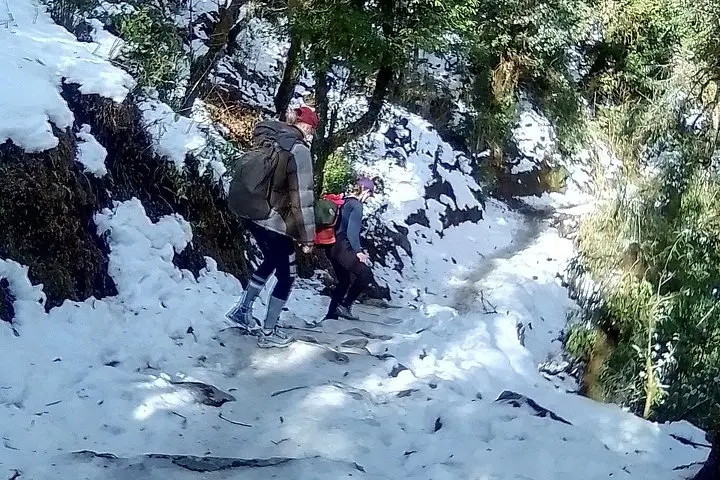
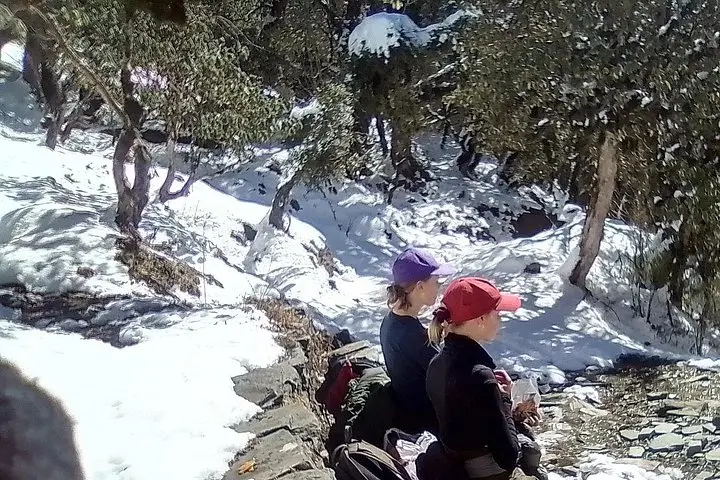
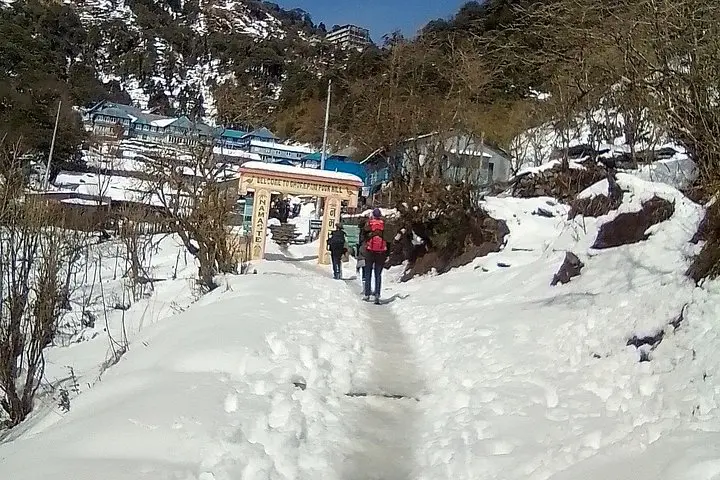
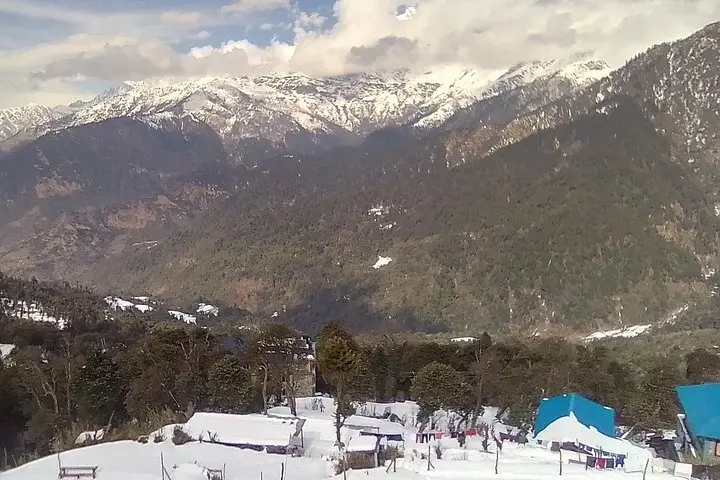
Dawn breaks cold and clear on the stone steps above Ghorepani; breath fogs in rhythm with other trekkers as the ridge opens to Annapurna’s jagged skyline. The hill climbs and terraced fields give way to rhododendron forests that push you forward, and local teahouses offer a warm cuppa before the final scramble to Poon Hill.
Dawn breaks cold and clear on the stone steps above Ghorepani; breath fogs in rhythm with other trekkers as the ridge opens to Annapurna’s jagged skyline. The hill climbs and terraced fields give way to rhododendron forests that push you forward, and local teahouses offer a warm cuppa before the final scramble to Poon Hill.
The route follows long-established mule tracks used for trade and seasonal migration through the Annapurna foothills. Geologically, the trail skirts the southern flanks of an uplifted Himalayan arc—frequent switchbacks trace old river terraces carved by glaciers and monsoon-fed streams. Culturally, this area is Gurung country: Ghandruk’s stone houses, prayer wheels, and community museum give a clear window into local life and military service traditions.
On trail you’ll move from sub-tropical valleys to cool alpine ridgelines in days; elevation ranges from roughly 820 m at Pokhara to 3,210 m at Poon Hill, so mornings can be sharp and afternoons pleasantly warm. Expect packed dirt steps, occasional rocky sections, many suspension bridges, and guest-house accommodation with basic facilities.
Plan for early starts to catch sunrise from Poon Hill, bring layered clothing for rapid temperature shifts, and allow time for gentle acclimatization—this is moderate-altitude trekking, not high-mountain mountaineering. Carry cash for tea-house purchases, respect local customs in Gurung villages, and follow leave-no-trace practices: the trail is resilient but sensitive to litter and wood-gathering. With steady pace and proper gear, the circuit delivers big Himalayan views, living culture, and straightforward multi-day trekking in six compact days.