THE ADVENTURE COLLECTIVE® · Independent discovery and booking for outdoor travel

Short on time but craving Himalayan sunrise views? This six-day private trek from Pokhara to Poon Hill and Ghorepani delivers classic Annapurna panoramas, rhododendron forests and Gurung village life—on teahouse nights and manageable daily distances.
Short on time but craving Himalayan sunrise views? This six-day private trek from Pokhara to Poon Hill and Ghorepani delivers classic Annapurna panoramas, rhododendron forests and Gurung village life—on teahouse nights and manageable daily distances.
A thin morning light slides along stone steps and rhododendron trunks as you climb toward Poon Hill—breath a little faster, breath a little quieter. The trail rises and falls through terraced fields and Gurung hamlets, each stop a compact portrait of mountain life: prayer flags, wood stoves, and stacked grain stores. At sunrise the Annapurna massif sharpens into a jagged horizon; Machapuchare (Fishtail) juts like a sculpted prow against the sky.
Verified experiences and guided adventures in the surrounding area.
Operated by Himalaya Sunrise Treks And Expedition Pvt.Ltd · Pokhara, Gandaki Province
A thin morning light slides along stone steps and rhododendron trunks as you climb toward Poon Hill—breath a little faster, breath a little quieter. The trail rises and falls through terraced fields and Gurung hamlets, each stop a compact portrait of mountain life: prayer flags, wood stoves, and stacked grain stores. At sunrise the Annapurna massif sharpens into a jagged horizon; Machapuchare (Fishtail) juts like a sculpted prow against the sky.
This route threads history and geology: uplifted Himalayan strata sculpted by glacial carving, and centuries of trans-Himalayan trade that shaped Ghorepani’s villages. The area is part of the Annapurna Conservation Area, where Gurung culture blends with Himalayan pastoralism. Forests here change character with elevation—subtropical valleys give way to rhododendron and fir as you move above 2,500 m.
Expect 4–7 hours of walking on most days, teahouse nights, and steadily increasing altitude—Poon Hill tops out at roughly 3,210 m. Trails alternate stone staircases, dirt switchbacks and narrow ridgelines; rain can make slopes slick, winter can add snow.
Practical guidance: pace yourself for the altitude gains, hydrate, and use trekking poles for steep sections. Pack layered clothing and a warm hat for dawn on Poon Hill. Book local teahouses in high season and carry small change for tipping locals and for hot drinks. With clear weather you’ll leave with sunrise panoramas and a grounded sense of mountain life—this is an accessible multi-day trek that rewards steady effort with big Himalayan views.
Yes—trekkers require the Annapurna Conservation Area Project (ACAP) permit and a TIMS card; guides or agencies typically arrange these before departure.
The final ascent is steep but short—about 30–60 minutes from Ghorepani depending on pace; expect stone stairs and a brisk altitude gain.
Accommodation is in teahouses and simple guesthouses on trek nights; expect basic rooms with shared bathrooms and hot meals available.
Fall (Sept–Nov) and spring (Mar–May) offer the best combination of weather, visibility and manageable temperatures.
Himalaya Sunrise Treks And Expedition Pvt.Ltd operates guided outdoor trips and adventures with an emphasis on safety, stewardship, and memorable experiences.
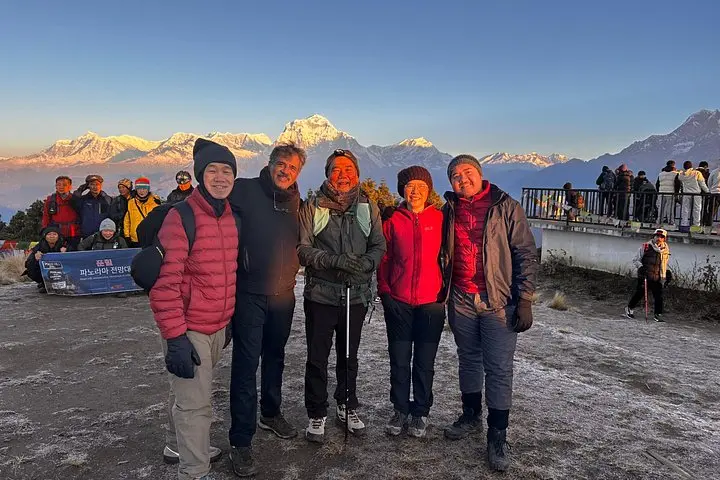
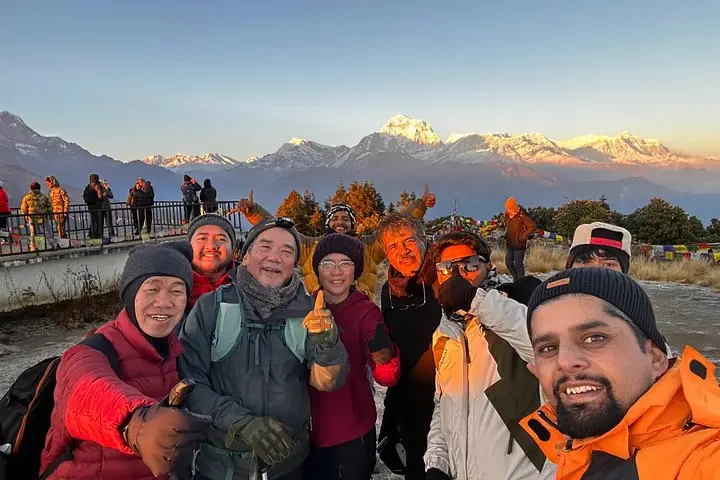
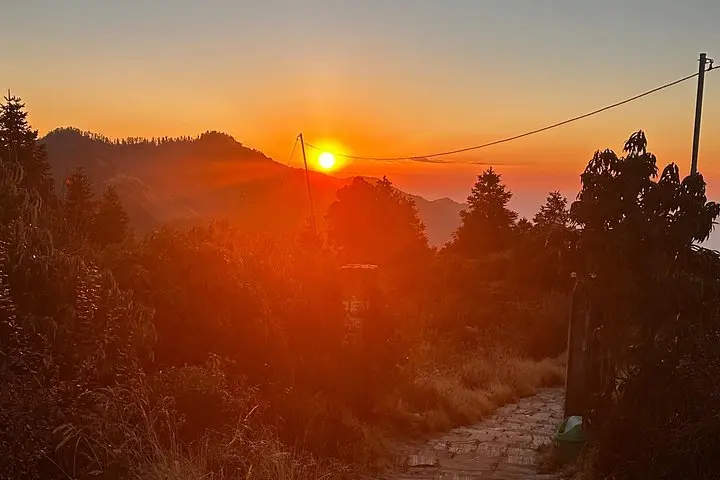
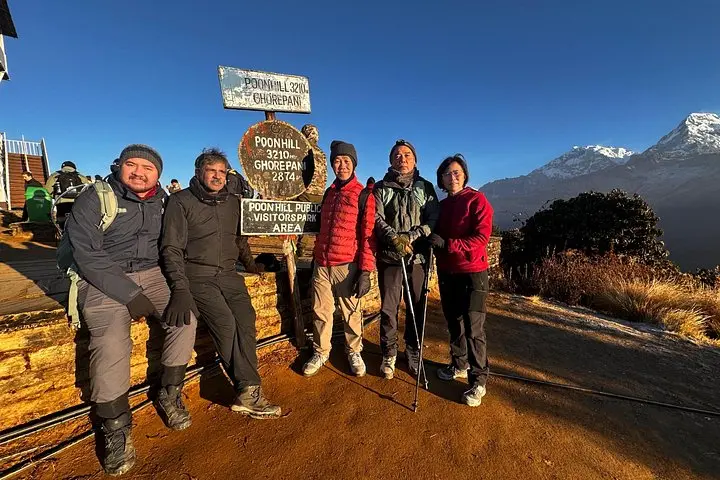
A thin morning light slides along stone steps and rhododendron trunks as you climb toward Poon Hill—breath a little faster, breath a little quieter. The trail rises and falls through terraced fields and Gurung hamlets, each stop a compact portrait of mountain life: prayer flags, wood stoves, and stacked grain stores. At sunrise the Annapurna massif sharpens into a jagged horizon; Machapuchare (Fishtail) juts like a sculpted prow against the sky.
A thin morning light slides along stone steps and rhododendron trunks as you climb toward Poon Hill—breath a little faster, breath a little quieter. The trail rises and falls through terraced fields and Gurung hamlets, each stop a compact portrait of mountain life: prayer flags, wood stoves, and stacked grain stores. At sunrise the Annapurna massif sharpens into a jagged horizon; Machapuchare (Fishtail) juts like a sculpted prow against the sky.
This route threads history and geology: uplifted Himalayan strata sculpted by glacial carving, and centuries of trans-Himalayan trade that shaped Ghorepani’s villages. The area is part of the Annapurna Conservation Area, where Gurung culture blends with Himalayan pastoralism. Forests here change character with elevation—subtropical valleys give way to rhododendron and fir as you move above 2,500 m.
Expect 4–7 hours of walking on most days, teahouse nights, and steadily increasing altitude—Poon Hill tops out at roughly 3,210 m. Trails alternate stone staircases, dirt switchbacks and narrow ridgelines; rain can make slopes slick, winter can add snow.
Practical guidance: pace yourself for the altitude gains, hydrate, and use trekking poles for steep sections. Pack layered clothing and a warm hat for dawn on Poon Hill. Book local teahouses in high season and carry small change for tipping locals and for hot drinks. With clear weather you’ll leave with sunrise panoramas and a grounded sense of mountain life—this is an accessible multi-day trek that rewards steady effort with big Himalayan views.