THE ADVENTURE COLLECTIVE® · Independent discovery and booking for outdoor travel

A short, high-reward trek in the Annapurna region, the Poon Hill Ghorepani route delivers a sunrise panorama of Annapurna and Dhaulagiri with manageable days and tea‑house stays. Expect steep stone steps, rhododendron forests, and Gurung villages en route.
A short, high-reward trek in the Annapurna region, the Poon Hill Ghorepani route delivers a sunrise panorama of Annapurna and Dhaulagiri with manageable days and tea‑house stays. Expect steep stone steps, rhododendron forests, and Gurung villages en route.
At 03:30 the ridge at Poon Hill is cold and impatient—headlamps blink, breath fogs, and the first pale fingers of light pry open the western horizon. Standing on the grassy knob at 3,210 m, the Annapurna and Dhaulagiri ranges respond like an audience: one peak after another brightens into sharp, serrated relief. The walk up is abrupt but brief, and the payoff is a sweeping, cinematic sunrise over the high Himalaya.
Verified experiences and guided adventures in the surrounding area.
Operated by Nepal Adventure Team · Ghorepani, Gandaki Province
At 03:30 the ridge at Poon Hill is cold and impatient—headlamps blink, breath fogs, and the first pale fingers of light pry open the western horizon. Standing on the grassy knob at 3,210 m, the Annapurna and Dhaulagiri ranges respond like an audience: one peak after another brightens into sharp, serrated relief. The walk up is abrupt but brief, and the payoff is a sweeping, cinematic sunrise over the high Himalaya.
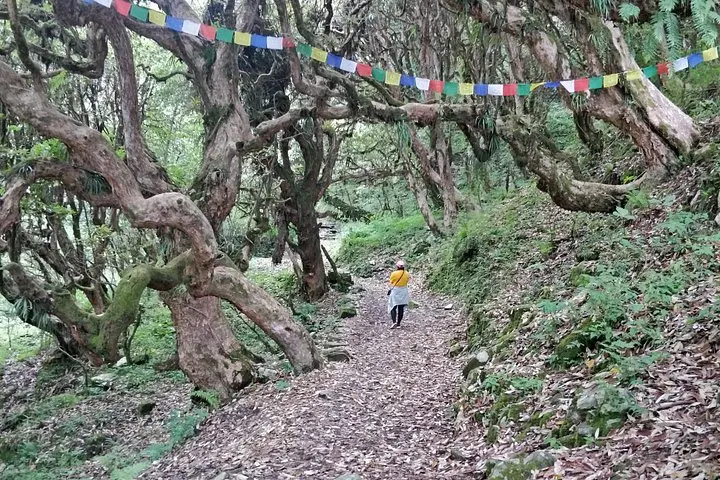
This trek follows ancient trade tracks and passes through rhododendron and oak forests, terraced farmland, and Gurung and Magar villages that have long balanced subsistence agriculture with seasonal tourism. Geologically, the Annapurna massif is a complex uplift of metamorphic and sedimentary rock; avalanches and steep drainage carve narrow valleys and dramatic viewpoints. Ghandruk and Ghorepani are cultural touchstones—local teahouses, stone-stair climbs, and Gurung hospitality frame the route.
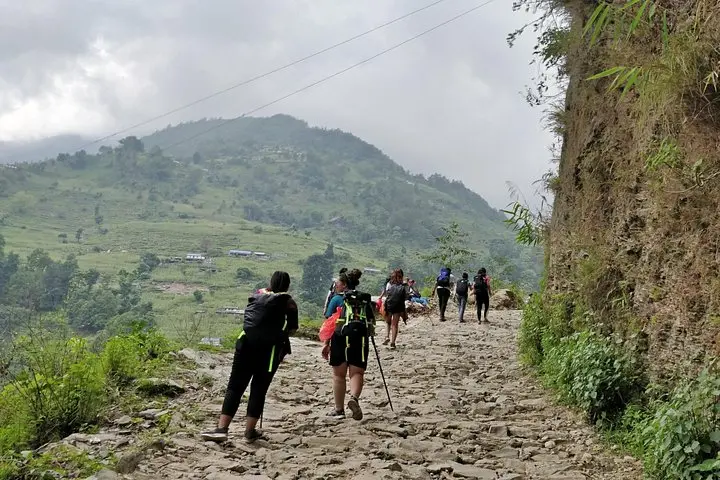
Practical guidance: the itinerary typically runs 7–10 days including transport from Pokhara or Kathmandu; expect daily walking of 4–6 hours on mixed singletrack, stone steps, and steep ascents with 300–900 m elevation change. Early starts capture better views and cooler hiking conditions; tea houses provide basic meals and hot water, but bring a lightweight sleeping liner for hygiene. Hydration and pacing are essential—altitude is moderate but real: move slowly on steep stretches and watch for headache or nausea. Footwear with good grip, trekking poles, layered clothing, and sun protection make the experience manageable and memorable. The Poon Hill Ghorepani Trek is short on technical demands and long on high-mountain atmosphere—an ideal introduction to Himalayan trekking.
The full itinerary including transfers usually spans 8–10 days; the core Ghorepani–Poon Hill route can be done in 3–5 days from Nayapul to Ghandruk.
No technical experience is needed, but walkers should be comfortable with steep ascents/descents and uneven stone stair sections for multiple hours a day.
Trekkers must carry an ACAP (Annapurna Conservation Area Project) permit and a TIMS card—these are arranged before or at trailhead offices in Pokhara/Nayapul.
October–November and March–May offer the most reliable weather and clear mountain views; monsoon months bring rain and winter can be very cold at higher viewpoints.
Nepal Adventure Team operates guided outdoor trips and adventures with an emphasis on safety, stewardship, and memorable experiences.
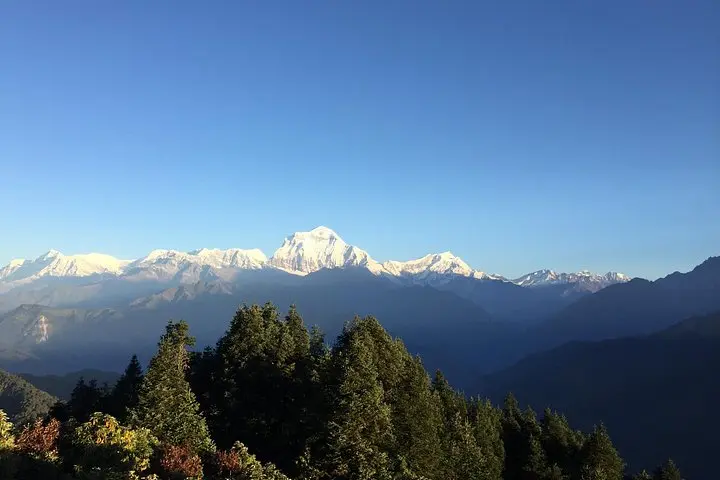
At 03:30 the ridge at Poon Hill is cold and impatient—headlamps blink, breath fogs, and the first pale fingers of light pry open the western horizon. Standing on the grassy knob at 3,210 m, the Annapurna and Dhaulagiri ranges respond like an audience: one peak after another brightens into sharp, serrated relief. The walk up is abrupt but brief, and the payoff is a sweeping, cinematic sunrise over the high Himalaya.
At 03:30 the ridge at Poon Hill is cold and impatient—headlamps blink, breath fogs, and the first pale fingers of light pry open the western horizon. Standing on the grassy knob at 3,210 m, the Annapurna and Dhaulagiri ranges respond like an audience: one peak after another brightens into sharp, serrated relief. The walk up is abrupt but brief, and the payoff is a sweeping, cinematic sunrise over the high Himalaya.
This trek follows ancient trade tracks and passes through rhododendron and oak forests, terraced farmland, and Gurung and Magar villages that have long balanced subsistence agriculture with seasonal tourism. Geologically, the Annapurna massif is a complex uplift of metamorphic and sedimentary rock; avalanches and steep drainage carve narrow valleys and dramatic viewpoints. Ghandruk and Ghorepani are cultural touchstones—local teahouses, stone-stair climbs, and Gurung hospitality frame the route.
Practical guidance: the itinerary typically runs 7–10 days including transport from Pokhara or Kathmandu; expect daily walking of 4–6 hours on mixed singletrack, stone steps, and steep ascents with 300–900 m elevation change. Early starts capture better views and cooler hiking conditions; tea houses provide basic meals and hot water, but bring a lightweight sleeping liner for hygiene. Hydration and pacing are essential—altitude is moderate but real: move slowly on steep stretches and watch for headache or nausea. Footwear with good grip, trekking poles, layered clothing, and sun protection make the experience manageable and memorable. The Poon Hill Ghorepani Trek is short on technical demands and long on high-mountain atmosphere—an ideal introduction to Himalayan trekking.