THE ADVENTURE COLLECTIVE® · Independent discovery and booking for outdoor travel

A four-day classic of the Annapurna foothills, the Ghorepani–Poon Hill trek delivers sunrise panoramas of Annapurna and Dhaulagiri with nights in village teahouses. Short days and steep stone stairways make it ideal for trekkers seeking big views on a compact itinerary.
A four-day classic of the Annapurna foothills, the Ghorepani–Poon Hill trek delivers sunrise panoramas of Annapurna and Dhaulagiri with nights in village teahouses. Short days and steep stone stairways make it ideal for trekkers seeking big views on a compact itinerary.
The sky thins to slate before dawn and a single ribbon of orange slides along the ridgeline — that first light is what draws hikers up the switchbacks to Poon Hill. From the stone steps above Ghorepani, rows of jagged summits—Dhaulagiri, Annapurna I, Machhapuchare—push into the cold, and the valley below opens into terraces and pine-scented gullies.
Verified experiences and guided adventures in the surrounding area.
Operated by Nepal High Trek & Expedition Pvt. Ltd · Ghorepani, Gandaki Province
The sky thins to slate before dawn and a single ribbon of orange slides along the ridgeline — that first light is what draws hikers up the switchbacks to Poon Hill. From the stone steps above Ghorepani, rows of jagged summits—Dhaulagiri, Annapurna I, Machhapuchare—push into the cold, and the valley below opens into terraces and pine-scented gullies.
This short trek threads traditional Magar and Gurung villages, terraced farmland and dense rhododendron forest. The Annapurna range exists because the Indian tectonic plate rammed into Eurasia; the uplifted peaks you watch at sunrise are a young, tectonic scar still rising. Culturally, the route passes working villages where teahouses, local porter routes and small Gurung museums trace a history of subsistence farming and seasonal migration.
Practically: the classic itinerary runs 3–4 days, reaching Poon Hill at 3,210 m with nights in Ghorepani (2,874 m) and Ghandruk. Expect steep stone stairways, sustained uphill sections (Ulleri is the typical stern climb), and well-marked trails but limited services beyond teahouse basics. Mornings are cold and views are clearest at sunrise; afternoons can bring cloud or monsoon drizzle in summer.
Bring layered clothing for sharp temperature swings, sturdy boots for uneven stone steps, and a headlamp for pre-dawn hikes. Hydrate and sleep well to reduce altitude discomfort; the summit walk from Ghorepani takes about 45–60 minutes. Time your trip for spring blossom or post-monsoon clarity if peak mountain visibility is the priority.
Yes—trekkers require the Annapurna Conservation Area Project (ACAP) permit and a TIMS card; guides usually help arrange these before the trek.
Yes—the route is popular with beginners due to short daily stages and teahouse accommodation, though you should be comfortable with stairs and uphill walking for several hours.
Poon Hill is about 3,210 m. Most trekkers tolerate this altitude, but monitor symptoms—headache, nausea or severe breathlessness warrant descending and rest.
Teahouses provide simple local meals (dal bhat, soups, noodles), twin-share rooms and limited hot-water showers for a fee; bring cash for extras.
Nepal High Trek & Expedition Pvt. Ltd operates guided outdoor trips and adventures with an emphasis on safety, stewardship, and memorable experiences.

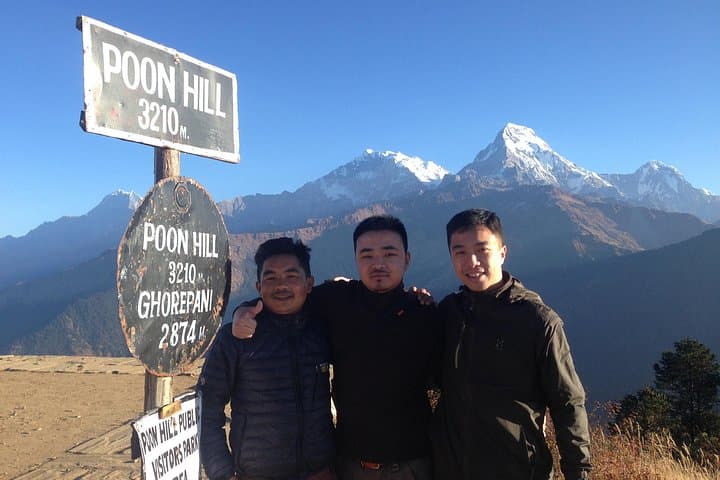

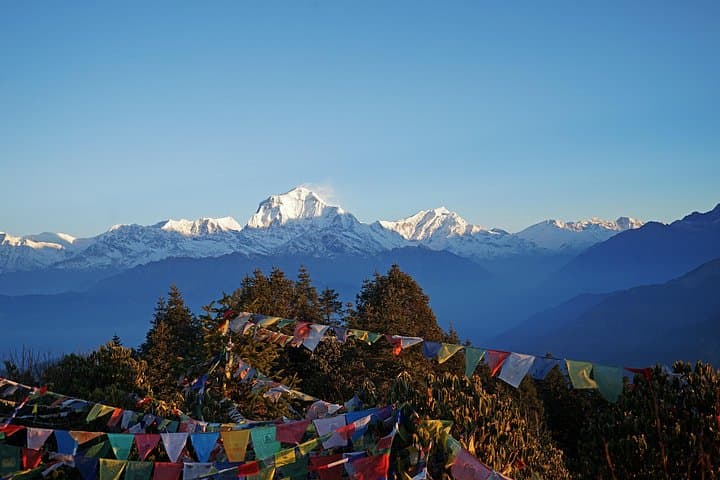
The sky thins to slate before dawn and a single ribbon of orange slides along the ridgeline — that first light is what draws hikers up the switchbacks to Poon Hill. From the stone steps above Ghorepani, rows of jagged summits—Dhaulagiri, Annapurna I, Machhapuchare—push into the cold, and the valley below opens into terraces and pine-scented gullies.
The sky thins to slate before dawn and a single ribbon of orange slides along the ridgeline — that first light is what draws hikers up the switchbacks to Poon Hill. From the stone steps above Ghorepani, rows of jagged summits—Dhaulagiri, Annapurna I, Machhapuchare—push into the cold, and the valley below opens into terraces and pine-scented gullies.
This short trek threads traditional Magar and Gurung villages, terraced farmland and dense rhododendron forest. The Annapurna range exists because the Indian tectonic plate rammed into Eurasia; the uplifted peaks you watch at sunrise are a young, tectonic scar still rising. Culturally, the route passes working villages where teahouses, local porter routes and small Gurung museums trace a history of subsistence farming and seasonal migration.
Practically: the classic itinerary runs 3–4 days, reaching Poon Hill at 3,210 m with nights in Ghorepani (2,874 m) and Ghandruk. Expect steep stone stairways, sustained uphill sections (Ulleri is the typical stern climb), and well-marked trails but limited services beyond teahouse basics. Mornings are cold and views are clearest at sunrise; afternoons can bring cloud or monsoon drizzle in summer.
Bring layered clothing for sharp temperature swings, sturdy boots for uneven stone steps, and a headlamp for pre-dawn hikes. Hydrate and sleep well to reduce altitude discomfort; the summit walk from Ghorepani takes about 45–60 minutes. Time your trip for spring blossom or post-monsoon clarity if peak mountain visibility is the priority.