THE ADVENTURE COLLECTIVE® · Independent discovery and booking for outdoor travel

Witness a Himalayan sunrise from Poon Hill on a concise 3-night, 4-day trek from Pokhara. This itinerary delivers panoramic eight-thousander views, rhododendron forests and village culture with teahouse stays.
Witness a Himalayan sunrise from Poon Hill on a concise 3-night, 4-day trek from Pokhara. This itinerary delivers panoramic eight-thousander views, rhododendron forests and village culture with teahouse stays.
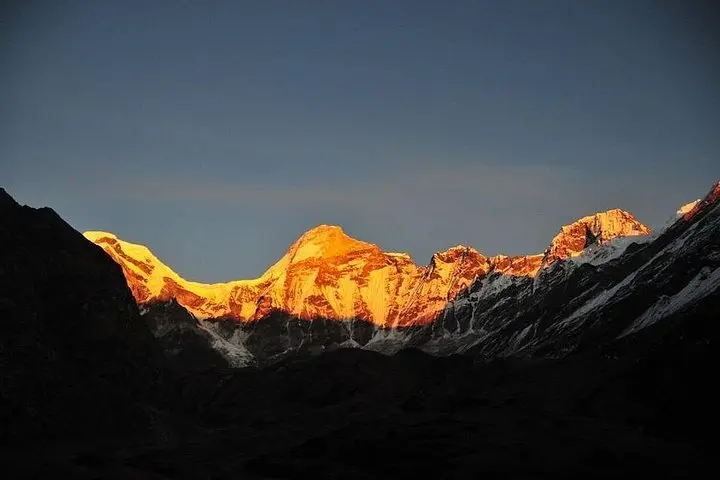
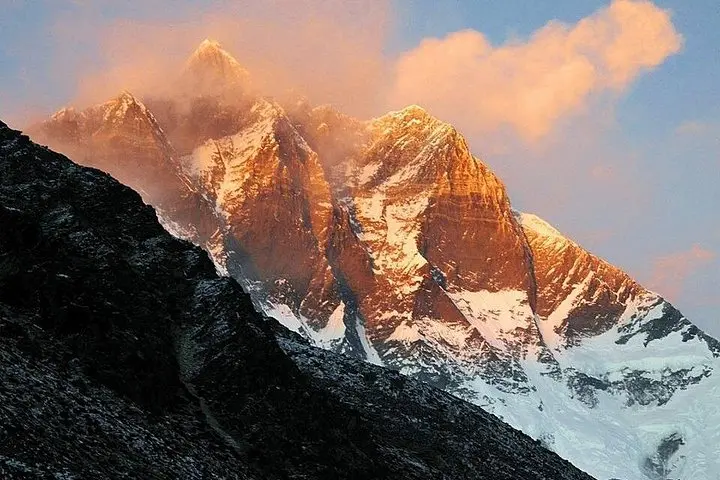
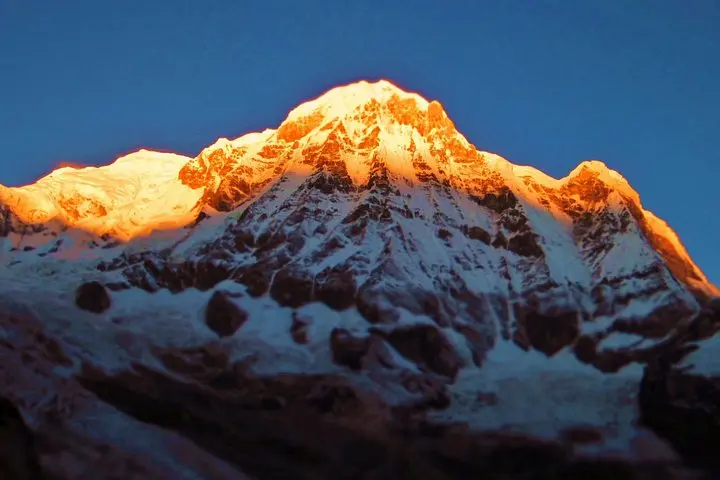
The cold registers on your cheeks before the first light breaks; from Poon Hill (3,190 m) the Annapurna massif blushes as if waking on cue. You stand among low cairns and wind-polished rocks while a ring of eight-thousanders—Dhaulagiri, Annapurna I and Manaslu—catch the sun and split the horizon.
Verified experiences and guided adventures in the surrounding area.
Operated by Welcome Nepal Treks P.ltd · Pokhara, Gandaki Province
The cold registers on your cheeks before the first light breaks; from Poon Hill (3,190 m) the Annapurna massif blushes as if waking on cue. You stand among low cairns and wind-polished rocks while a ring of eight-thousanders—Dhaulagiri, Annapurna I and Manaslu—catch the sun and split the horizon.
This compact 3-night, 4-day itinerary threads classic Annapurna terrain: a scenic drive from Pokhara to Nayapul, riverside trails beside the daring Modi Khola, steep stone staircases through Ulleri (≈2,100 m) and a rhododendron ridge to Ghorepani (≈2,800 m). The geology here is dramatic—deeply incised Kali Gandaki valley carved between uplifted thrusts of the Himalaya leaving high, craggy ridgelines and glaciated massifs.
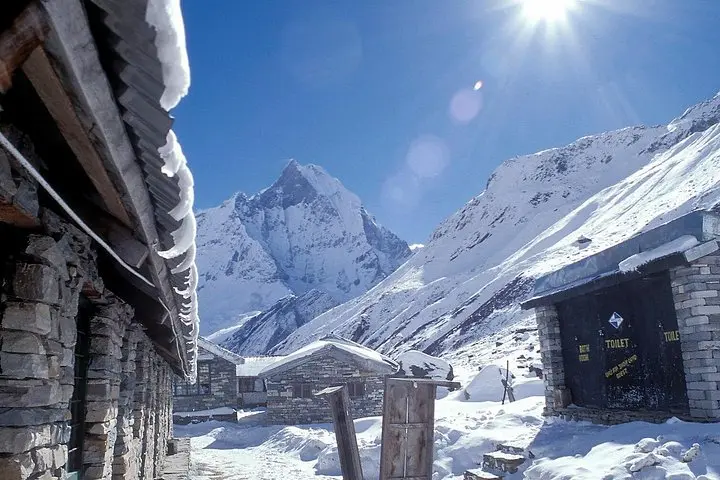
Culture appears in teahouse doorways and Gurung villages like Ghandruk, where slate-roofed houses and terraced fields reflect a century of mountain farming and Gurkha service abroad. The trail is maintained by local communities and regulated under Annapurna Conservation Area rules; permits and conservation fees help fund trails and waste management.
Practically: expect up to 6 hours of walking on day two, frequent stone steps, and basic teahouse lodging. Mornings are for the sunrise climb; afternoons move at a steady pace through forest and high pasture. Carry layered clothing for sub-zero nights, plan for limited cash access, and allow time for short rests—altitude gain is steady rather than extreme, but hydration and a slow pace reward the view.
Yes—ACAP (Annapurna Conservation Area) permit and TIMS are required; reputable operators usually include these in the package.
It’s classified moderate: steep stone steps and sustained ascents but short days and teahouse support make it achievable for fit beginners.
Teahouse lodges offer basic rooms with shared bathrooms and hot meals; standards improve seasonally—carry small bills for hot showers and tips.
Late September–November and March–April deliver the clearest views and best weather; spring also adds rhododendron blooms.
Welcome Nepal Treks P.ltd operates guided outdoor trips and adventures with an emphasis on safety, stewardship, and memorable experiences.
The cold registers on your cheeks before the first light breaks; from Poon Hill (3,190 m) the Annapurna massif blushes as if waking on cue. You stand among low cairns and wind-polished rocks while a ring of eight-thousanders—Dhaulagiri, Annapurna I and Manaslu—catch the sun and split the horizon.
The cold registers on your cheeks before the first light breaks; from Poon Hill (3,190 m) the Annapurna massif blushes as if waking on cue. You stand among low cairns and wind-polished rocks while a ring of eight-thousanders—Dhaulagiri, Annapurna I and Manaslu—catch the sun and split the horizon.
This compact 3-night, 4-day itinerary threads classic Annapurna terrain: a scenic drive from Pokhara to Nayapul, riverside trails beside the daring Modi Khola, steep stone staircases through Ulleri (≈2,100 m) and a rhododendron ridge to Ghorepani (≈2,800 m). The geology here is dramatic—deeply incised Kali Gandaki valley carved between uplifted thrusts of the Himalaya leaving high, craggy ridgelines and glaciated massifs.
Culture appears in teahouse doorways and Gurung villages like Ghandruk, where slate-roofed houses and terraced fields reflect a century of mountain farming and Gurkha service abroad. The trail is maintained by local communities and regulated under Annapurna Conservation Area rules; permits and conservation fees help fund trails and waste management.
Practically: expect up to 6 hours of walking on day two, frequent stone steps, and basic teahouse lodging. Mornings are for the sunrise climb; afternoons move at a steady pace through forest and high pasture. Carry layered clothing for sub-zero nights, plan for limited cash access, and allow time for short rests—altitude gain is steady rather than extreme, but hydration and a slow pace reward the view.