THE ADVENTURE COLLECTIVE® · Independent discovery and booking for outdoor travel

Catch the famous Poon Hill sunrise on a compact four-day trek from Pokhara. Expect rhododendron forests, Gurung villages, teahouse nights, and panoramic views of the Annapurna massif with manageable daily hiking.
Catch the famous Poon Hill sunrise on a compact four-day trek from Pokhara. Expect rhododendron forests, Gurung villages, teahouse nights, and panoramic views of the Annapurna massif with manageable daily hiking.
You stand on a low ridgeline before dawn with a mug of tea cooling in your hands and the Himalaya a dark serrated horizon. The first ray slices through valleys, and Annapurna’s faces shift from pewter to a fierce red that seems to push the cold back a little.
Verified experiences and guided adventures in the surrounding area.
Operated by Himalayan Advisor Pvt. Ltd. · Pokhara, Gandaki Province
You stand on a low ridgeline before dawn with a mug of tea cooling in your hands and the Himalaya a dark serrated horizon. The first ray slices through valleys, and Annapurna’s faces shift from pewter to a fierce red that seems to push the cold back a little.
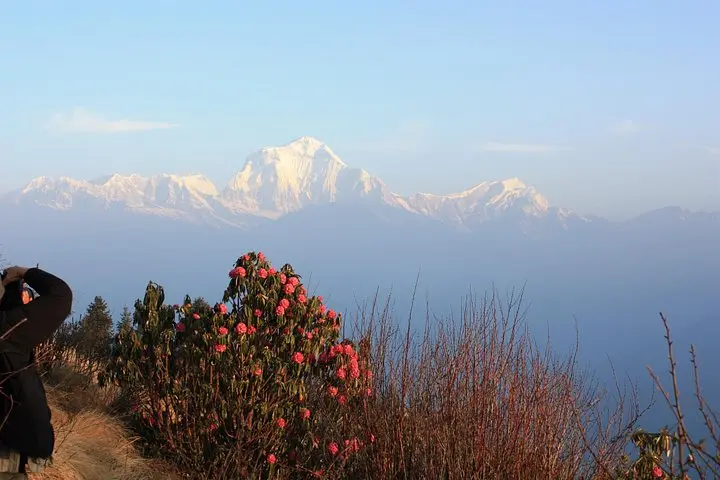
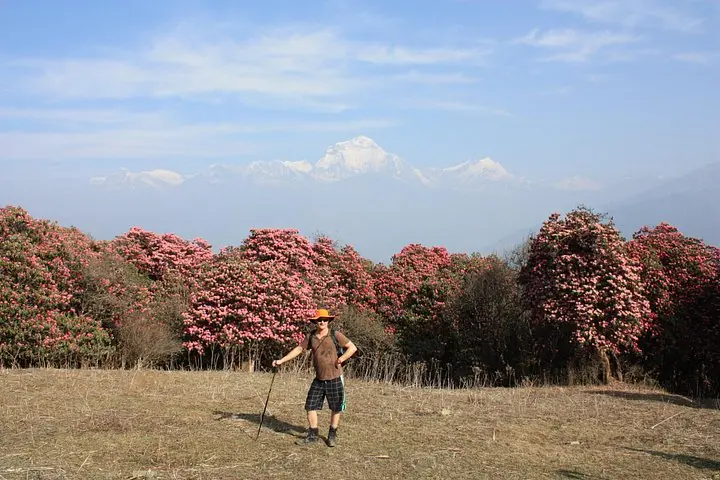
This short, four-day trek runs from Pokhara into the lower Annapurna foothills, topping out at Poon Hill (3,221 m). Geologically the route follows ancient erosion-carved ridges and old trade tracks used by Gurung caravans, passing stone steps and terraced fields. Botanically it moves from subtropical lower slopes into dense rhododendron and oak forest—spring brings blazing rhododendron blooms, while autumn reveals crystal-clear mountain vistas.
Culturally the trail threads through Gurung villages—Ghandruk and Ghorepani—where teahouses provide simple twin rooms and home-cooked dhal bhat. The route is not high enough to require serious acclimatization, but expect steep stone staircases, short steep gains, and uneven terrain underfoot.
Practical notes: plan pre-dawn starts for the Poon Hill sunrise, carry a headlamp, and budget rupees for teahouse snacks and phone charging. Daily walking is usually 3–6 hours with rest stops; pack layered clothing for cold mornings, and bring a water treatment option—the teahouse supply can be boiled but bottled waste is an issue. Guides and porters are common and make the route accessible to moderately fit hikers.
This trek is ideal for travelers who want a high-mountain sunrise without extended high-altitude exposure—bring sturdy boots, a warm down layer, and respect local trail etiquette to keep these paths open for the villages that rely on trekking income.
Yes—trekkers need the Annapurna Conservation Area Permit (ACAP) and a TIMS card; guides often handle permits for groups.
It’s moderate—daily walking is manageable but includes steep, extended stone stair sections; a basic level of fitness and stair-climbing stamina is recommended.
Teahouses provide twin rooms with thin mattresses and shared or basic private bathrooms; hot showers and charging usually cost extra.
Autumn (Sept–Nov) and spring (Mar–May) offer the clearest skies; avoid monsoon months for reliable visibility.
Himalayan Advisor Pvt. Ltd. operates guided outdoor trips and adventures with an emphasis on safety, stewardship, and memorable experiences.
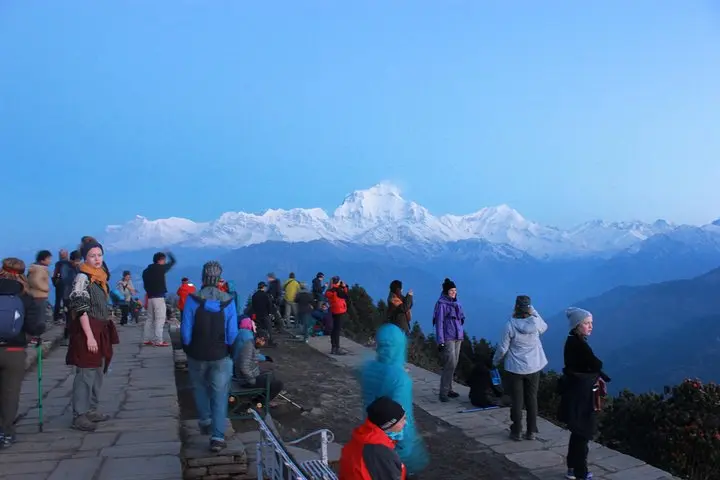
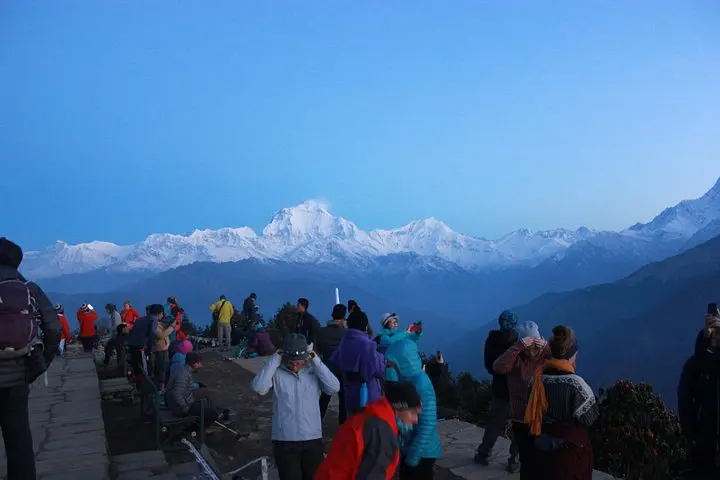
You stand on a low ridgeline before dawn with a mug of tea cooling in your hands and the Himalaya a dark serrated horizon. The first ray slices through valleys, and Annapurna’s faces shift from pewter to a fierce red that seems to push the cold back a little.
You stand on a low ridgeline before dawn with a mug of tea cooling in your hands and the Himalaya a dark serrated horizon. The first ray slices through valleys, and Annapurna’s faces shift from pewter to a fierce red that seems to push the cold back a little.
This short, four-day trek runs from Pokhara into the lower Annapurna foothills, topping out at Poon Hill (3,221 m). Geologically the route follows ancient erosion-carved ridges and old trade tracks used by Gurung caravans, passing stone steps and terraced fields. Botanically it moves from subtropical lower slopes into dense rhododendron and oak forest—spring brings blazing rhododendron blooms, while autumn reveals crystal-clear mountain vistas.
Culturally the trail threads through Gurung villages—Ghandruk and Ghorepani—where teahouses provide simple twin rooms and home-cooked dhal bhat. The route is not high enough to require serious acclimatization, but expect steep stone staircases, short steep gains, and uneven terrain underfoot.
Practical notes: plan pre-dawn starts for the Poon Hill sunrise, carry a headlamp, and budget rupees for teahouse snacks and phone charging. Daily walking is usually 3–6 hours with rest stops; pack layered clothing for cold mornings, and bring a water treatment option—the teahouse supply can be boiled but bottled waste is an issue. Guides and porters are common and make the route accessible to moderately fit hikers.
This trek is ideal for travelers who want a high-mountain sunrise without extended high-altitude exposure—bring sturdy boots, a warm down layer, and respect local trail etiquette to keep these paths open for the villages that rely on trekking income.