THE ADVENTURE COLLECTIVE® · Independent discovery and booking for outdoor travel

Watch sunrise ignite Annapurna and Dhaulagiri from Poon Hill on a short, family-friendly trek through rhododendron forests and Gurung villages. This accessible circuit combines sweeping mountain panoramas with teahouse comforts and straightforward logistics.
Watch sunrise ignite Annapurna and Dhaulagiri from Poon Hill on a short, family-friendly trek through rhododendron forests and Gurung villages. This accessible circuit combines sweeping mountain panoramas with teahouse comforts and straightforward logistics.
Before dawn you climb a rib of earth above Ghorepani, headlamp bobbing, cold air sharpening the silhouette of Machhapuchhare (Fishtail) and the serrated crowns of Annapurna and Dhaulagiri. The horizon blooms; the first light fingers across glaciers and ridgelines, turning snow to molten gold. That fifteen-minute summit at Poon Hill (≈3,210 m) is the reason most people make this gentle, family-friendly circuit.
Verified experiences and guided adventures in the surrounding area.
Operated by Eve Holidays · Pokhara, Gandaki Province
Before dawn you climb a rib of earth above Ghorepani, headlamp bobbing, cold air sharpening the silhouette of Machhapuchhare (Fishtail) and the serrated crowns of Annapurna and Dhaulagiri. The horizon blooms; the first light fingers across glaciers and ridgelines, turning snow to molten gold. That fifteen-minute summit at Poon Hill (≈3,210 m) is the reason most people make this gentle, family-friendly circuit.
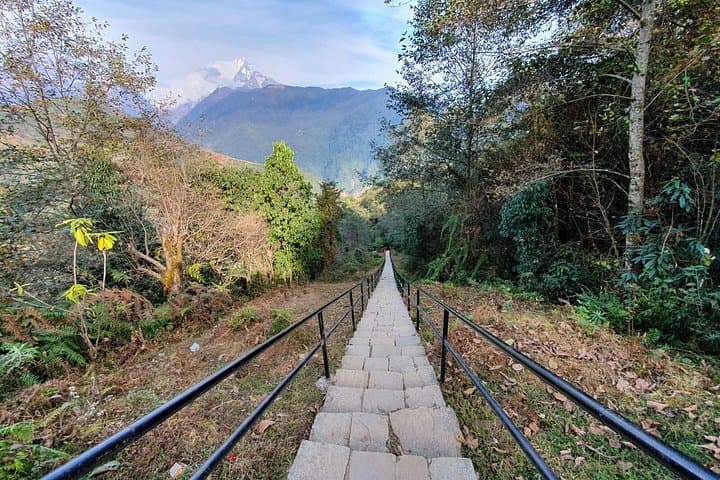
The route threads through a long human history of Gurung villages and terraced farms carved into steep slopes. Geologically the Annapurna Massif is young, uplifted by the collision of the Indian and Eurasian plates, so expect steep stone staircases and sharply carved valleys. Rhododendron and oak forests dominate the mid-elevations; in spring the woods roar with breeding songbirds and colorful blooms.
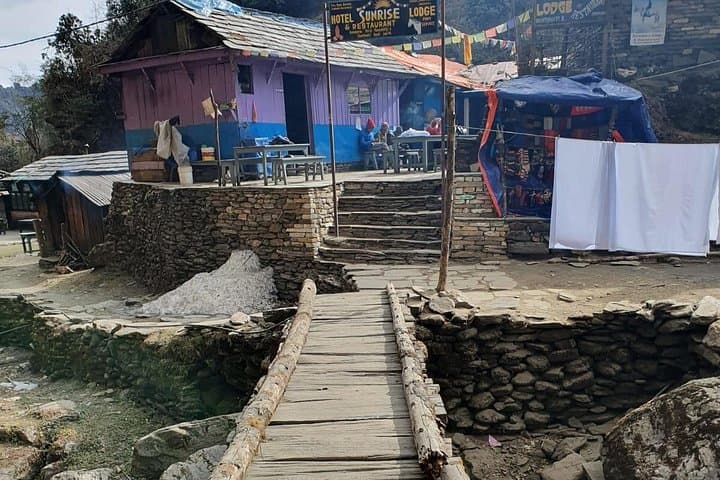
Practically, the trek is short — most itineraries use 3–5 days on the trail with long days of 3–6 hours walking between teahouses. You’ll fly or drive to Pokhara, then transfer to the trailhead at Hille or Nayapul. Trails are well-marked but steep in sections; altitude is moderate, so acclimatize and watch for headache or fatigue. Permits (Annapurna Conservation Area Permit and TIMS) are required and often handled by operators. Teahouse lodges provide hot meals and a bed; carry cash and small-denomination notes.
Plan for late starts, freezing mornings for sunrise, and easy-paced days to enjoy village walks and birdlife. With basic fitness, sturdy boots, and layered clothing, Poon Hill delivers a concentrated Himalayan experience without technical climbing.
It’s considered moderate and suitable for beginners with basic fitness; the walking is usually 3–6 hours per day with some steep stone steps but no technical climbing.
Yes—Annapurna Conservation Area Permit (ACAP) and a TIMS card are required; operators commonly arrange these before departure.
Poon Hill reaches about 3,210 m—mild altitude effects are possible; ascend slowly, hydrate, and report symptoms to your guide; serious AMS is uncommon on this route.
Teahouse lodges along the trail provide simple private rooms and meals; expect basic facilities and bring cash for extras and tips.
Eve Holidays operates guided outdoor trips and adventures with an emphasis on safety, stewardship, and memorable experiences.
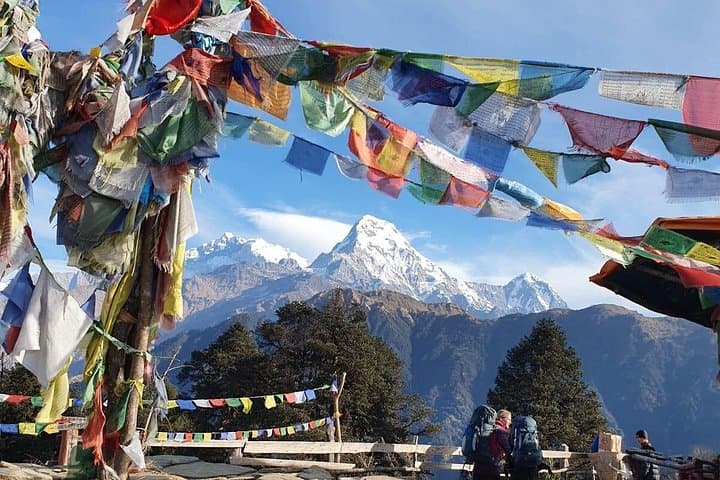
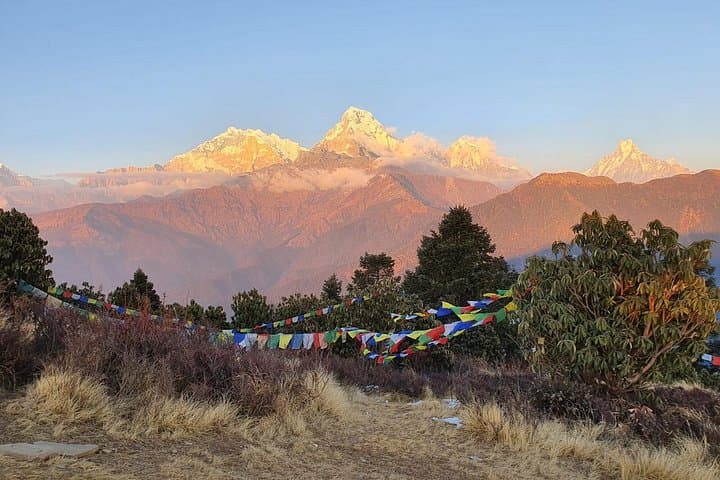
Before dawn you climb a rib of earth above Ghorepani, headlamp bobbing, cold air sharpening the silhouette of Machhapuchhare (Fishtail) and the serrated crowns of Annapurna and Dhaulagiri. The horizon blooms; the first light fingers across glaciers and ridgelines, turning snow to molten gold. That fifteen-minute summit at Poon Hill (≈3,210 m) is the reason most people make this gentle, family-friendly circuit.
Before dawn you climb a rib of earth above Ghorepani, headlamp bobbing, cold air sharpening the silhouette of Machhapuchhare (Fishtail) and the serrated crowns of Annapurna and Dhaulagiri. The horizon blooms; the first light fingers across glaciers and ridgelines, turning snow to molten gold. That fifteen-minute summit at Poon Hill (≈3,210 m) is the reason most people make this gentle, family-friendly circuit.
The route threads through a long human history of Gurung villages and terraced farms carved into steep slopes. Geologically the Annapurna Massif is young, uplifted by the collision of the Indian and Eurasian plates, so expect steep stone staircases and sharply carved valleys. Rhododendron and oak forests dominate the mid-elevations; in spring the woods roar with breeding songbirds and colorful blooms.
Practically, the trek is short — most itineraries use 3–5 days on the trail with long days of 3–6 hours walking between teahouses. You’ll fly or drive to Pokhara, then transfer to the trailhead at Hille or Nayapul. Trails are well-marked but steep in sections; altitude is moderate, so acclimatize and watch for headache or fatigue. Permits (Annapurna Conservation Area Permit and TIMS) are required and often handled by operators. Teahouse lodges provide hot meals and a bed; carry cash and small-denomination notes.
Plan for late starts, freezing mornings for sunrise, and easy-paced days to enjoy village walks and birdlife. With basic fitness, sturdy boots, and layered clothing, Poon Hill delivers a concentrated Himalayan experience without technical climbing.