THE ADVENTURE COLLECTIVE® · Independent discovery and booking for outdoor travel

A compact, two-day trek from Pokhara to Poon Hill delivers Himalayan sunrise views over Annapurna and Dhaulagiri, threaded by rhododendron forests and tea‑house culture. It’s short on days but rich in mountain scenery and cultural encounters.
A compact, two-day trek from Pokhara to Poon Hill delivers Himalayan sunrise views over Annapurna and Dhaulagiri, threaded by rhododendron forests and tea‑house culture. It’s short on days but rich in mountain scenery and cultural encounters.
You wake before dawn in a stone-and-wood tea house on a rim of the Annapurna foothills, the air a thin, cold bite that sharpens the mountains into serrated silhouettes. Lanterns wink off as a steady stream of trekkers climbs the switchbacks toward Poon Hill; by the time you reach the viewpoint at 3,210 m the sky is already burning gold behind Annapurna and Dhaulagiri.
Verified experiences and guided adventures in the surrounding area.
Operated by Welcome Nepal Treks P.ltd · Pokhara, Gandaki Province
You wake before dawn in a stone-and-wood tea house on a rim of the Annapurna foothills, the air a thin, cold bite that sharpens the mountains into serrated silhouettes. Lanterns wink off as a steady stream of trekkers climbs the switchbacks toward Poon Hill; by the time you reach the viewpoint at 3,210 m the sky is already burning gold behind Annapurna and Dhaulagiri.
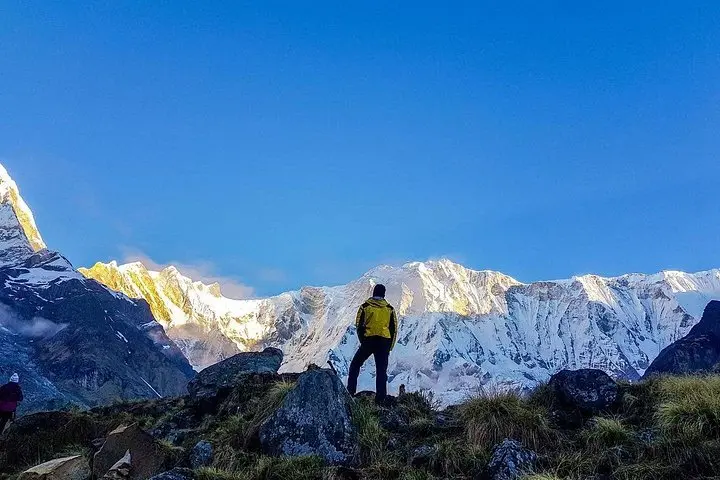
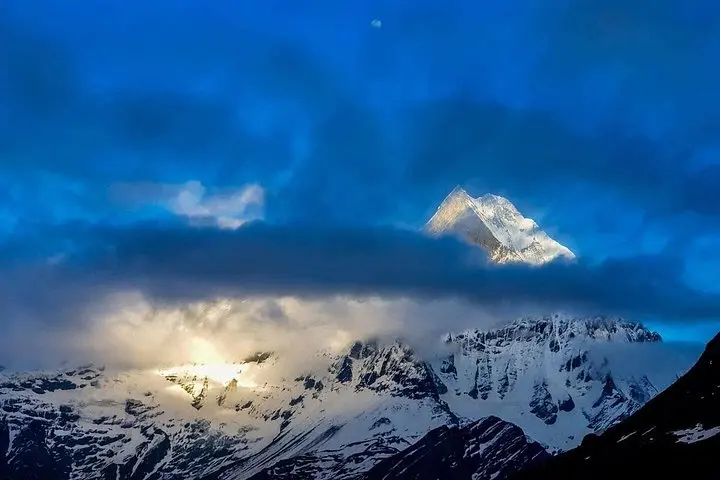
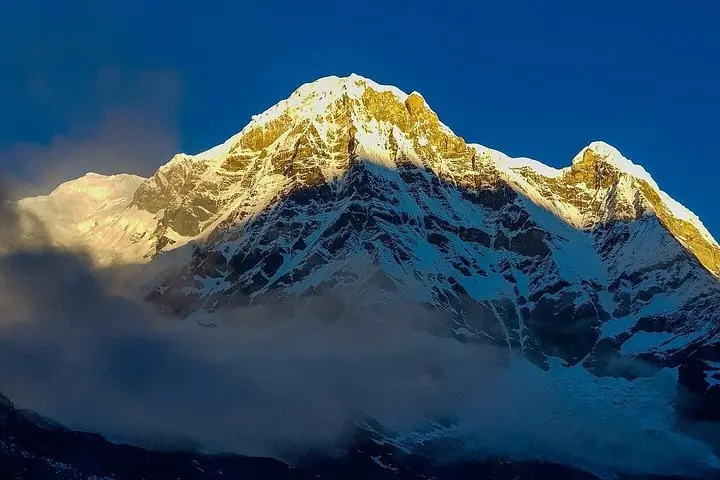
This short Ghorepani–Poon Hill route is one of the most accessible Himalayan sunrise treks. Traced by Gurung and Magar villages, the trail crosses rhododendron forests and terraced fields, and its stone steps and tea-house culture reflect decades of low-impact mountain tourism. Geologically, you’re on the southern flanks of the Greater Himalaya — weathered sedimentary and metamorphic rocks uplifted by collision — and on clear days you can see the ridgelines that mark the Annapurna Conservation Area.
Practical guide: the itinerary is typically a jeep transfer from Pokhara to Ulleri or Nayapul, followed by 3–5 hours of uphill walking to Ghorepani on day one, and an early 1–2 hour climb to Poon Hill day two before descending back to Pokhara. Expect uneven stone steps, short steep pitches, and cool nights in tea houses. Bring layers for sub-zero pre-dawn temperatures, a headlamp, and comfortable trekking boots; water purification and altitude-aware pacing are essential.
Timing: aim for clear-sky windows (spring and autumn prime) and avoid heavy-monsoon stretches. The route is beginner-friendly but respect altitude gain, trail etiquette, and local customs when visiting villages and tea houses.
Yes — TIMS and an Annapurna Conservation Area Permit (ACAP) are required and are typically handled by your operator or checked at entry points.
The route is accessible to beginners in good general health; expect steep sections and altitude to 3,210 m, so take rest breaks and hydrate.
Spring (Mar–May) and autumn (Sept–Nov) offer the clearest conditions and rhododendron blooms; monsoon months bring heavy rain and obstructed views.
Tea houses offer basic bedding and meals; accommodation is communal and rustic with hot meals and simple showers when available.
Welcome Nepal Treks P.ltd operates guided outdoor trips and adventures with an emphasis on safety, stewardship, and memorable experiences.
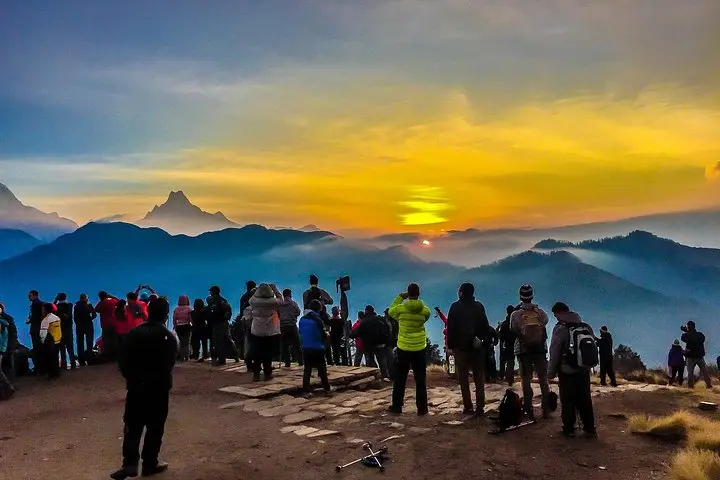
You wake before dawn in a stone-and-wood tea house on a rim of the Annapurna foothills, the air a thin, cold bite that sharpens the mountains into serrated silhouettes. Lanterns wink off as a steady stream of trekkers climbs the switchbacks toward Poon Hill; by the time you reach the viewpoint at 3,210 m the sky is already burning gold behind Annapurna and Dhaulagiri.
You wake before dawn in a stone-and-wood tea house on a rim of the Annapurna foothills, the air a thin, cold bite that sharpens the mountains into serrated silhouettes. Lanterns wink off as a steady stream of trekkers climbs the switchbacks toward Poon Hill; by the time you reach the viewpoint at 3,210 m the sky is already burning gold behind Annapurna and Dhaulagiri.
This short Ghorepani–Poon Hill route is one of the most accessible Himalayan sunrise treks. Traced by Gurung and Magar villages, the trail crosses rhododendron forests and terraced fields, and its stone steps and tea-house culture reflect decades of low-impact mountain tourism. Geologically, you’re on the southern flanks of the Greater Himalaya — weathered sedimentary and metamorphic rocks uplifted by collision — and on clear days you can see the ridgelines that mark the Annapurna Conservation Area.
Practical guide: the itinerary is typically a jeep transfer from Pokhara to Ulleri or Nayapul, followed by 3–5 hours of uphill walking to Ghorepani on day one, and an early 1–2 hour climb to Poon Hill day two before descending back to Pokhara. Expect uneven stone steps, short steep pitches, and cool nights in tea houses. Bring layers for sub-zero pre-dawn temperatures, a headlamp, and comfortable trekking boots; water purification and altitude-aware pacing are essential.
Timing: aim for clear-sky windows (spring and autumn prime) and avoid heavy-monsoon stretches. The route is beginner-friendly but respect altitude gain, trail etiquette, and local customs when visiting villages and tea houses.