THE ADVENTURE COLLECTIVE® · Independent discovery and booking for outdoor travel

Catch a predawn climb to Poon Hill and watch the Annapurnas ignite. This multi-day Ghorepani trek pairs cultural village trails and rhododendron forests with practical teahouse comforts—ideal for hikers seeking a compact Himalayan experience.
Catch a predawn climb to Poon Hill and watch the Annapurnas ignite. This multi-day Ghorepani trek pairs cultural village trails and rhododendron forests with practical teahouse comforts—ideal for hikers seeking a compact Himalayan experience.
Before dawn the ridge feels like a careful audience, and Poon Hill’s viewpoint pulls the sky open for the Annapurna range. You’ll rise well before sunrise—many groups start around 04:00—to walk the last steep switchbacks and stone steps as the first light paints Annapurna South, Hiunchuli and Machhapuchhre. The air is thin, cold, and decisive; the view answers every step.
Verified experiences and guided adventures in the surrounding area.
Operated by Travel Max Guide · Ghorepani, Gandaki Province
Before dawn the ridge feels like a careful audience, and Poon Hill’s viewpoint pulls the sky open for the Annapurna range. You’ll rise well before sunrise—many groups start around 04:00—to walk the last steep switchbacks and stone steps as the first light paints Annapurna South, Hiunchuli and Machhapuchhre. The air is thin, cold, and decisive; the view answers every step.
This route threads local history and geology: terraced farmlands and centuries-old stone stairways built by hill communities, and a Himalayan backbone hewn from uplifted marine sediments and granite intrusions. The Ghorepani–Poon Hill corridor runs through rhododendron and oak forest used and managed by Gurung villages; Ghandruk, a nearby terrace settlement, preserves Gurung culture and small home museums.
On the ground expect 4–6 hours of trekking on several days, steep stone steps (Ulleri alone is ~3,200 steps), and teahouse lodgings rather than campsites. Trails alternate dusty farm tracks, packed dirt, and slippery roots after rain. Poon Hill summit sits at about 3,210 m; Ghorepani is ~2,860 m, Tikhedhunga ~1,480 m, and Ghandruk ~1,940 m.
Practical guidance: pace yourself on stair sections, hydrate early and often, and carry cash for teahouse extras. Morning windows offer the clearest views—plan your summit push for predawn—and pack warm layers for sunrise and wind. Respect village rhythms: quiet evenings, minimal plastic, and tip guides and kitchen staff who make teahouse stays possible.
Spring (March–May) and fall (September–November) offer the clearest mountain views and stable weather; spring also brings rhododendron blooms.
The route is moderate—no technical climbing—but requires sustained walking on steep stairs and trails; a few days of prior hiking conditioning helps.
Yes—Annapurna Conservation Area Project (ACAP) permits and TIMS are typically required; guides usually arrange them as part of the package.
Teahouses provide basic twin rooms and hot meals; expect simple bedding, limited hot water, and communal dining with local cuisine.
Travel Max Guide operates guided outdoor trips and adventures with an emphasis on safety, stewardship, and memorable experiences.
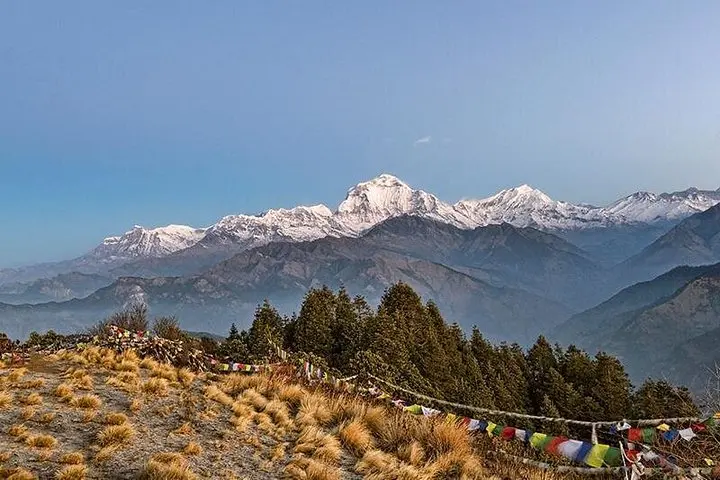
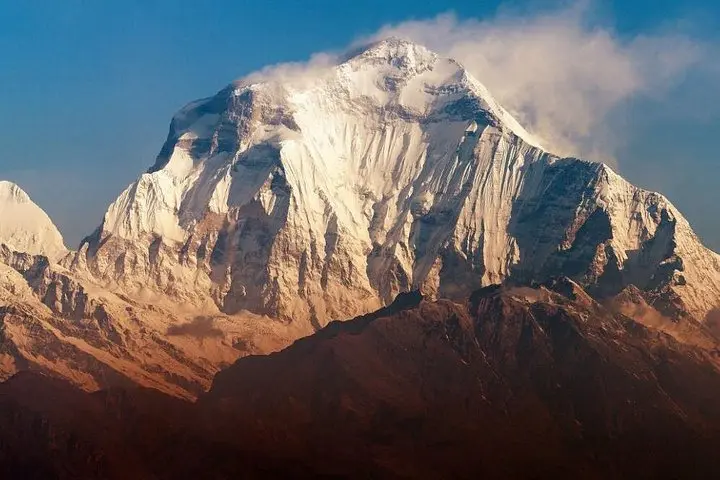

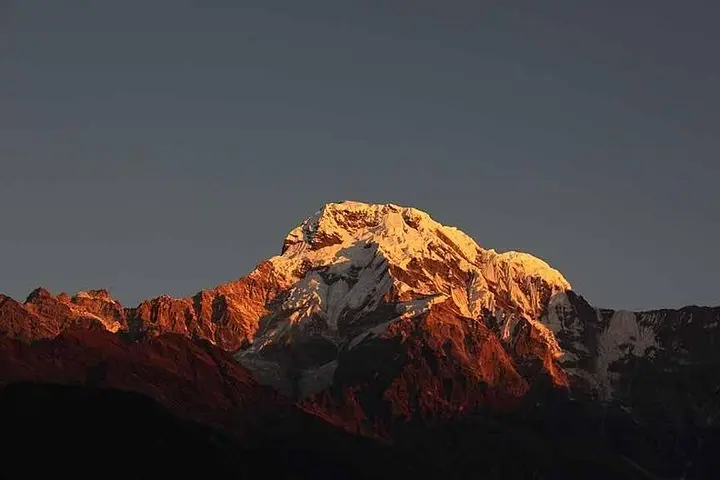
Before dawn the ridge feels like a careful audience, and Poon Hill’s viewpoint pulls the sky open for the Annapurna range. You’ll rise well before sunrise—many groups start around 04:00—to walk the last steep switchbacks and stone steps as the first light paints Annapurna South, Hiunchuli and Machhapuchhre. The air is thin, cold, and decisive; the view answers every step.
Before dawn the ridge feels like a careful audience, and Poon Hill’s viewpoint pulls the sky open for the Annapurna range. You’ll rise well before sunrise—many groups start around 04:00—to walk the last steep switchbacks and stone steps as the first light paints Annapurna South, Hiunchuli and Machhapuchhre. The air is thin, cold, and decisive; the view answers every step.
This route threads local history and geology: terraced farmlands and centuries-old stone stairways built by hill communities, and a Himalayan backbone hewn from uplifted marine sediments and granite intrusions. The Ghorepani–Poon Hill corridor runs through rhododendron and oak forest used and managed by Gurung villages; Ghandruk, a nearby terrace settlement, preserves Gurung culture and small home museums.
On the ground expect 4–6 hours of trekking on several days, steep stone steps (Ulleri alone is ~3,200 steps), and teahouse lodgings rather than campsites. Trails alternate dusty farm tracks, packed dirt, and slippery roots after rain. Poon Hill summit sits at about 3,210 m; Ghorepani is ~2,860 m, Tikhedhunga ~1,480 m, and Ghandruk ~1,940 m.
Practical guidance: pace yourself on stair sections, hydrate early and often, and carry cash for teahouse extras. Morning windows offer the clearest views—plan your summit push for predawn—and pack warm layers for sunrise and wind. Respect village rhythms: quiet evenings, minimal plastic, and tip guides and kitchen staff who make teahouse stays possible.