THE ADVENTURE COLLECTIVE® · Independent discovery and booking for outdoor travel

A compact, four-day trek from Pokhara to Poon Hill that climbs through rhododendron forests, tea-house villages and a sunrise viewpoint at 3,210 m. Expect steep stone steps, clear mountain panoramas and Gurung village culture on a moderate, well-supported route.
A compact, four-day trek from Pokhara to Poon Hill that climbs through rhododendron forests, tea-house villages and a sunrise viewpoint at 3,210 m. Expect steep stone steps, clear mountain panoramas and Gurung village culture on a moderate, well-supported route.
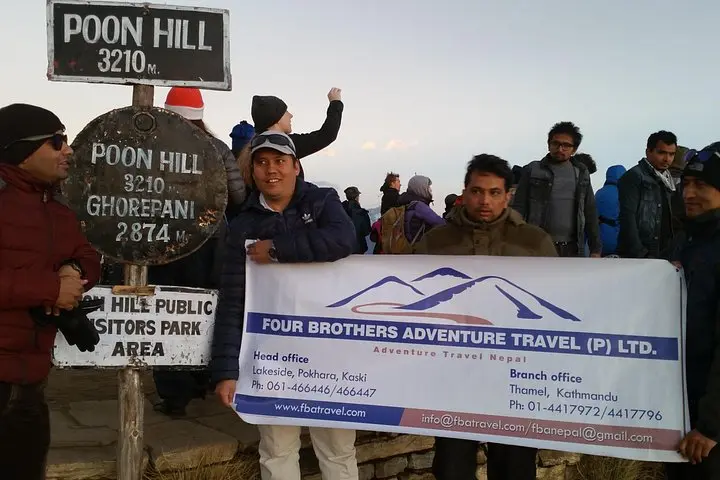
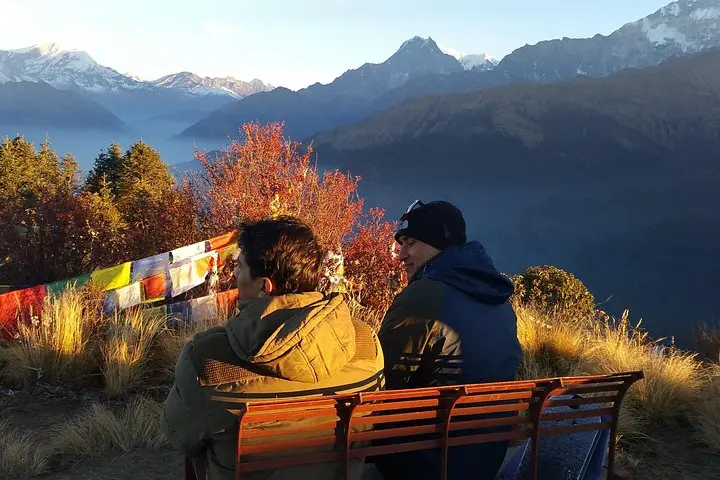
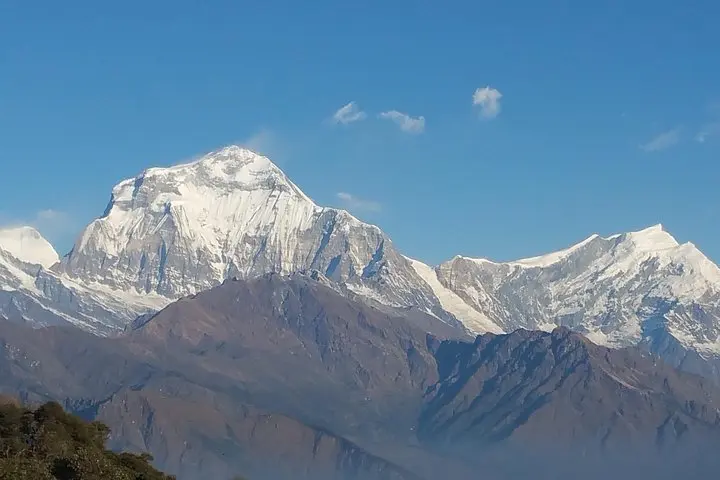
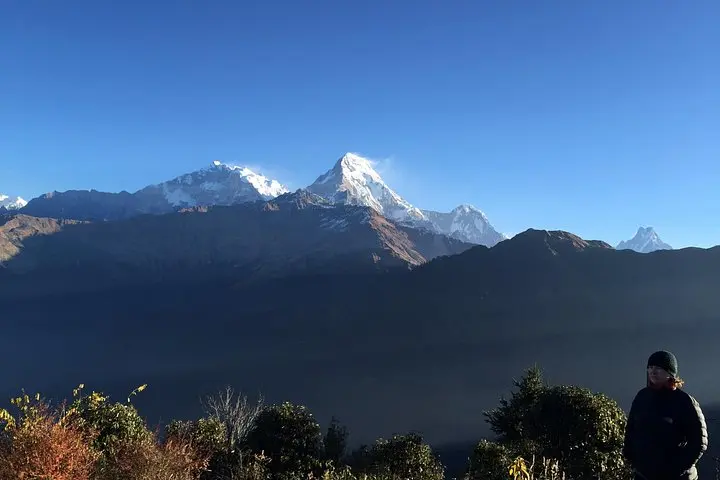
Dawn arrives cold and sharp above Ghorepani; silhouettes of Annapurna and Dhaulagiri slice the horizon while trekkers edge along a stone stairway to Poon Hill. The climb is muscular but honest — a rhythm of steps, rhododendron tunnels, and the occasional waterfall that dares you to slow down and listen.
Verified experiences and guided adventures in the surrounding area.
Operated by Swissa Adventure Travel & Treks · Pokhara, Gandaki Province
Dawn arrives cold and sharp above Ghorepani; silhouettes of Annapurna and Dhaulagiri slice the horizon while trekkers edge along a stone stairway to Poon Hill. The climb is muscular but honest — a rhythm of steps, rhododendron tunnels, and the occasional waterfall that dares you to slow down and listen.
This short trek threads through the lower Annapurna foothills, rising to Poon Hill at about 3,210 m, a viewpoint long used by local Gurung communities and now protected within the Annapurna Conservation Area (ACAP). Geology here shifts from terraced farmland to folded metamorphic rock and loose stone steps carved into steep ridgelines; seasonal rhododendron blooms color the slopes in spring while winter brings crisp air and clearer vistas.
Culturally, villages like Ulleri, Ghorepani and Ghandruk offer a window into Gurung life — stone houses, prayer flags, and tea houses that host evening conversations over dal bhat. Practically, expect 4 days of trekking with daily walking of 4–6 hours on mixed terrain: packed dirt, stone steps, and occasional steep switchbacks. Accommodation is in tea houses; permits (ACAP/TIMS) are required and usually handled by operators.
Plan for an early 4:00 AM wake-up for the sunrise at Poon Hill; bring layered insulation, waterproof footwear, and 2–3 liters of water capacity. Altitude is moderate—move slowly, hydrate, and be aware of symptoms of AMS. Transport to Nayapul from Pokhara takes roughly two hours by road; return includes a private drive back to Pokhara. When strike a steady pace the route rewards with cathedral-like mountain faces, open ridges, and the simple hospitality of highland villages.
Yes — the trek is inside the Annapurna Conservation Area; ACAP and TIMS permits are required and are commonly handled by tour operators.
Moderate fitness is sufficient: expect 3–6 hours of hiking per day with stair-like ascents and descents; prior hill-walking experience helps.
Yes, but conditions vary: spring and autumn are most popular for stable weather and views; winter is cold but clear; monsoon (summer) brings rain and leeches in lower sections.
Tea houses provide basic private or dorm-style rooms with shared bathrooms, hot meals like dal bhat, and simple heating; standards vary by village.
Swissa Adventure Travel & Treks operates guided outdoor trips and adventures with an emphasis on safety, stewardship, and memorable experiences.
Dawn arrives cold and sharp above Ghorepani; silhouettes of Annapurna and Dhaulagiri slice the horizon while trekkers edge along a stone stairway to Poon Hill. The climb is muscular but honest — a rhythm of steps, rhododendron tunnels, and the occasional waterfall that dares you to slow down and listen.
Dawn arrives cold and sharp above Ghorepani; silhouettes of Annapurna and Dhaulagiri slice the horizon while trekkers edge along a stone stairway to Poon Hill. The climb is muscular but honest — a rhythm of steps, rhododendron tunnels, and the occasional waterfall that dares you to slow down and listen.
This short trek threads through the lower Annapurna foothills, rising to Poon Hill at about 3,210 m, a viewpoint long used by local Gurung communities and now protected within the Annapurna Conservation Area (ACAP). Geology here shifts from terraced farmland to folded metamorphic rock and loose stone steps carved into steep ridgelines; seasonal rhododendron blooms color the slopes in spring while winter brings crisp air and clearer vistas.
Culturally, villages like Ulleri, Ghorepani and Ghandruk offer a window into Gurung life — stone houses, prayer flags, and tea houses that host evening conversations over dal bhat. Practically, expect 4 days of trekking with daily walking of 4–6 hours on mixed terrain: packed dirt, stone steps, and occasional steep switchbacks. Accommodation is in tea houses; permits (ACAP/TIMS) are required and usually handled by operators.
Plan for an early 4:00 AM wake-up for the sunrise at Poon Hill; bring layered insulation, waterproof footwear, and 2–3 liters of water capacity. Altitude is moderate—move slowly, hydrate, and be aware of symptoms of AMS. Transport to Nayapul from Pokhara takes roughly two hours by road; return includes a private drive back to Pokhara. When strike a steady pace the route rewards with cathedral-like mountain faces, open ridges, and the simple hospitality of highland villages.