THE ADVENTURE COLLECTIVE® · Independent discovery and booking for outdoor travel

A short, high-reward Himalayan trek from Pokhara, the Poon Hill route combines rhododendron forests, Gurung villages and a famed sunrise viewpoint over Annapurna and Dhaulagiri. Ideal for trekkers with normal fitness seeking big mountain views on a teahouse-style itinerary.
A short, high-reward Himalayan trek from Pokhara, the Poon Hill route combines rhododendron forests, Gurung villages and a famed sunrise viewpoint over Annapurna and Dhaulagiri. Ideal for trekkers with normal fitness seeking big mountain views on a teahouse-style itinerary.
Morning cool and thin, the ridge at Poon Hill pulls you awake—headlamps bobbing, breath steaming as the first band of light cuts the Annapurna range into sharp planes. The climb from Ghorepani is brisk but short; by the time the sun clears the peaks, fishtail ridgelines and snow-edged shoulders of Dhaulagiri and Annapurna stand ordered and immense.
Verified experiences and guided adventures in the surrounding area.
Operated by Nepal Hiking Adventure Company - Private Day Tours · Pokhara, Gandaki Province
Morning cool and thin, the ridge at Poon Hill pulls you awake—headlamps bobbing, breath steaming as the first band of light cuts the Annapurna range into sharp planes. The climb from Ghorepani is brisk but short; by the time the sun clears the peaks, fishtail ridgelines and snow-edged shoulders of Dhaulagiri and Annapurna stand ordered and immense.
This trail follows centuries-old mule tracks used by Gurung and Magar communities. Geologically, the route climbs from subtropical terraces through rhododendron-dense mid-elevation forest into subalpine scrub and meadows—each ecological band framing a different mountain view. Villages like Ulleri, Ghorepani and Ghandruk offer living culture: stone houses, carved wooden windows, and breakfast rooms where tea and local stories fuel the next day’s steps.
Practical planning is straightforward. Typical 4-day itineraries start with a 6–8 hour tourist-bus transfer from Kathmandu to Pokhara, then a short drive to Birethanti (≈1,000 m) to begin trekking. Expect daily ascents to 2,000–3,200 m (Ulleri ~2,070 m; Ghorepani ~2,860 m; Poon Hill ~3,210 m) and 10–15 km total walking distance over the core trekking days. Lodges (teahouses) provide basic rooms and hot meals; permits are checked at Birethanti inside the Annapurna Conservation Area.
Bring layered clothing, good boots and a light daypack; start the Poon Hill hike pre-dawn to avoid crowds and cold winds. Hydrate, move deliberately on stone steps, and allow time in Ghandruk to absorb Gurung hospitality before the downhill return to Birethanti and Pokhara.
Yes—trekkers must carry an Annapurna Conservation Area Project (ACAP) permit and TIMS card; permits are checked at Birethanti.
The summit walk is steep but short from Ghorepani (about 45–90 minutes); the overall trek is moderate with daily ascents and descents over 3–4 days.
Teahouses provide basic private rooms with shared or en-suite toilets in larger stops, and hot meals—bring small cash for extras.
Poon Hill reaches ~3,210 m—mild symptoms can occur; pace yourself, stay hydrated and descend if symptoms worsen.
Nepal Hiking Adventure Company - Private Day Tours operates guided outdoor trips and adventures with an emphasis on safety, stewardship, and memorable experiences.
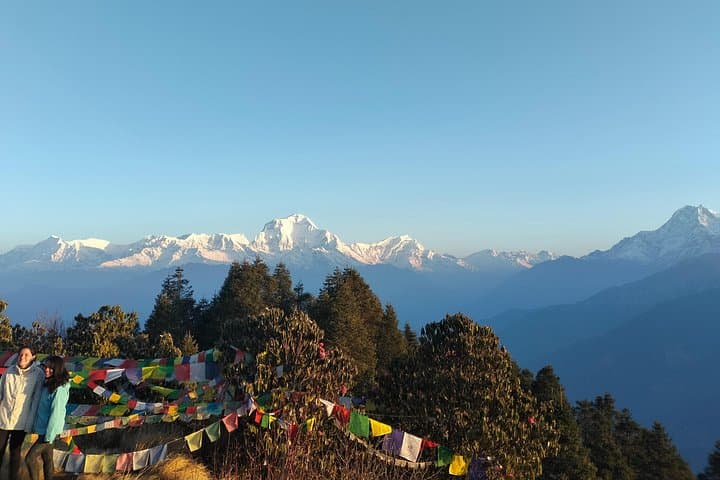


Morning cool and thin, the ridge at Poon Hill pulls you awake—headlamps bobbing, breath steaming as the first band of light cuts the Annapurna range into sharp planes. The climb from Ghorepani is brisk but short; by the time the sun clears the peaks, fishtail ridgelines and snow-edged shoulders of Dhaulagiri and Annapurna stand ordered and immense.
Morning cool and thin, the ridge at Poon Hill pulls you awake—headlamps bobbing, breath steaming as the first band of light cuts the Annapurna range into sharp planes. The climb from Ghorepani is brisk but short; by the time the sun clears the peaks, fishtail ridgelines and snow-edged shoulders of Dhaulagiri and Annapurna stand ordered and immense.
This trail follows centuries-old mule tracks used by Gurung and Magar communities. Geologically, the route climbs from subtropical terraces through rhododendron-dense mid-elevation forest into subalpine scrub and meadows—each ecological band framing a different mountain view. Villages like Ulleri, Ghorepani and Ghandruk offer living culture: stone houses, carved wooden windows, and breakfast rooms where tea and local stories fuel the next day’s steps.
Practical planning is straightforward. Typical 4-day itineraries start with a 6–8 hour tourist-bus transfer from Kathmandu to Pokhara, then a short drive to Birethanti (≈1,000 m) to begin trekking. Expect daily ascents to 2,000–3,200 m (Ulleri ~2,070 m; Ghorepani ~2,860 m; Poon Hill ~3,210 m) and 10–15 km total walking distance over the core trekking days. Lodges (teahouses) provide basic rooms and hot meals; permits are checked at Birethanti inside the Annapurna Conservation Area.
Bring layered clothing, good boots and a light daypack; start the Poon Hill hike pre-dawn to avoid crowds and cold winds. Hydrate, move deliberately on stone steps, and allow time in Ghandruk to absorb Gurung hospitality before the downhill return to Birethanti and Pokhara.