THE ADVENTURE COLLECTIVE® · Independent discovery and booking for outdoor travel

A compact 4-day trek from Pokhara to Poon Hill delivers a high-reward sunrise over the Annapurna massif, rhododendron forests and authentic Gurung villages. Expect steep stone steps, basic guesthouses and spectacular mountain panoramas.
A compact 4-day trek from Pokhara to Poon Hill delivers a high-reward sunrise over the Annapurna massif, rhododendron forests and authentic Gurung villages. Expect steep stone steps, basic guesthouses and spectacular mountain panoramas.
Before dawn the stairs up from Ghorepani feel like a string of small lamps leading toward the sky. Headlamps wink as hikers climb through quiet rhododendron and pine, and then the ridge opens to a raw, crystalline sunrise that rims the Annapurna range — Dhaulagiri, Annapurna South and Hiunchuli pushing above the cloud line.
Verified experiences and guided adventures in the surrounding area.
Operated by Couch Adventure Nepal (CAN) · Pokhara, Gandaki Province
Before dawn the stairs up from Ghorepani feel like a string of small lamps leading toward the sky. Headlamps wink as hikers climb through quiet rhododendron and pine, and then the ridge opens to a raw, crystalline sunrise that rims the Annapurna range — Dhaulagiri, Annapurna South and Hiunchuli pushing above the cloud line.
The route traces traditional trade lanes and Gurung settlements carved into terraced hills. Geologically the Annapurna massif is young, steep and deeply incised; the trail drops and rises across stone stairways, narrow ridgelines and rivers crossed by suspension bridges. Local culture is visible in Ghandruk’s stone houses and chhortens; mules and villagers still move goods where roads end.
Practically: the itinerary moves from Pokhara (≈820 m) by road to Nayapul then up to Ulleri (≈2,100 m), Ghorepani (≈2,880 m) and Poon Hill (≈3,210 m). Expect 3–6 hours of hiking most days, steep ascents on stone steps, and basic guesthouse accommodation with simple meals and hot showers where available.
Bring layers for pre-dawn cold, a reliable pair of trekking boots for rocky trails, and a headlamp for early starts. Acclimatize by keeping pace and drinking water; TIMS and local permits are required. Sunrise windows are calmest in clear weather—winter offers the sharpest views but colder nights; spring gives rhododendron blooms. Respect village routines, pack out waste where possible, and allow extra time for slippery sections after rain.
Yes — the trek requires an Annapurna Conservation Area Permit (ACAP) and a TIMS card; many operators include these with the trip.
Technically easy but physically demanding: steep stone steps can make short days feel intense; allow for 30–90 minutes for the final ascent from Ghorepani depending on pace.
Basic family-run guesthouses with twin rooms, shared bathrooms and simple Nepali meals are standard; hot showers may be available for a fee.
Spring (March–May) for rhododendron blooms and autumn (Sept–Nov) for the clearest mountain views; winter offers crisp visibility but colder nights.
Couch Adventure Nepal (CAN) operates guided outdoor trips and adventures with an emphasis on safety, stewardship, and memorable experiences.
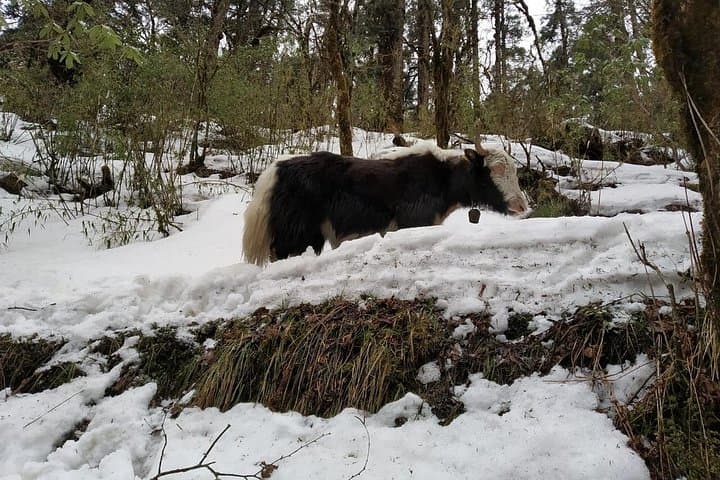


Before dawn the stairs up from Ghorepani feel like a string of small lamps leading toward the sky. Headlamps wink as hikers climb through quiet rhododendron and pine, and then the ridge opens to a raw, crystalline sunrise that rims the Annapurna range — Dhaulagiri, Annapurna South and Hiunchuli pushing above the cloud line.
Before dawn the stairs up from Ghorepani feel like a string of small lamps leading toward the sky. Headlamps wink as hikers climb through quiet rhododendron and pine, and then the ridge opens to a raw, crystalline sunrise that rims the Annapurna range — Dhaulagiri, Annapurna South and Hiunchuli pushing above the cloud line.
The route traces traditional trade lanes and Gurung settlements carved into terraced hills. Geologically the Annapurna massif is young, steep and deeply incised; the trail drops and rises across stone stairways, narrow ridgelines and rivers crossed by suspension bridges. Local culture is visible in Ghandruk’s stone houses and chhortens; mules and villagers still move goods where roads end.
Practically: the itinerary moves from Pokhara (≈820 m) by road to Nayapul then up to Ulleri (≈2,100 m), Ghorepani (≈2,880 m) and Poon Hill (≈3,210 m). Expect 3–6 hours of hiking most days, steep ascents on stone steps, and basic guesthouse accommodation with simple meals and hot showers where available.
Bring layers for pre-dawn cold, a reliable pair of trekking boots for rocky trails, and a headlamp for early starts. Acclimatize by keeping pace and drinking water; TIMS and local permits are required. Sunrise windows are calmest in clear weather—winter offers the sharpest views but colder nights; spring gives rhododendron blooms. Respect village routines, pack out waste where possible, and allow extra time for slippery sections after rain.