THE ADVENTURE COLLECTIVE® · Independent discovery and booking for outdoor travel

Explore Port Elizabeth on a private two-hour walking tour that visits the Campanile, City Hall, Donkin Reserve, Fort Frederick and St George’s Park. Ideal for history lovers and leisure walkers who want an efficient, interpretive look at the city’s civic heart.
Explore Port Elizabeth on a private two-hour walking tour that visits the Campanile, City Hall, Donkin Reserve, Fort Frederick and St George’s Park. Ideal for history lovers and leisure walkers who want an efficient, interpretive look at the city’s civic heart.
A cool Atlantic breeze lifts off Algoa Bay as the guide leads you away from the traffic and into a different Port Elizabeth — one of stone monuments, public parks and hard-won views. The Campanile rises ahead, a brick column you can climb for a quick sweep of the city's geometry; below, streets open into a Victorian City Hall and historic squares that have watched generations pass.
Verified experiences and guided adventures in the surrounding area.
Operated by Opatrip South Africa · Port Elizabeth, Eastern Cape
A cool Atlantic breeze lifts off Algoa Bay as the guide leads you away from the traffic and into a different Port Elizabeth — one of stone monuments, public parks and hard-won views. The Campanile rises ahead, a brick column you can climb for a quick sweep of the city's geometry; below, streets open into a Victorian City Hall and historic squares that have watched generations pass.
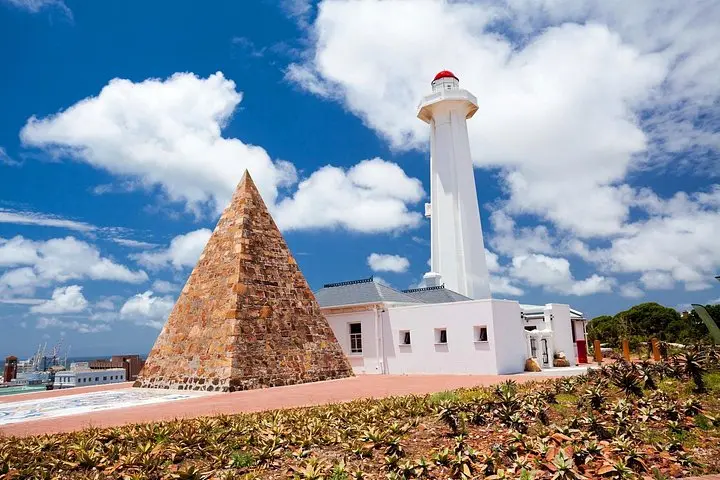
This compact, two-hour walk threads colonial history with civic life: Fort Frederick’s 18th‑century batteries watch the harbor, the Donkin Reserve shelters a small lighthouse and public art, and St George’s Park offers lawns, bandstands and botanical variety. Geology is understated here — coastal shale and sandstone cliffs give way to reclaimed urban plots — but the shoreline and harbor shaped the town’s growth and strategic value.
Culturally the route traces the 1820 settler legacy and later Victorian civic pride, visible in plaques, memorials and the city grid. Local insights arrive in small things: tilework on a bank, a market stall selling biltong, a gardener pruning roses.
Practical guidance: this is an easy, mostly flat walk on paved streets and park paths. Expect roughly 2 hours of walking with several short stops; wear sturdy walking shoes, bring a sun hat and water, and aim for morning or late afternoon to avoid peak sun. Public transport is nearby and the tour is private, so pace and focus can be adapted. Leave space for a slow cup of coffee afterward — the city rewards a relaxed finish.
The tour runs about 2 hours and covers a compact central route—expect 2–3 kilometers depending on detours and pacing.
No general admission is required for the viewpoints included on this walking route, though special exhibits may have fees—your guide will advise on-site.
Yes—it's rated easy. The private format allows the guide to adjust pace and stops for families and older participants.
Port Elizabeth has local bus and taxi services; most central stops are within a short walk of the Donkin Reserve/Campanile area—confirm the specific meeting point on booking.
Opatrip South Africa operates guided outdoor trips and adventures with an emphasis on safety, stewardship, and memorable experiences.
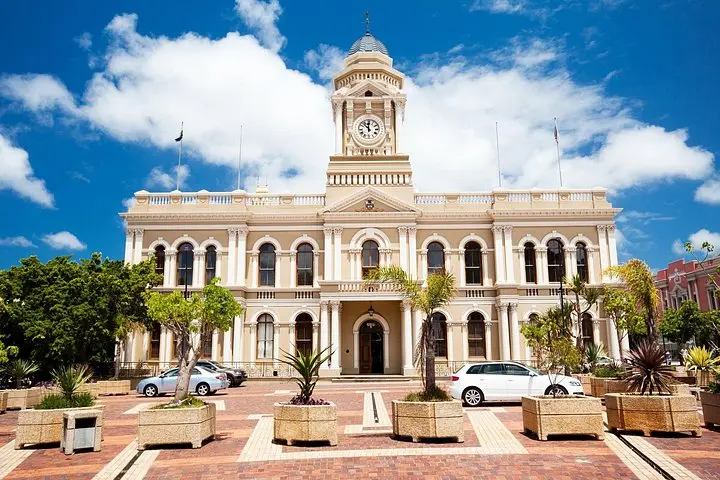


A cool Atlantic breeze lifts off Algoa Bay as the guide leads you away from the traffic and into a different Port Elizabeth — one of stone monuments, public parks and hard-won views. The Campanile rises ahead, a brick column you can climb for a quick sweep of the city's geometry; below, streets open into a Victorian City Hall and historic squares that have watched generations pass.
A cool Atlantic breeze lifts off Algoa Bay as the guide leads you away from the traffic and into a different Port Elizabeth — one of stone monuments, public parks and hard-won views. The Campanile rises ahead, a brick column you can climb for a quick sweep of the city's geometry; below, streets open into a Victorian City Hall and historic squares that have watched generations pass.
This compact, two-hour walk threads colonial history with civic life: Fort Frederick’s 18th‑century batteries watch the harbor, the Donkin Reserve shelters a small lighthouse and public art, and St George’s Park offers lawns, bandstands and botanical variety. Geology is understated here — coastal shale and sandstone cliffs give way to reclaimed urban plots — but the shoreline and harbor shaped the town’s growth and strategic value.
Culturally the route traces the 1820 settler legacy and later Victorian civic pride, visible in plaques, memorials and the city grid. Local insights arrive in small things: tilework on a bank, a market stall selling biltong, a gardener pruning roses.
Practical guidance: this is an easy, mostly flat walk on paved streets and park paths. Expect roughly 2 hours of walking with several short stops; wear sturdy walking shoes, bring a sun hat and water, and aim for morning or late afternoon to avoid peak sun. Public transport is nearby and the tour is private, so pace and focus can be adapted. Leave space for a slow cup of coffee afterward — the city rewards a relaxed finish.