THE ADVENTURE COLLECTIVE® · Independent discovery and booking for outdoor travel

Spend a day around Port Vila sampling village life, jumping from a rope swing into a natural blue lagoon and cooling off beneath Eden’s waterfall. This guided tour combines local history, hands-on cultural demonstrations and straightforward swimming stops—ideal for travelers who want one compact, insightful island day.
Spend a day around Port Vila sampling village life, jumping from a rope swing into a natural blue lagoon and cooling off beneath Eden’s waterfall. This guided tour combines local history, hands-on cultural demonstrations and straightforward swimming stops—ideal for travelers who want one compact, insightful island day.
You step off a shaded minibus and the tempo of Port Vila slackens into something the guides politely call “island time.” The first stop is a bushed clearing at Teouma, about 12 km from town—a village where ceremonial life still commands attention. Men in pandanus skirts and painted faces move with economy and intent; the chief meets visitors with a formal welcome while warriors brandish clubs, spears and bows. That opening ceremony is less spectacle and more social shorthand: it maps relationships—who belongs, who tends the land, and which stories are kept alive.
Verified experiences and guided adventures in the surrounding area.
Operated by Yumi Tours & Transfers Vanuatu · Port Vila, Shefa Province
You step off a shaded minibus and the tempo of Port Vila slackens into something the guides politely call “island time.” The first stop is a bushed clearing at Teouma, about 12 km from town—a village where ceremonial life still commands attention. Men in pandanus skirts and painted faces move with economy and intent; the chief meets visitors with a formal welcome while warriors brandish clubs, spears and bows. That opening ceremony is less spectacle and more social shorthand: it maps relationships—who belongs, who tends the land, and which stories are kept alive.
The tour threads local history, lived geology and present-day livelihoods. Teouma sits on volcanic soils that slope toward reef and lagoon; the land’s fertility and the ocean’s yield shaped ancestral diets and rites. Guides narrate blunt, human histories—of Lapita pottery traces nearby, and of past conflicts, including frank local accounts of cannibalism that are presented as part of oral law and 19th-century change rather than a curiosity to gawk at.
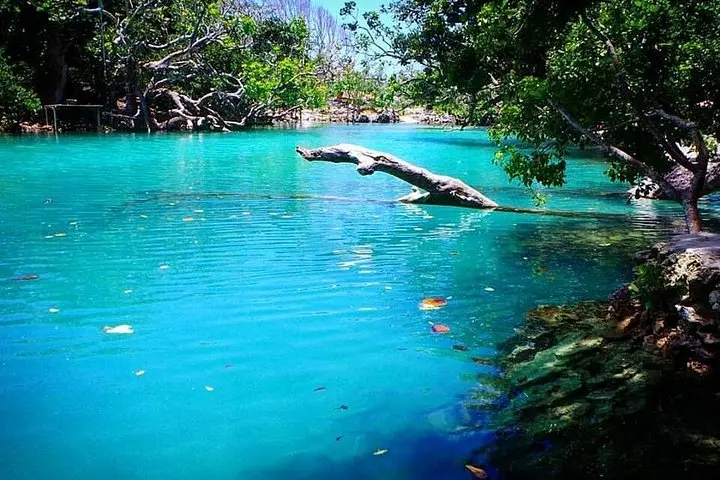
After the village, the minibus bends toward fresh water where the Blue Lagoon mixes salt and spring water into a luminous green-blue pool. The rope swing—a five-meter arc over the water—invites a particular kind of reckoning: gravity, risk and laughter. Eden on the River follows, a short walk to a cascade that drops into a deep, cool plunge pool where lunch is served riverside; the water hums and the tropical forest leans close.
Culturally, the day balances demonstration and exchange. Artisans may show shell-weaving and traditional fishing techniques; vendors at the wharf market sell kava and carved goods that are useful souvenirs and direct income for families. The guide’s role is practical—translating, ensuring respectful behavior, and keeping the schedule tight enough to return you to your hotel or port on time.
Practical guidance: this is a half-day to full-day outing (5–6 hours) with moderate walking on uneven village paths and short swims. Expect humidity, sudden showers, and sun that reflects off water with surprising intensity. Bring reef-safe sunscreen, secure water shoes for the lagoon’s rocky entry, and a lightweight dry bag for phones. Respect the chief’s rules: photography of ceremonies is often allowed only with permission, and modest dress is expected in village areas.
For travelers who want a single experience that mixes hands-on cultural exchange, safe adventure swimming and a waterfall picnic, this Yumi Tours itinerary is efficient and grounded—equal parts local narrative and accessible outdoor play.
The tour lasts roughly 5–6 hours; pick-up is about 30 minutes before departure and you should be returned to town or the cruise pier the same afternoon.
Yes—both sites are popular swimming spots but expect uneven bottoms and occasional currents; use caution with children and non-swimmers and follow the guide’s instructions.
Often you must ask permission—guides will alert you when photos are allowed; some rituals are private or sacred and should not be photographed.
Lunch is included; inform the operator of dietary restrictions at booking so they can arrange alternatives where possible.
Yes—hotel lobby pick-up and port pick-up are provided; confirm your exact pick-up point when booking and be ready 30 minutes before departure.
Moderate—participants should be comfortable walking on unpaved village paths, swimming short distances, and climbing short inclines at waterfall viewpoints.
Yumi Tours & Transfers Vanuatu operates guided outdoor trips and adventures with an emphasis on safety, stewardship, and memorable experiences.
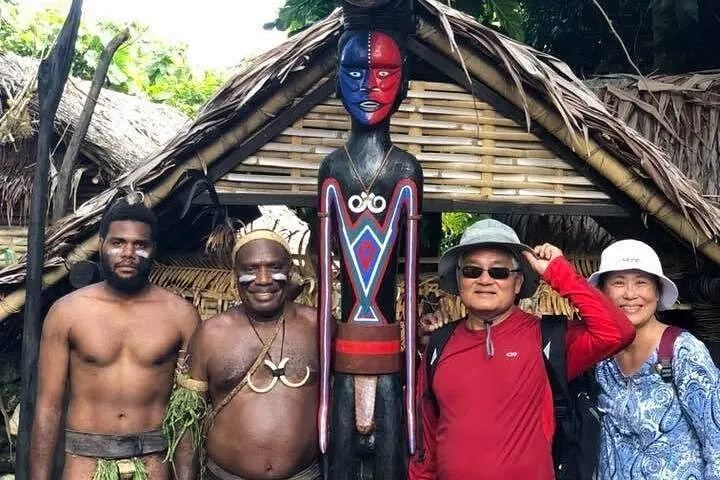
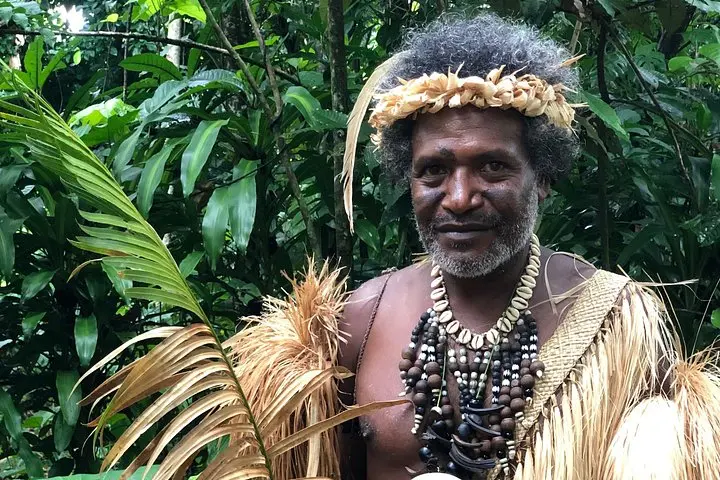
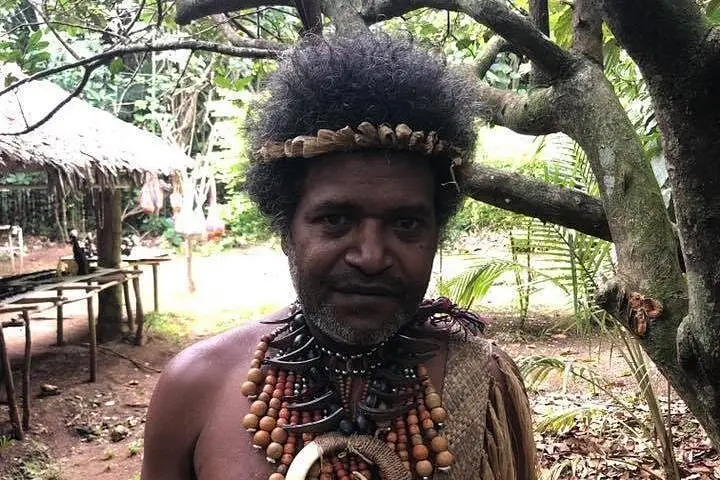
You step off a shaded minibus and the tempo of Port Vila slackens into something the guides politely call “island time.” The first stop is a bushed clearing at Teouma, about 12 km from town—a village where ceremonial life still commands attention. Men in pandanus skirts and painted faces move with economy and intent; the chief meets visitors with a formal welcome while warriors brandish clubs, spears and bows. That opening ceremony is less spectacle and more social shorthand: it maps relationships—who belongs, who tends the land, and which stories are kept alive.
You step off a shaded minibus and the tempo of Port Vila slackens into something the guides politely call “island time.” The first stop is a bushed clearing at Teouma, about 12 km from town—a village where ceremonial life still commands attention. Men in pandanus skirts and painted faces move with economy and intent; the chief meets visitors with a formal welcome while warriors brandish clubs, spears and bows. That opening ceremony is less spectacle and more social shorthand: it maps relationships—who belongs, who tends the land, and which stories are kept alive.
The tour threads local history, lived geology and present-day livelihoods. Teouma sits on volcanic soils that slope toward reef and lagoon; the land’s fertility and the ocean’s yield shaped ancestral diets and rites. Guides narrate blunt, human histories—of Lapita pottery traces nearby, and of past conflicts, including frank local accounts of cannibalism that are presented as part of oral law and 19th-century change rather than a curiosity to gawk at.
After the village, the minibus bends toward fresh water where the Blue Lagoon mixes salt and spring water into a luminous green-blue pool. The rope swing—a five-meter arc over the water—invites a particular kind of reckoning: gravity, risk and laughter. Eden on the River follows, a short walk to a cascade that drops into a deep, cool plunge pool where lunch is served riverside; the water hums and the tropical forest leans close.
Culturally, the day balances demonstration and exchange. Artisans may show shell-weaving and traditional fishing techniques; vendors at the wharf market sell kava and carved goods that are useful souvenirs and direct income for families. The guide’s role is practical—translating, ensuring respectful behavior, and keeping the schedule tight enough to return you to your hotel or port on time.
Practical guidance: this is a half-day to full-day outing (5–6 hours) with moderate walking on uneven village paths and short swims. Expect humidity, sudden showers, and sun that reflects off water with surprising intensity. Bring reef-safe sunscreen, secure water shoes for the lagoon’s rocky entry, and a lightweight dry bag for phones. Respect the chief’s rules: photography of ceremonies is often allowed only with permission, and modest dress is expected in village areas.
For travelers who want a single experience that mixes hands-on cultural exchange, safe adventure swimming and a waterfall picnic, this Yumi Tours itinerary is efficient and grounded—equal parts local narrative and accessible outdoor play.