THE ADVENTURE COLLECTIVE® · Independent discovery and booking for outdoor travel

Board at Portimão Marina for a 2.5-hour trip that combines dolphin and whale watching with a circumnavigation of Benagil Cave, led by a multilingual marine biologist. Expect close encounters, geological theater, and clear guidance on when and how the vessel may approach the cave.
Board at Portimão Marina for a 2.5-hour trip that combines dolphin and whale watching with a circumnavigation of Benagil Cave, led by a multilingual marine biologist. Expect close encounters, geological theater, and clear guidance on when and how the vessel may approach the cave.
The engine hums, gulls wheel overhead and the Algarve unspools in layered bands of blue as the boat slips from Portimão Marina. Passengers lean on the rail, breath held, as a pair of bottlenose dolphins arcs from the wake—water daring the sky—and a multilingual marine biologist steps forward with a small, precise map of local currents. The tone is part natural-history lecture, part sea-spray storytelling: an efficient brief before the coast opens into a sequence of honeycombed cliffs and the low, cathedral mouth of Benagil.
Verified experiences and guided adventures in the surrounding area.
Operated by 5emotionsalgarve · Portimão, Faro
The engine hums, gulls wheel overhead and the Algarve unspools in layered bands of blue as the boat slips from Portimão Marina. Passengers lean on the rail, breath held, as a pair of bottlenose dolphins arcs from the wake—water daring the sky—and a multilingual marine biologist steps forward with a small, precise map of local currents. The tone is part natural-history lecture, part sea-spray storytelling: an efficient brief before the coast opens into a sequence of honeycombed cliffs and the low, cathedral mouth of Benagil.
Geology here reads like a slow-motion performance. Soft Miocene limestones and marls have been scored by Atlantic fetch for millennia; caves and arches are not decoration but process, carved where joints in the rock invited waves to work. Human history runs parallel: from small sardine boats and seasonal fishermen to the modern tourism fleet, the Algarve’s shoreline has long been a place of work and wonder. Local captains respect that history and the regulations that now limit how long vessels may linger at sensitive sites.
The trip deliberately balances spectacle with science. Onboard, the marine biologist identifies species—common and striped dolphins are frequent, bottlenose are typical show-stealers—and points out seabirds and subtle markers of upwelling. There’s a roughly 95% chance of spotting cetaceans on good days, but guides are candid about limits: cave entry and swimming stops depend on sea state and permissions from the maritime police.
Practicalities are direct: check in at the 5emotionsalgarve kiosk in Portimão 30 minutes before departure, dress in layers (wind and spray can make mid-journey temperatures feel several degrees cooler), and bring motion-sickness remedies if you’re sensitive. The tour lasts about 2.5 hours; the vessel is wheelchair accessible and family-friendly, but not recommended for pregnant travelers or those with serious spinal or cardiac problems. Photography is best from the bow at calm moments or as the boat eases toward Benagil’s mouth—remember to protect equipment from salt spray.
This is not a wild, unrestricted encounter: conservation-minded operators enforce distances, prohibit disembarking inside the cave, and may cancel for safety or insufficient bookings. Take the biologist’s questions as a guide to reading the sea—currents, bird behavior, and pod dynamics—and you’ll go home with images, facts, and the practical appreciation that the Algarve’s cliffs keep giving, patiently shaping the next moment of discovery.
Entry is allowed only if sea conditions and marine police regulations permit; even then the vessel may remain inside only briefly and no disembarking is permitted.
Operators report about a 95% chance of cetacean sightings overall, but sightings depend on weather, season, and animal movements.
The vessel is wheelchair accessible and suitable for families, but infants must sit on laps; those with severe mobility restrictions should consult the operator in advance.
Swimming is only allowed when sea conditions are safe and the crew confirms a stop; it is not guaranteed and is weather-dependent.
Layers, a windproof jacket, non-slip shoes, sunscreen, and a camera with protection from salt spray; bring seasickness meds if needed.
Tours may be canceled or rescheduled for safety or insufficient bookings; full refunds are typically available if canceled at least 24 hours before departure.
5emotionsalgarve operates guided outdoor trips and adventures with an emphasis on safety, stewardship, and memorable experiences.
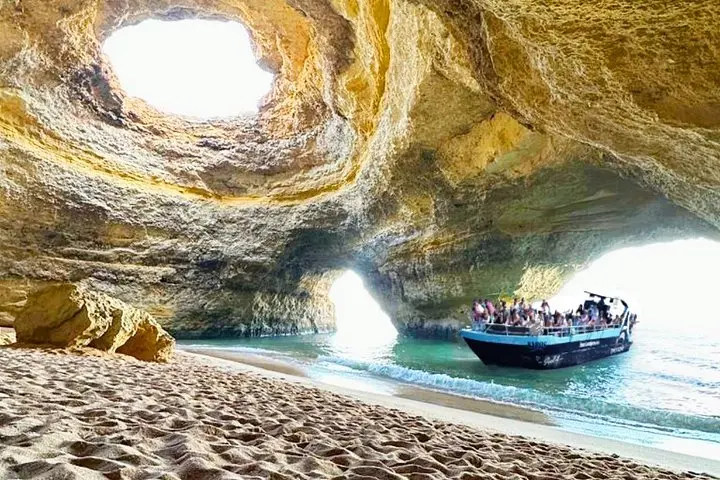
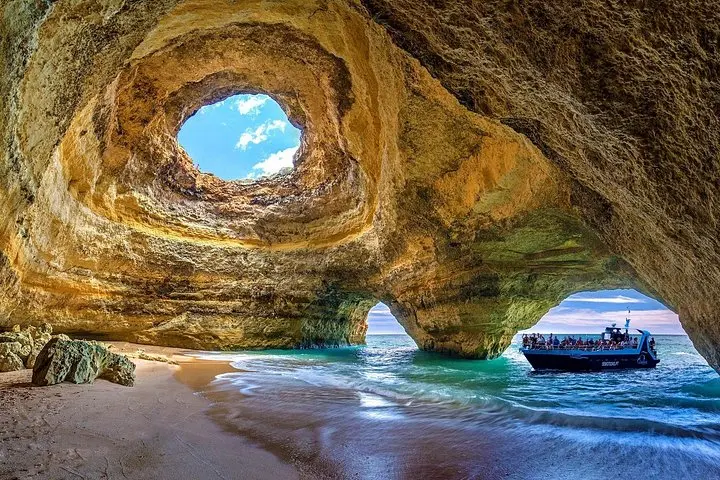
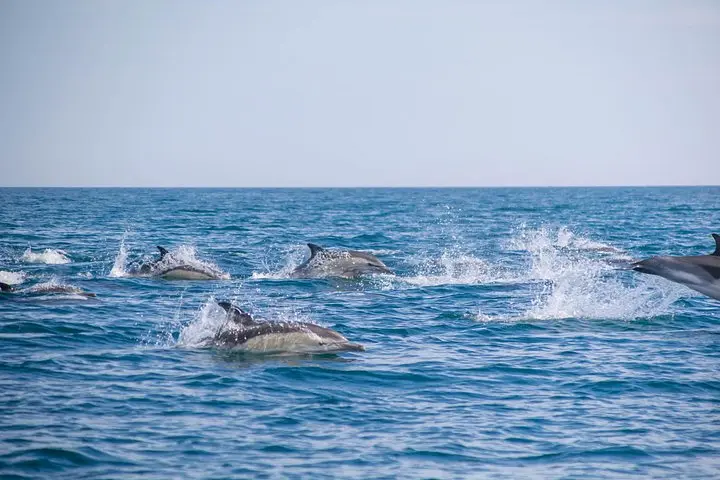
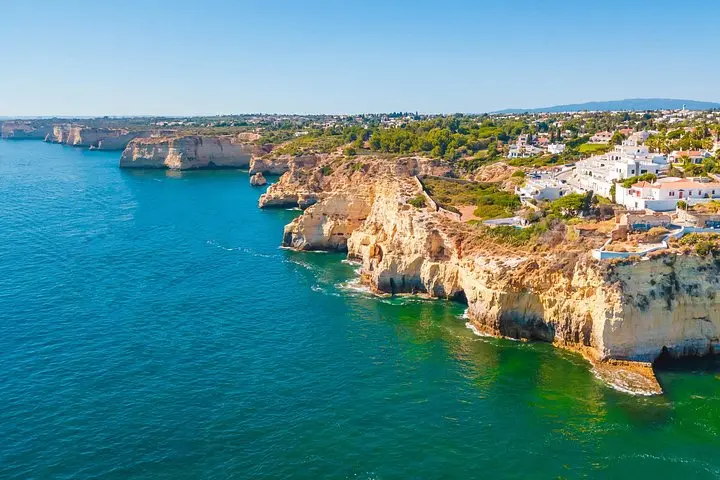
The engine hums, gulls wheel overhead and the Algarve unspools in layered bands of blue as the boat slips from Portimão Marina. Passengers lean on the rail, breath held, as a pair of bottlenose dolphins arcs from the wake—water daring the sky—and a multilingual marine biologist steps forward with a small, precise map of local currents. The tone is part natural-history lecture, part sea-spray storytelling: an efficient brief before the coast opens into a sequence of honeycombed cliffs and the low, cathedral mouth of Benagil.
The engine hums, gulls wheel overhead and the Algarve unspools in layered bands of blue as the boat slips from Portimão Marina. Passengers lean on the rail, breath held, as a pair of bottlenose dolphins arcs from the wake—water daring the sky—and a multilingual marine biologist steps forward with a small, precise map of local currents. The tone is part natural-history lecture, part sea-spray storytelling: an efficient brief before the coast opens into a sequence of honeycombed cliffs and the low, cathedral mouth of Benagil.
Geology here reads like a slow-motion performance. Soft Miocene limestones and marls have been scored by Atlantic fetch for millennia; caves and arches are not decoration but process, carved where joints in the rock invited waves to work. Human history runs parallel: from small sardine boats and seasonal fishermen to the modern tourism fleet, the Algarve’s shoreline has long been a place of work and wonder. Local captains respect that history and the regulations that now limit how long vessels may linger at sensitive sites.
The trip deliberately balances spectacle with science. Onboard, the marine biologist identifies species—common and striped dolphins are frequent, bottlenose are typical show-stealers—and points out seabirds and subtle markers of upwelling. There’s a roughly 95% chance of spotting cetaceans on good days, but guides are candid about limits: cave entry and swimming stops depend on sea state and permissions from the maritime police.
Practicalities are direct: check in at the 5emotionsalgarve kiosk in Portimão 30 minutes before departure, dress in layers (wind and spray can make mid-journey temperatures feel several degrees cooler), and bring motion-sickness remedies if you’re sensitive. The tour lasts about 2.5 hours; the vessel is wheelchair accessible and family-friendly, but not recommended for pregnant travelers or those with serious spinal or cardiac problems. Photography is best from the bow at calm moments or as the boat eases toward Benagil’s mouth—remember to protect equipment from salt spray.
This is not a wild, unrestricted encounter: conservation-minded operators enforce distances, prohibit disembarking inside the cave, and may cancel for safety or insufficient bookings. Take the biologist’s questions as a guide to reading the sea—currents, bird behavior, and pod dynamics—and you’ll go home with images, facts, and the practical appreciation that the Algarve’s cliffs keep giving, patiently shaping the next moment of discovery.