THE ADVENTURE COLLECTIVE® · Independent discovery and booking for outdoor travel

Glide beneath Porto’s six bridges on a two-hour intimate cruise that traces the Douro from Ribeira to the river mouth. Expect close-up views of Dom Luís I, wine lodges, and a skipper’s local insight—ideal for photographers and first-time visitors.
Glide beneath Porto’s six bridges on a two-hour intimate cruise that traces the Douro from Ribeira to the river mouth. Expect close-up views of Dom Luís I, wine lodges, and a skipper’s local insight—ideal for photographers and first-time visitors.
Boarding at the Ribeira, the boat slips away from cobbled streets and the city exhales salt and iron from the river. Low buildings give way to the rise of the Dom Luís I bridge, its iron arches cutting a deliberate silhouette as the skipper steers past merchant façades and wine lodges. The Douro dares you forward; currents pull the wake toward the Atlantic and the city composes itself along both banks.
Verified experiences and guided adventures in the surrounding area.
Operated by Opo Boat Tours · Porto, Porto
Boarding at the Ribeira, the boat slips away from cobbled streets and the city exhales salt and iron from the river. Low buildings give way to the rise of the Dom Luís I bridge, its iron arches cutting a deliberate silhouette as the skipper steers past merchant façades and wine lodges. The Douro dares you forward; currents pull the wake toward the Atlantic and the city composes itself along both banks.
Porto’s six-bridge run is a compact lesson in industrial-era engineering and maritime trade: from 19th-century ironwork to mid-20th-century concrete spans, each structure marks a chapter in the city’s growth and the Douro’s role carrying port wine from vineyard terraces to the sea. Geologically, the river mouth broadens into an estuary where fluvial deposits meet Atlantic tides, creating shifting sandbars and a brackish edge alive with seabirds.
Culturally the route frames Porto’s wine culture — Ribeira warehouses and Gaia cellars — while the skipper’s commentary ties architecture to local stories. Expect photos at postcard viewpoints, brief stops for narration, and a relaxed pace that suits families and photographers.
Practical guidance: bring wind-resistant layers and sunscreen; light can change fast over the water. Morning and late-afternoon departures offer lower glare and softer light for the bridges. The vessel is small and intimate—motion-sickness considerations apply—and safety briefings and life jackets are provided. Plan transport to/from central Porto or Gaia; public transit and taxis serve the quays. This two-hour cruise is an efficient, scenic primer on Porto’s riverine identity and a straightforward way to see the city from water level.
The scheduled cruise lasts about two hours and covers the six bridges from Ribeira to the river mouth and back.
Yes; the tour is rated easy and offers infant seats. Standard safety briefings apply and life jackets are available.
Yes; the trip includes in-person guides speaking English, Spanish, and Portuguese according to the listing.
Tours may be canceled if conditions are unsafe; you can get a full refund if you cancel or if the operator cancels at least 24 hours prior, per the booking policy.
Opo Boat Tours operates guided outdoor trips and adventures with an emphasis on safety, stewardship, and memorable experiences.

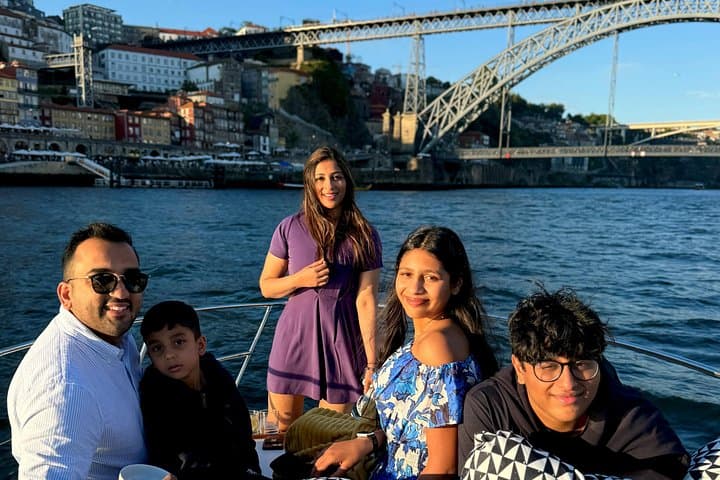


Boarding at the Ribeira, the boat slips away from cobbled streets and the city exhales salt and iron from the river. Low buildings give way to the rise of the Dom Luís I bridge, its iron arches cutting a deliberate silhouette as the skipper steers past merchant façades and wine lodges. The Douro dares you forward; currents pull the wake toward the Atlantic and the city composes itself along both banks.
Boarding at the Ribeira, the boat slips away from cobbled streets and the city exhales salt and iron from the river. Low buildings give way to the rise of the Dom Luís I bridge, its iron arches cutting a deliberate silhouette as the skipper steers past merchant façades and wine lodges. The Douro dares you forward; currents pull the wake toward the Atlantic and the city composes itself along both banks.
Porto’s six-bridge run is a compact lesson in industrial-era engineering and maritime trade: from 19th-century ironwork to mid-20th-century concrete spans, each structure marks a chapter in the city’s growth and the Douro’s role carrying port wine from vineyard terraces to the sea. Geologically, the river mouth broadens into an estuary where fluvial deposits meet Atlantic tides, creating shifting sandbars and a brackish edge alive with seabirds.
Culturally the route frames Porto’s wine culture — Ribeira warehouses and Gaia cellars — while the skipper’s commentary ties architecture to local stories. Expect photos at postcard viewpoints, brief stops for narration, and a relaxed pace that suits families and photographers.
Practical guidance: bring wind-resistant layers and sunscreen; light can change fast over the water. Morning and late-afternoon departures offer lower glare and softer light for the bridges. The vessel is small and intimate—motion-sickness considerations apply—and safety briefings and life jackets are provided. Plan transport to/from central Porto or Gaia; public transit and taxis serve the quays. This two-hour cruise is an efficient, scenic primer on Porto’s riverine identity and a straightforward way to see the city from water level.