THE ADVENTURE COLLECTIVE® · Independent discovery and booking for outdoor travel

Glide through narrow channels framed by stilted mangroves on a Pottuvil Lagoon safari. This 2–3 hour eco-tour from Arugam Bay delivers close birdlife viewing, possible elephant sightings and local natural-history insight.
Glide through narrow channels framed by stilted mangroves on a Pottuvil Lagoon safari. This 2–3 hour eco-tour from Arugam Bay delivers close birdlife viewing, possible elephant sightings and local natural-history insight.
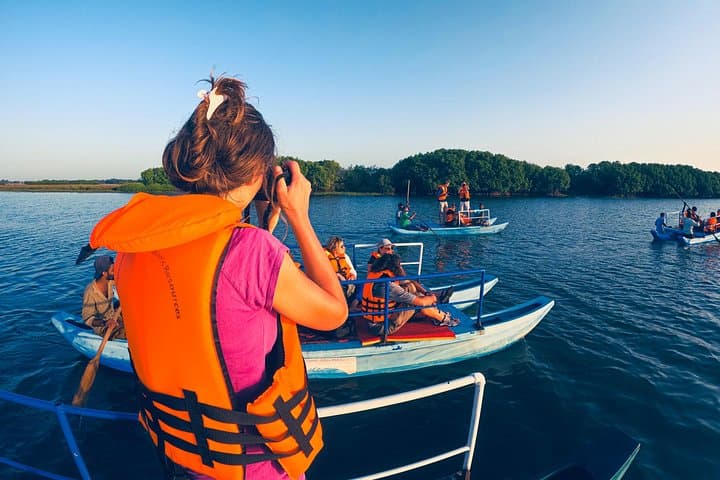
A low-slung boat parts the glassy water and the mangroves answer with a rustle — leaves flick like pages turning. Morning light picks out the slick green roots and a kingfisher darts, daring you to be still. This is Pottuvil Lagoon: a shallow estuary where tidal breath and mangrove teeth create narrow channels for a quiet, wildlife-rich float.
Verified experiences and guided adventures in the surrounding area.
Operated by Arugambay Agenda · Arugam Bay, Eastern Province
A low-slung boat parts the glassy water and the mangroves answer with a rustle — leaves flick like pages turning. Morning light picks out the slick green roots and a kingfisher darts, daring you to be still. This is Pottuvil Lagoon: a shallow estuary where tidal breath and mangrove teeth create narrow channels for a quiet, wildlife-rich float.
Geologically the lagoon is a coastal estuary shaped by sediment from nearby rivers and the Indian Ocean’s tides; its mangroves trap silt and shelter juvenile fish. Culturally the area supports small fishing communities that have worked these waters for generations, and nearby ruins and temples speak to long-standing human ties to the coast. Guides on local tours typically explain how the mangrove’s root networks knit together an intricate food chain that keeps the lagoon productive for birds, prawns and larger mammals.
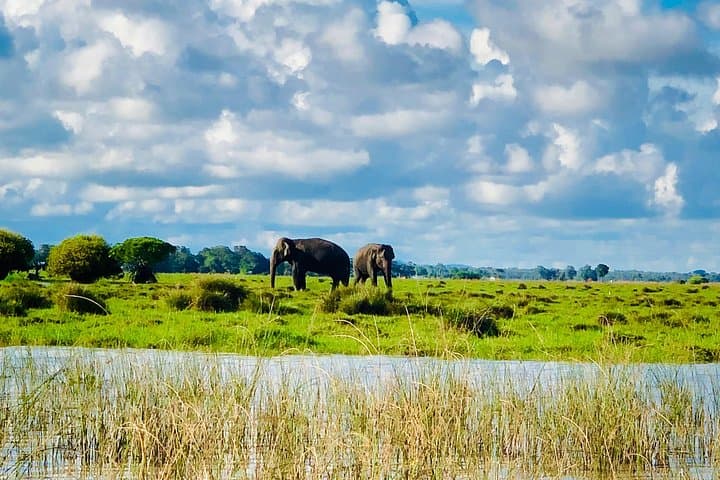
Expect slow, observational travel rather than adrenaline: binoculars in hand, a guide pointing to a sea eagle circling or to a distant elephant wading across a channel. The experience balances quiet wildlife watching with short drives from Arugam Bay and a king-coconut pause to drink in the calm.
Practical notes: tours last roughly 2–3 hours, operate best in calm weather and avoid high tide chop. Wear sun-protective clothing and insect repellent, bring water and a waterproof pocket for phones. Early morning or late afternoon light gives the best bird activity and photography. Respect local guides and give wildlife distance — crocodiles and elephants are real and deserve space.
Typical tour duration is about 2–3 hours including transfer time from Arugam Bay; onboard time on the lagoon is roughly 90–120 minutes.
Sightings can’t be guaranteed — both are seasonal and shy; early morning tours improve odds for wildlife encounters.
Yes — the tour is rated easy; infants must sit on an adult’s lap and life jackets are provided for passengers.
Tours usually include a king coconut and bottled water; bring small local currency for tips or snacks if you plan to buy additional items.
Arugambay Agenda operates guided outdoor trips and adventures with an emphasis on safety, stewardship, and memorable experiences.


A low-slung boat parts the glassy water and the mangroves answer with a rustle — leaves flick like pages turning. Morning light picks out the slick green roots and a kingfisher darts, daring you to be still. This is Pottuvil Lagoon: a shallow estuary where tidal breath and mangrove teeth create narrow channels for a quiet, wildlife-rich float.
A low-slung boat parts the glassy water and the mangroves answer with a rustle — leaves flick like pages turning. Morning light picks out the slick green roots and a kingfisher darts, daring you to be still. This is Pottuvil Lagoon: a shallow estuary where tidal breath and mangrove teeth create narrow channels for a quiet, wildlife-rich float.
Geologically the lagoon is a coastal estuary shaped by sediment from nearby rivers and the Indian Ocean’s tides; its mangroves trap silt and shelter juvenile fish. Culturally the area supports small fishing communities that have worked these waters for generations, and nearby ruins and temples speak to long-standing human ties to the coast. Guides on local tours typically explain how the mangrove’s root networks knit together an intricate food chain that keeps the lagoon productive for birds, prawns and larger mammals.
Expect slow, observational travel rather than adrenaline: binoculars in hand, a guide pointing to a sea eagle circling or to a distant elephant wading across a channel. The experience balances quiet wildlife watching with short drives from Arugam Bay and a king-coconut pause to drink in the calm.
Practical notes: tours last roughly 2–3 hours, operate best in calm weather and avoid high tide chop. Wear sun-protective clothing and insect repellent, bring water and a waterproof pocket for phones. Early morning or late afternoon light gives the best bird activity and photography. Respect local guides and give wildlife distance — crocodiles and elephants are real and deserve space.