THE ADVENTURE COLLECTIVE® · Independent discovery and booking for outdoor travel

Walk Prague’s streets with a historian and discover how Art Nouveau flourishes and Cubist angles reshaped a capital. This private 3‑hour tour visits ornate interiors and sharp‑edged facades while offering context on art, politics and urban life.
Walk Prague’s streets with a historian and discover how Art Nouveau flourishes and Cubist angles reshaped a capital. This private 3‑hour tour visits ornate interiors and sharp‑edged facades while offering context on art, politics and urban life.
You step out of a shaded arcade into a city that changed itself around the turn of the 20th century: Prague's stone facades lean forward like readers over a shared book of styles. In three hours a historian guide threads you through municipal squares and tucked passages, bringing the language of Art Nouveau and the sharp geometry of Czech Cubism into conversation.
Verified experiences and guided adventures in the surrounding area.
Operated by Insight Cities · Prague, Prague
You step out of a shaded arcade into a city that changed itself around the turn of the 20th century: Prague's stone facades lean forward like readers over a shared book of styles. In three hours a historian guide threads you through municipal squares and tucked passages, bringing the language of Art Nouveau and the sharp geometry of Czech Cubism into conversation.
Art Nouveau arrived in Prague as an optimistic, decorative response to industrial life—floral ironwork, painted domes and the sweeping interiors of the Main Train Station remain visible markers. Cubism followed shortly after, an architectural experiment that translated crystalline painting into facades and furnishings; buildings such as the House of the Black Madonna translate that theory into hard edges and facetted light.
Beyond aesthetics you'll hear how the Czech National Revival and early 20th‑century politics shaped Prague’s skyline, and why architects like Josef Gočár pushed geometry into domestic interiors. The walk moves at an urban pace—cobblestones, short flights of steps and cool, ornamented lobbies—so the sensory highlights are visual: gilt domes, carved doorways, and the way light slices across a cubist corner.
Practical guidance: arrive with city‑friendly footwear and a charged phone for photos and quick map checks; many interiors allow photos but ask first. Morning departures offer softer light for facades and fewer crowds at stations and arcades. If you’d like specific stops—Masaryk Station’s dome, Lucerna’s gallery, or the Black Madonna museum—mention them when booking; the private format adapts to your interests. A three‑hour guided walk is compact, illuminating and designed for anyone comfortable walking on historic streets.
This tour focuses on exterior and public interiors; admissions are typically not included—confirm with the operator if you want paid museum entry added.
The listing is for a private tour—check availability with the operator for maximum group size and any incremental pricing.
Many historic buildings have stairs and limited accessibility; notify the provider before booking so they can adapt the route where possible.
The description notes a historian guide—confirm language availability at booking as options may vary by guide.
Insight Cities operates guided outdoor trips and adventures with an emphasis on safety, stewardship, and memorable experiences.
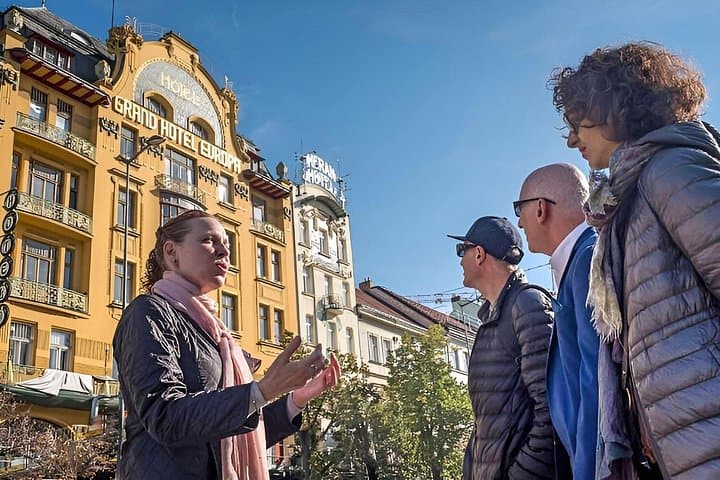
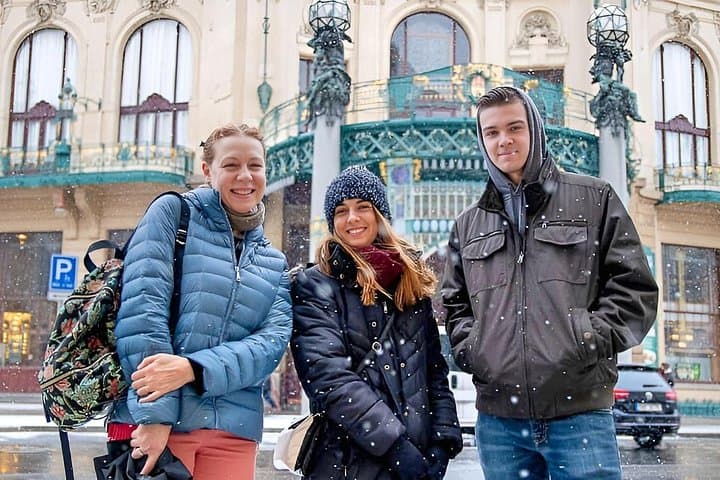
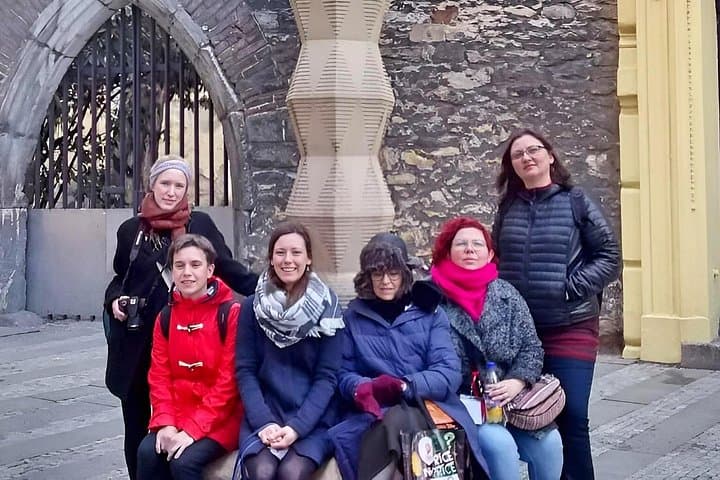
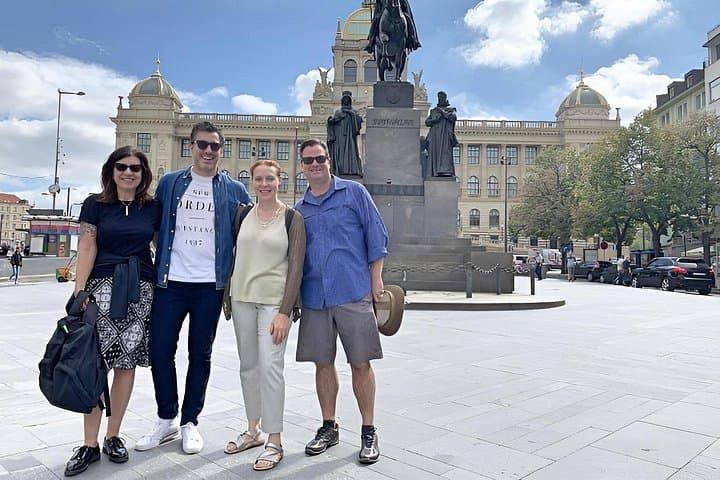
You step out of a shaded arcade into a city that changed itself around the turn of the 20th century: Prague's stone facades lean forward like readers over a shared book of styles. In three hours a historian guide threads you through municipal squares and tucked passages, bringing the language of Art Nouveau and the sharp geometry of Czech Cubism into conversation.
You step out of a shaded arcade into a city that changed itself around the turn of the 20th century: Prague's stone facades lean forward like readers over a shared book of styles. In three hours a historian guide threads you through municipal squares and tucked passages, bringing the language of Art Nouveau and the sharp geometry of Czech Cubism into conversation.
Art Nouveau arrived in Prague as an optimistic, decorative response to industrial life—floral ironwork, painted domes and the sweeping interiors of the Main Train Station remain visible markers. Cubism followed shortly after, an architectural experiment that translated crystalline painting into facades and furnishings; buildings such as the House of the Black Madonna translate that theory into hard edges and facetted light.
Beyond aesthetics you'll hear how the Czech National Revival and early 20th‑century politics shaped Prague’s skyline, and why architects like Josef Gočár pushed geometry into domestic interiors. The walk moves at an urban pace—cobblestones, short flights of steps and cool, ornamented lobbies—so the sensory highlights are visual: gilt domes, carved doorways, and the way light slices across a cubist corner.
Practical guidance: arrive with city‑friendly footwear and a charged phone for photos and quick map checks; many interiors allow photos but ask first. Morning departures offer softer light for facades and fewer crowds at stations and arcades. If you’d like specific stops—Masaryk Station’s dome, Lucerna’s gallery, or the Black Madonna museum—mention them when booking; the private format adapts to your interests. A three‑hour guided walk is compact, illuminating and designed for anyone comfortable walking on historic streets.