THE ADVENTURE COLLECTIVE® · Independent discovery and booking for outdoor travel

Turn a routine transfer from Prague to Dresden into a daylong adventure. Explore the labyrinthine Tisa Rocks, savor a local lunch, and finish on the Bastei Bridge with sweeping Elbe Valley views.
Turn a routine transfer from Prague to Dresden into a daylong adventure. Explore the labyrinthine Tisa Rocks, savor a local lunch, and finish on the Bastei Bridge with sweeping Elbe Valley views.
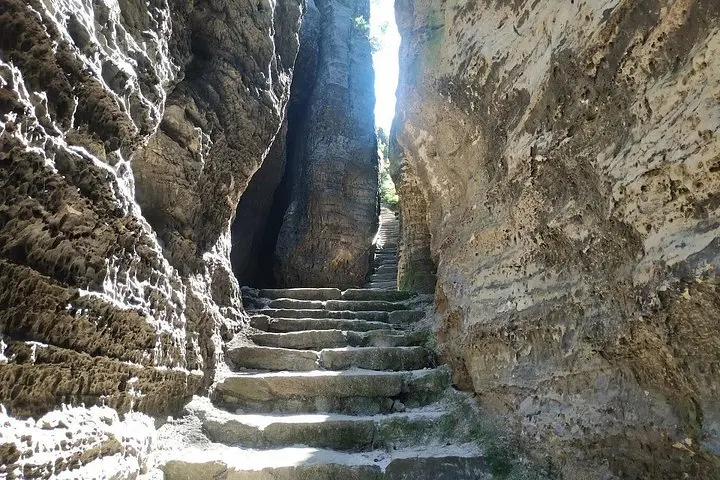
It starts with the city slipping past the window: Prague's baroque roofs give way to rolling fields, and soon the asphalt narrows to a ribbon of trees. By mid-morning the minivan pulls into a gravel parking area and the guide opens the door to a different world — the Tisa Rocks. Towering sandstone spires rise like an urban skyline carved by wind and time; narrow corridors dare you to pick a route and get lost among windows, alcoves and tiny stone squares.
Verified experiences and guided adventures in the surrounding area.
Operated by Saxon Tours · Prague, Prague
It starts with the city slipping past the window: Prague's baroque roofs give way to rolling fields, and soon the asphalt narrows to a ribbon of trees. By mid-morning the minivan pulls into a gravel parking area and the guide opens the door to a different world — the Tisa Rocks. Towering sandstone spires rise like an urban skyline carved by wind and time; narrow corridors dare you to pick a route and get lost among windows, alcoves and tiny stone squares.
This route stitches together two landscapes shaped by the same geology. The Elbe Sandstone formations — on both sides of today's border — are a chapter of an ancient seabed uplifted and then sculpted into pinnacles and canyons by millennia of frost and water. Human history is layered on top: shepherds and medieval watchmen once used these high stones as lookouts; later, romantic painters and early hikers turned the Bastei into a must-see viewpoint in the 19th century.
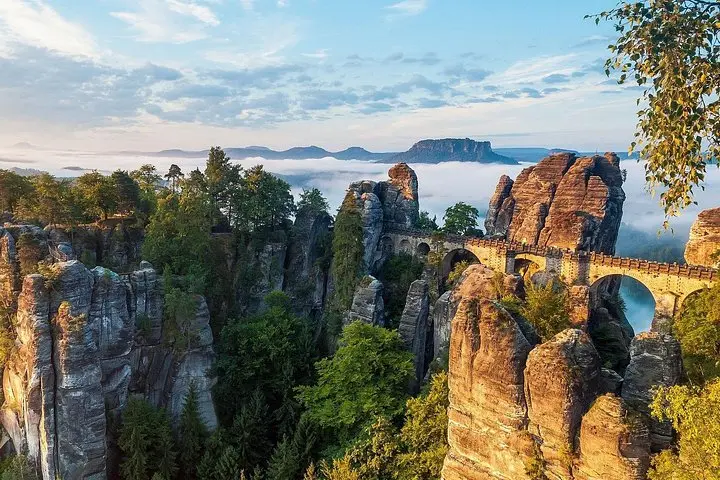
Culture here is quiet and deliberate. In the Czech villages near Tisa you still find wood-fired ovens and small inns serving svíčková and dumplings; across the river valley in Saxon Switzerland, beer gardens crowd the promenades that lead to the Bastei bridge, a graceful sandstone span that frames the Elbe like a postcard. The guide will mention Königstein Fortress as an optional detour, and for travelers with a longer timeline, Terezín offers a sobering WWII history lesson nearby.
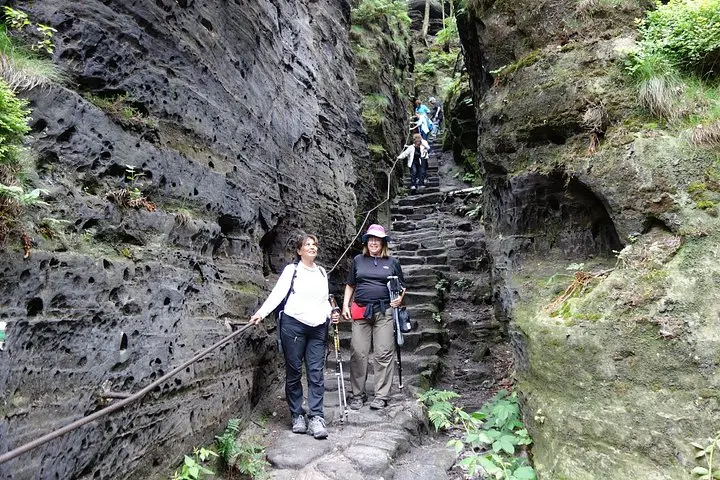
Practical guidance: plan for a 7-hour transfer that blends roadside driving with 2–3 short hikes. Expect uneven paths, stone steps and short ladders at Felsenburg Neurathen; good ankle support and a steady pace make those sections enjoyable rather than taxing. Bring a small daypack with water, layered clothing and a camera — mornings are crisp and clear, afternoons prone to soft haze.
Logistics are straightforward: pick-up anywhere in Prague, air-conditioned transport, an English-speaking guide and a sit-down lunch included. Border formalities are minimal — Czechia and Germany are in Schengen — but carry an ID or passport. Cash in Czech koruna helps for small purchases at rural kiosks, though most stops accept cards.
Timing matters: visit Tisa early to avoid crowds and hit the Bastei for late-afternoon light that throws long shadows across the Elbe valley. Respect the fragile sandstone: stay on marked trails, avoid climbing where prohibited, and pack out what you bring in. Do that and this one-way journey between two great centers of Central Europe becomes more than a transfer — it’s a compact expedition through rock, history and riverside panoramas.
The tour runs about 7 hours total (420 minutes) including stops and sightseeing; exact duration can vary with traffic.
Yes — the itinerary notes it’s suitable for all fitness levels, though some sections have steps and short ladders that may be challenging for limited mobility.
Standard sightseeing stops included in the itinerary don’t require additional admission; optional detours like Königstein Fortress may have separate fees if you choose to visit.
Lunch is included, and most facilities accept cards, but carrying some Czech koruna is useful for rural kiosks or small purchases.
Yes — the tour crosses from Czechia into Germany. Both countries are in Schengen, so routine passport controls are unlikely, but carry ID.
Yes — the operator offers pickup from any Prague hotel or Airbnb; provide your address when booking.
Saxon Tours operates guided outdoor trips and adventures with an emphasis on safety, stewardship, and memorable experiences.
It starts with the city slipping past the window: Prague's baroque roofs give way to rolling fields, and soon the asphalt narrows to a ribbon of trees. By mid-morning the minivan pulls into a gravel parking area and the guide opens the door to a different world — the Tisa Rocks. Towering sandstone spires rise like an urban skyline carved by wind and time; narrow corridors dare you to pick a route and get lost among windows, alcoves and tiny stone squares.
It starts with the city slipping past the window: Prague's baroque roofs give way to rolling fields, and soon the asphalt narrows to a ribbon of trees. By mid-morning the minivan pulls into a gravel parking area and the guide opens the door to a different world — the Tisa Rocks. Towering sandstone spires rise like an urban skyline carved by wind and time; narrow corridors dare you to pick a route and get lost among windows, alcoves and tiny stone squares.
This route stitches together two landscapes shaped by the same geology. The Elbe Sandstone formations — on both sides of today's border — are a chapter of an ancient seabed uplifted and then sculpted into pinnacles and canyons by millennia of frost and water. Human history is layered on top: shepherds and medieval watchmen once used these high stones as lookouts; later, romantic painters and early hikers turned the Bastei into a must-see viewpoint in the 19th century.
Culture here is quiet and deliberate. In the Czech villages near Tisa you still find wood-fired ovens and small inns serving svíčková and dumplings; across the river valley in Saxon Switzerland, beer gardens crowd the promenades that lead to the Bastei bridge, a graceful sandstone span that frames the Elbe like a postcard. The guide will mention Königstein Fortress as an optional detour, and for travelers with a longer timeline, Terezín offers a sobering WWII history lesson nearby.
Practical guidance: plan for a 7-hour transfer that blends roadside driving with 2–3 short hikes. Expect uneven paths, stone steps and short ladders at Felsenburg Neurathen; good ankle support and a steady pace make those sections enjoyable rather than taxing. Bring a small daypack with water, layered clothing and a camera — mornings are crisp and clear, afternoons prone to soft haze.
Logistics are straightforward: pick-up anywhere in Prague, air-conditioned transport, an English-speaking guide and a sit-down lunch included. Border formalities are minimal — Czechia and Germany are in Schengen — but carry an ID or passport. Cash in Czech koruna helps for small purchases at rural kiosks, though most stops accept cards.
Timing matters: visit Tisa early to avoid crowds and hit the Bastei for late-afternoon light that throws long shadows across the Elbe valley. Respect the fragile sandstone: stay on marked trails, avoid climbing where prohibited, and pack out what you bring in. Do that and this one-way journey between two great centers of Central Europe becomes more than a transfer — it’s a compact expedition through rock, history and riverside panoramas.