THE ADVENTURE COLLECTIVE® · Independent discovery and booking for outdoor travel

Spend a long, rewarding day exploring two very different Khmer sites — the cliff-top Preah Vihear and the remote pyramid of Koh Ker. This private tour pairs panoramic views with unique temple architecture and a sustained road trip through northern Cambodia.
Spend a long, rewarding day exploring two very different Khmer sites — the cliff-top Preah Vihear and the remote pyramid of Koh Ker. This private tour pairs panoramic views with unique temple architecture and a sustained road trip through northern Cambodia.
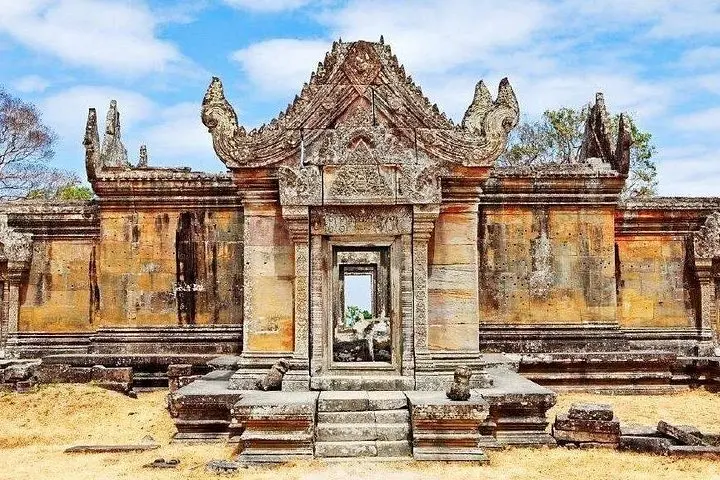
You step out of an air-conditioned van into a dry, sun-bleached plain and the Dângrêk escarpment rises ahead like a stone wall daring you to climb. The road tightens, rice paddies give way to scrub, and by late morning the causeway to Preah Vihear appears, its naga balustrades pointing toward a temple perched on the cliff that commands the borderlands.
Verified experiences and guided adventures in the surrounding area.
Operated by Cambodia Angkor Driver Tours · Preah Vihear, Preah Vihear Province
You step out of an air-conditioned van into a dry, sun-bleached plain and the Dângrêk escarpment rises ahead like a stone wall daring you to climb. The road tightens, rice paddies give way to scrub, and by late morning the causeway to Preah Vihear appears, its naga balustrades pointing toward a temple perched on the cliff that commands the borderlands.
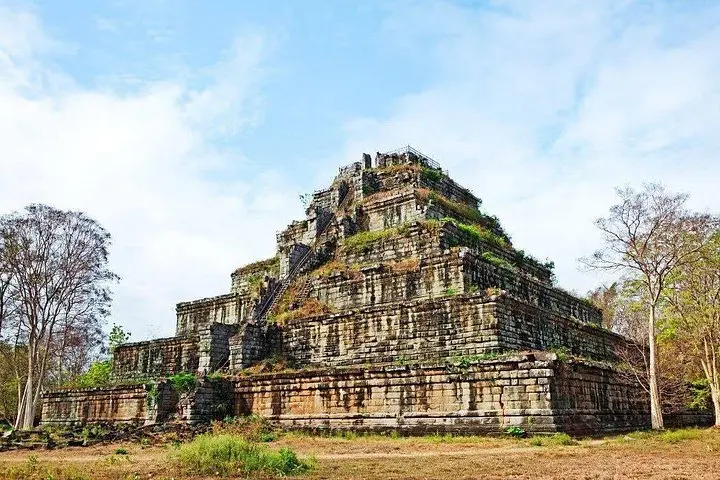
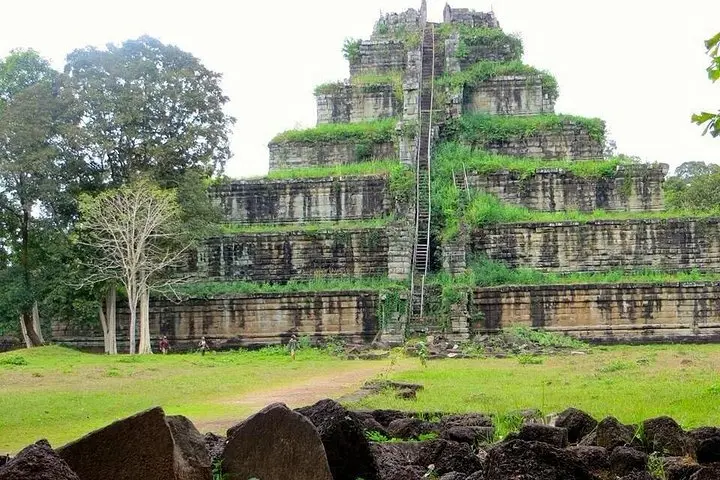
Preah Vihear was raised during the height of the Khmer Empire; its gopuras and prasats frame views that read like a map of regional history. Koh Ker, by contrast, is a remote capital’s experiment in red brick and stepped pyramids — Prasat Thom offers a different angle on Khmer ambition, a vertical answer to the horizontal barays below.
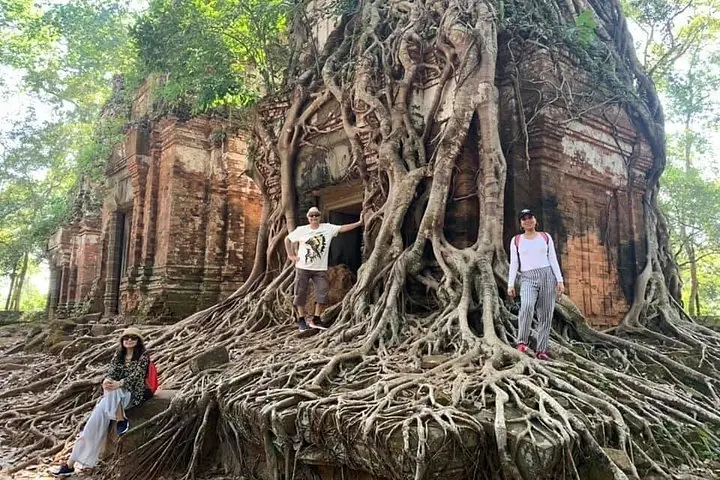
Geology here is lived: sandstone lintels weathered by monsoon, red brick cores that soak up heat, and ancient reservoirs that still shape the landscape. Local culture appears in small ways — roadside fruit stalls, temple custodians maintaining rituals, and the slow pace of villages where temple tourism remains limited.
Practical edge: this is a long day — expect 10–12 hours including 3–4 hours of driving each way depending on road conditions. Wear grippy shoes for uneven stone steps, sun protection and carry 2–3 liters of water; entrance fees and meals are often paid separately at sites or local restaurants. An early departure avoids midday heat and gives you cleaner light for photography.
This tour blends panoramic cliffside views, archaeological variety, and a sense of remoteness that rewards patience and basic preparation.
Expect roughly 3–4 hours one-way depending on road conditions and traffic; the tour’s total travel time is included in the 10–12 hour schedule.
Entrance fees are typically not included and are paid at each site—bring cash in small denominations (USD widely accepted).
The tour is family-friendly but involves steep steps and long vehicle time; it’s not recommended for people with serious spinal, cardiovascular issues, or for late-stage pregnancy.
Carry ID or passport for identification; while not always checked at the temples, it’s useful for hotel transfers and administrative reasons.
Cambodia Angkor Driver Tours operates guided outdoor trips and adventures with an emphasis on safety, stewardship, and memorable experiences.
You step out of an air-conditioned van into a dry, sun-bleached plain and the Dângrêk escarpment rises ahead like a stone wall daring you to climb. The road tightens, rice paddies give way to scrub, and by late morning the causeway to Preah Vihear appears, its naga balustrades pointing toward a temple perched on the cliff that commands the borderlands.
You step out of an air-conditioned van into a dry, sun-bleached plain and the Dângrêk escarpment rises ahead like a stone wall daring you to climb. The road tightens, rice paddies give way to scrub, and by late morning the causeway to Preah Vihear appears, its naga balustrades pointing toward a temple perched on the cliff that commands the borderlands.
Preah Vihear was raised during the height of the Khmer Empire; its gopuras and prasats frame views that read like a map of regional history. Koh Ker, by contrast, is a remote capital’s experiment in red brick and stepped pyramids — Prasat Thom offers a different angle on Khmer ambition, a vertical answer to the horizontal barays below.
Geology here is lived: sandstone lintels weathered by monsoon, red brick cores that soak up heat, and ancient reservoirs that still shape the landscape. Local culture appears in small ways — roadside fruit stalls, temple custodians maintaining rituals, and the slow pace of villages where temple tourism remains limited.
Practical edge: this is a long day — expect 10–12 hours including 3–4 hours of driving each way depending on road conditions. Wear grippy shoes for uneven stone steps, sun protection and carry 2–3 liters of water; entrance fees and meals are often paid separately at sites or local restaurants. An early departure avoids midday heat and gives you cleaner light for photography.
This tour blends panoramic cliffside views, archaeological variety, and a sense of remoteness that rewards patience and basic preparation.