THE ADVENTURE COLLECTIVE® · Independent discovery and booking for outdoor travel

A private day tour takes you 150 km north of Siem Reap to Preah Vihear: a cliff‑top Khmer temple UNESCO listed in 2008. Expect a dramatic ridge-top setting, long axial galleries, and a full‑day trip with rural driving and uneven steps.
A private day tour takes you 150 km north of Siem Reap to Preah Vihear: a cliff‑top Khmer temple UNESCO listed in 2008. Expect a dramatic ridge-top setting, long axial galleries, and a full‑day trip with rural driving and uneven steps.
Morning light slices across the plains as a private minivan climbs the Dongrek ridge — the wind at the temple's cliff edge seems to push visitors forward. At the summit, a long linear sequence of sanctuaries unspools along a north–south axis; stone balustrades, steep staircases and carved lintels frame a panorama that stretches for kilometres toward Thailand.
Verified experiences and guided adventures in the surrounding area.
Operated by Tour Guide-Siem Reap · Preah Vihear, Preah Vihear Province
Morning light slices across the plains as a private minivan climbs the Dongrek ridge — the wind at the temple's cliff edge seems to push visitors forward. At the summit, a long linear sequence of sanctuaries unspools along a north–south axis; stone balustrades, steep staircases and carved lintels frame a panorama that stretches for kilometres toward Thailand.
Prasat Preah Vihear began life under the Khmer Empire and was reshaped by successive kings; its unique axial plan and cliff-top siting make it one of Cambodia’s most dramatic Hindu temple complexes. The rock underfoot is lateritic and sandstone, worked into elegant decoration that survives better here because the site remained remote for centuries. The temple’s modern story includes a 1962 International Court of Justice decision confirming Cambodian sovereignty and a 2008 inscription as a UNESCO World Heritage Site, which brought renewed conservation focus and visitation.
Culturally, the site is both sacred and strategic: long causeways link terraces and sanctuaries, and local communities still treat certain spots with reverence. Expect uneven steps, exposed stone, and wind that gives the cliffs a distinct voice.
Practical guidance: depart Siem Reap early for the 3‑hour drive, bring sun protection and at least 1.5 liters of water, and wear shoes with good grip for staircases and rocky walks. Photography is rewarding but avoid touching fragile carvings; follow your private guide for the best viewpoints and context. Allow a full day (7–8 hours) for travel, exploration, and relaxed stops through northern Cambodian countryside.
Expect about 3 hours each way (roughly 150 km), depending on traffic and road conditions.
There is an entrance fee for Preah Vihear (paid locally); check with your operator or guide for current rates and payment methods.
The site has steep staircases and uneven stone floors — it’s not ideal for guests with limited mobility or serious back issues.
No — the temple sits on the Cambodian side; border crossing is not permitted from the site and requires proper checkpoints and documentation.
Tour Guide-Siem Reap operates guided outdoor trips and adventures with an emphasis on safety, stewardship, and memorable experiences.
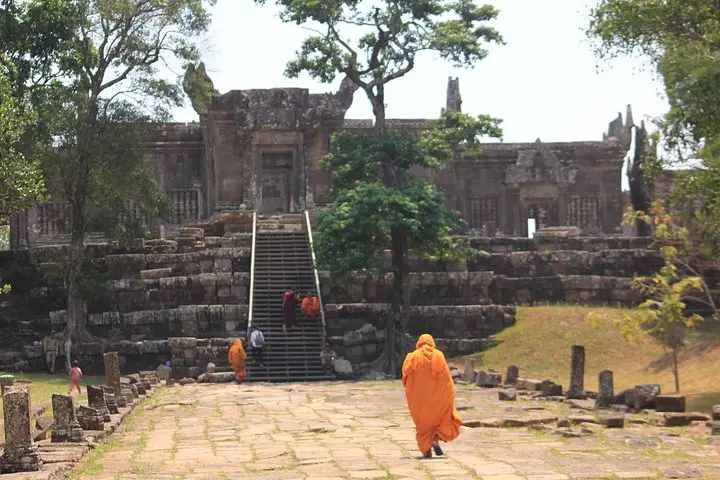
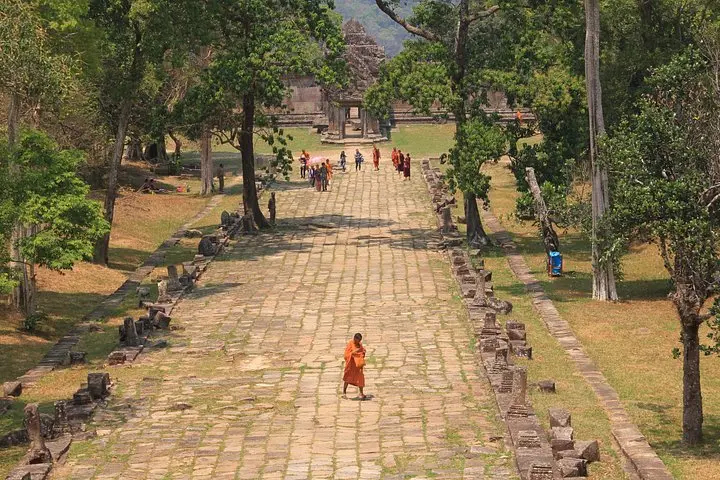
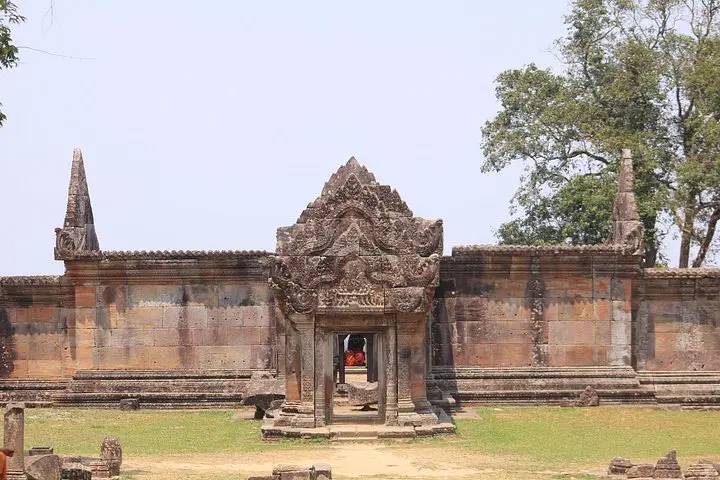
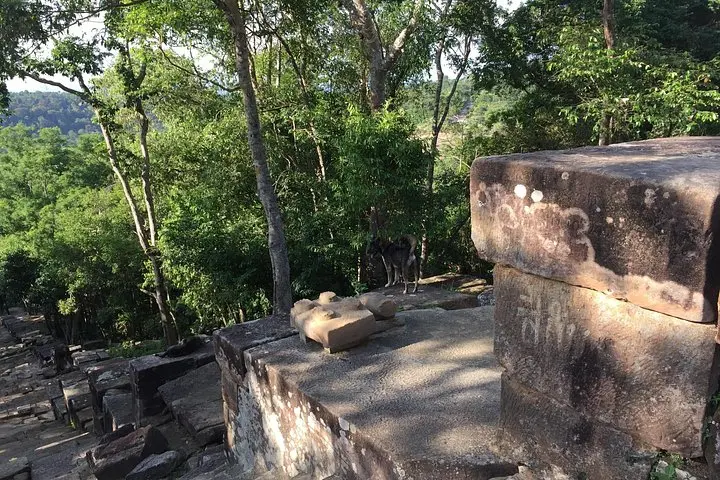
Morning light slices across the plains as a private minivan climbs the Dongrek ridge — the wind at the temple's cliff edge seems to push visitors forward. At the summit, a long linear sequence of sanctuaries unspools along a north–south axis; stone balustrades, steep staircases and carved lintels frame a panorama that stretches for kilometres toward Thailand.
Morning light slices across the plains as a private minivan climbs the Dongrek ridge — the wind at the temple's cliff edge seems to push visitors forward. At the summit, a long linear sequence of sanctuaries unspools along a north–south axis; stone balustrades, steep staircases and carved lintels frame a panorama that stretches for kilometres toward Thailand.
Prasat Preah Vihear began life under the Khmer Empire and was reshaped by successive kings; its unique axial plan and cliff-top siting make it one of Cambodia’s most dramatic Hindu temple complexes. The rock underfoot is lateritic and sandstone, worked into elegant decoration that survives better here because the site remained remote for centuries. The temple’s modern story includes a 1962 International Court of Justice decision confirming Cambodian sovereignty and a 2008 inscription as a UNESCO World Heritage Site, which brought renewed conservation focus and visitation.
Culturally, the site is both sacred and strategic: long causeways link terraces and sanctuaries, and local communities still treat certain spots with reverence. Expect uneven steps, exposed stone, and wind that gives the cliffs a distinct voice.
Practical guidance: depart Siem Reap early for the 3‑hour drive, bring sun protection and at least 1.5 liters of water, and wear shoes with good grip for staircases and rocky walks. Photography is rewarding but avoid touching fragile carvings; follow your private guide for the best viewpoints and context. Allow a full day (7–8 hours) for travel, exploration, and relaxed stops through northern Cambodian countryside.