THE ADVENTURE COLLECTIVE® · Independent discovery and booking for outdoor travel

A long, demanding day hike from Ushuaia leads to the Albino Eye — a green melt lagoon framed by a 20‑meter glacial wall. Expect rugged terrain, steep climbs and big rewards for fit hikers who come prepared.
A long, demanding day hike from Ushuaia leads to the Albino Eye — a green melt lagoon framed by a 20‑meter glacial wall. Expect rugged terrain, steep climbs and big rewards for fit hikers who come prepared.
You crest a final rocky shoulder and the world rearranges itself: a low, glassy pond the color of oxidized copper sits cut against a 20‑meter ice cliff, and wind tugs at the hood of your jacket as if insisting you pay attention. This is Ojo del Albino — the Albino Eye — and the last hours of the day’s climb feel like a negotiation with the mountain.
Verified experiences and guided adventures in the surrounding area.
Operated by TAUN USHUAIA · Ushuaia, Tierra del Fuego
You crest a final rocky shoulder and the world rearranges itself: a low, glassy pond the color of oxidized copper sits cut against a 20‑meter ice cliff, and wind tugs at the hood of your jacket as if insisting you pay attention. This is Ojo del Albino — the Albino Eye — and the last hours of the day’s climb feel like a negotiation with the mountain.
The route begins in Tierra Mayor Valley, squeezing through shrubby native lenga and peat bogs. Early sections are soft and earthen; later, the trail tightens into stone slabs that demand steady footing. For roughly three hours you climb without much relief, passing bright-orange sandstone walls that split the landscape and give way to a narrow natural balcony overlooking Laguna Esmeralda far below. Hands-and-feet scrambling and short exposed sections appear late in the approach; guides fit helmets and brief the group before the final push.
Geologically the Sierra Alvear is a cold‑climate sculptor: glacial advance and recession have carved terraces, left moraines and built the small emerald lagoons fed by melt. The Albino Ice front you reach is a modern remnant of that process — a compact wall of ice and meltwater whose green comes from finely ground rock suspended in glacial runoff. Culturally this is Yámana land; modern Ushuaia grew from a mix of indigenous heritage and late 19th‑century frontier settlement, and the valley still smells of peat and ocean-borne weather.
The company runs this as a premium small‑group operation with private transport from Ushuaia, lunch, helmets and trekking poles; in winter they swap to snow traction as the lagoon freezes. Expect a demanding outing: plan for roughly 10 hours total, an estimated 10 km round trip with sustained climbing (roughly 700–900 m gain depending on route), and long stretches of rocky, uneven terrain. The reward is both visual and tactile — an intimate face‑to‑face with a living glacier and its melt lagoon.
Practical tips: start early to avoid oncoming weather, carry layers for polar maritime weather, and use broken‑in, stiff‑soled boots for the rockier sections. Hydrate and eat for a long day; the guides are experienced but the route suits well‑trained hikers more than casual walkers. If you go in summer you’ll trade crampons for light approach shoes; in winter expect boots, gaiters and the chance to walk across a frozen pool. The operator’s small‑group format keeps the pace steady and gives time for on‑route geology and wildlife interpretation — guanacos and foxes are not uncommon. Show up fit, respectful of the fragile peatlands, and you’ll find the effort matches the payoff.
This is a demanding day — you should be comfortable hiking 4–6 hours with significant uphill and some scrambling; regular aerobic training and long‑hike experience are recommended.
The route includes steep sections and short hand‑and‑foot scrambles; guides lead the group, provide helmets and route instruction, but it is not a rope‑technical glacier climb.
Bring layered clothing, waterproof shell, water (2–3 liters), snacks, sun protection, and sturdy boots; the operator supplies poles and helmets.
Yes — the tour offers hotel pickup from Ushuaia with about 60 minutes before departure for collection.
Beginners with strong fitness and no spinal or heart issues might manage, but the operator recommends participants have a high level of physical fitness.
Summer provides the least ice and longer daylight for this trek; winter offers a frozen lagoon and snow travel but requires more specialized traction and clothing.
TAUN USHUAIA operates guided outdoor trips and adventures with an emphasis on safety, stewardship, and memorable experiences.
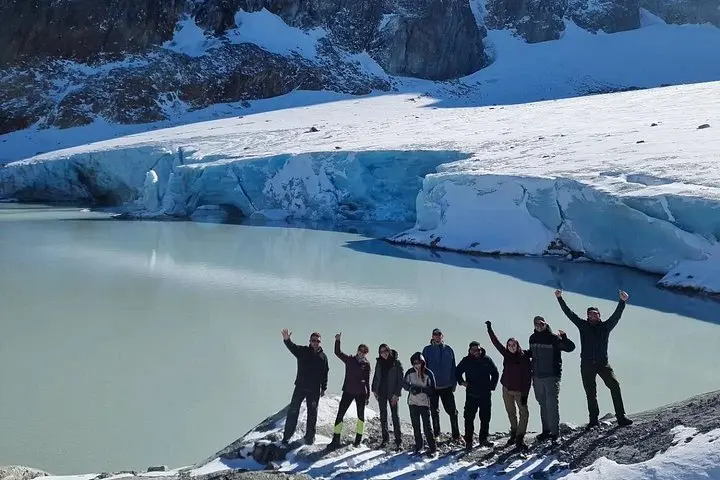
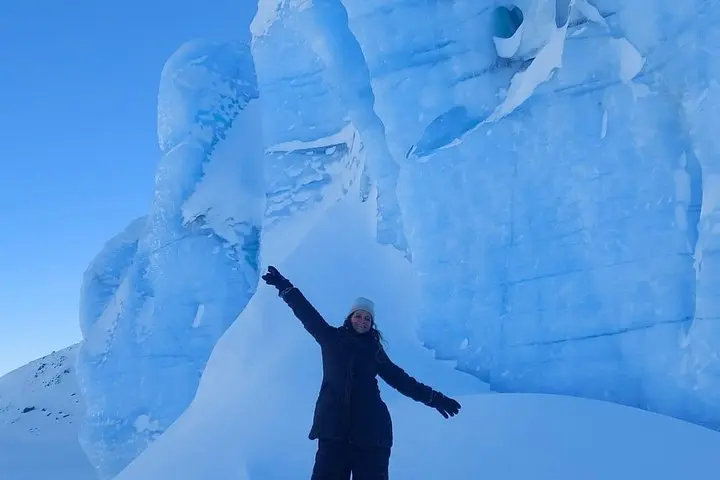
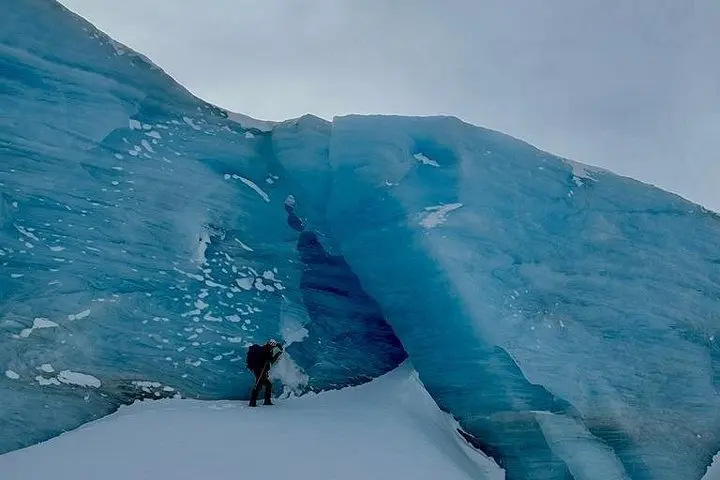
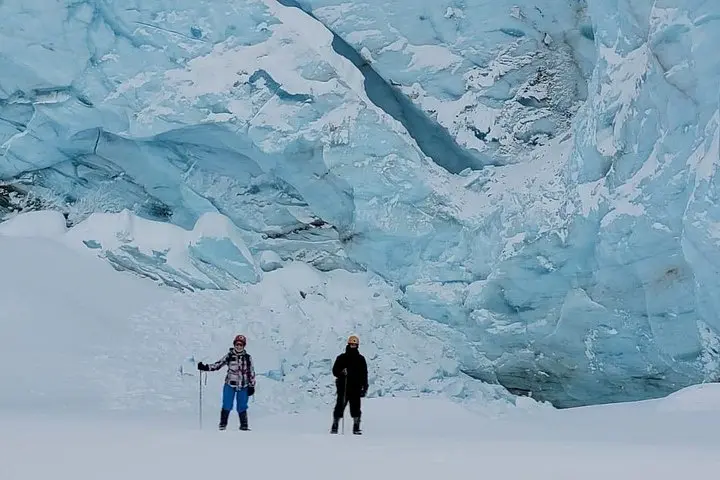
You crest a final rocky shoulder and the world rearranges itself: a low, glassy pond the color of oxidized copper sits cut against a 20‑meter ice cliff, and wind tugs at the hood of your jacket as if insisting you pay attention. This is Ojo del Albino — the Albino Eye — and the last hours of the day’s climb feel like a negotiation with the mountain.
You crest a final rocky shoulder and the world rearranges itself: a low, glassy pond the color of oxidized copper sits cut against a 20‑meter ice cliff, and wind tugs at the hood of your jacket as if insisting you pay attention. This is Ojo del Albino — the Albino Eye — and the last hours of the day’s climb feel like a negotiation with the mountain.
The route begins in Tierra Mayor Valley, squeezing through shrubby native lenga and peat bogs. Early sections are soft and earthen; later, the trail tightens into stone slabs that demand steady footing. For roughly three hours you climb without much relief, passing bright-orange sandstone walls that split the landscape and give way to a narrow natural balcony overlooking Laguna Esmeralda far below. Hands-and-feet scrambling and short exposed sections appear late in the approach; guides fit helmets and brief the group before the final push.
Geologically the Sierra Alvear is a cold‑climate sculptor: glacial advance and recession have carved terraces, left moraines and built the small emerald lagoons fed by melt. The Albino Ice front you reach is a modern remnant of that process — a compact wall of ice and meltwater whose green comes from finely ground rock suspended in glacial runoff. Culturally this is Yámana land; modern Ushuaia grew from a mix of indigenous heritage and late 19th‑century frontier settlement, and the valley still smells of peat and ocean-borne weather.
The company runs this as a premium small‑group operation with private transport from Ushuaia, lunch, helmets and trekking poles; in winter they swap to snow traction as the lagoon freezes. Expect a demanding outing: plan for roughly 10 hours total, an estimated 10 km round trip with sustained climbing (roughly 700–900 m gain depending on route), and long stretches of rocky, uneven terrain. The reward is both visual and tactile — an intimate face‑to‑face with a living glacier and its melt lagoon.
Practical tips: start early to avoid oncoming weather, carry layers for polar maritime weather, and use broken‑in, stiff‑soled boots for the rockier sections. Hydrate and eat for a long day; the guides are experienced but the route suits well‑trained hikers more than casual walkers. If you go in summer you’ll trade crampons for light approach shoes; in winter expect boots, gaiters and the chance to walk across a frozen pool. The operator’s small‑group format keeps the pace steady and gives time for on‑route geology and wildlife interpretation — guanacos and foxes are not uncommon. Show up fit, respectful of the fragile peatlands, and you’ll find the effort matches the payoff.