THE ADVENTURE COLLECTIVE® · Independent discovery and booking for outdoor travel

Walk Prescott’s Courthouse Plaza and Whiskey Row with an expert storyteller who re-creates the drama of the 1900 Whiskey Row Fire and maps the town’s role as Arizona’s territorial capital. This accessible 1.5-mile tour mixes architecture, local lore, and practical insight for first-time visitors.
Walk Prescott’s Courthouse Plaza and Whiskey Row with an expert storyteller who re-creates the drama of the 1900 Whiskey Row Fire and maps the town’s role as Arizona’s territorial capital. This accessible 1.5-mile tour mixes architecture, local lore, and practical insight for first-time visitors.
You step onto Courthouse Plaza and the square answers: flags snapping, the Rough Rider statue watching. The guide leads down the north side toward Whiskey Row, where brick facades and gaps in the streetscape mark the places the 1900 fire burned hottest. Voices and footsteps fill the open plaza; the town's age is not hidden, it's on the pavement beneath your boots.
Verified experiences and guided adventures in the surrounding area.
Operated by Freaky Foot Tours · Prescott, Arizona
You step onto Courthouse Plaza and the square answers: flags snapping, the Rough Rider statue watching. The guide leads down the north side toward Whiskey Row, where brick facades and gaps in the streetscape mark the places the 1900 fire burned hottest. Voices and footsteps fill the open plaza; the town's age is not hidden, it's on the pavement beneath your boots.
Prescott was Arizona’s territorial capital and this short, focused walk threads local history with built form. Expect accounts of the Great Whiskey Row Fire of 1900, the territorial courthouse politics, and the Victorian mansions on Nob Hill that followed economic booms and busts. Geologically, you’re on granite foothills peeled from the Bradshaw Mountains; local quarries fed the town’s early buildings. Culturally, Prescott carries an Old West civic identity — parades, rodeos, and a downtown that still trades in memory as much as commerce.
This tour is 1.5 miles over mostly flat, paved surfaces and lasts about two hours. Guides stop often to tell first-person stories and point to architectural details, so bring a water bottle and plan for frequent pauses. Wear comfortable walking shoes; shade is limited on summer afternoons. The route is wheelchair- and stroller-accessible and keeps groups small to preserve conversation.
Timing matters: mornings or late afternoons are cooler and quieter. Listen for the guide’s cues if you want to photograph storefront plaques or duck into a historic saloon. By the end you’ll understand not only the events that shaped Prescott, but how ordinary streets still carry those choices forward.
The tour runs about two hours and covers roughly 1.5 miles of mostly flat, paved streets.
Yes. The route and surfaces are wheelchair and stroller accessible—notify the operator in advance for accommodations.
The tour primarily takes place outdoors; guides typically note nearby public restrooms and may pause at accessible indoor locations if available.
Yes. The storytelling approach works for older children; strollers are allowed and guides adapt stories for family audiences.
Freaky Foot Tours operates guided outdoor trips and adventures with an emphasis on safety, stewardship, and memorable experiences.

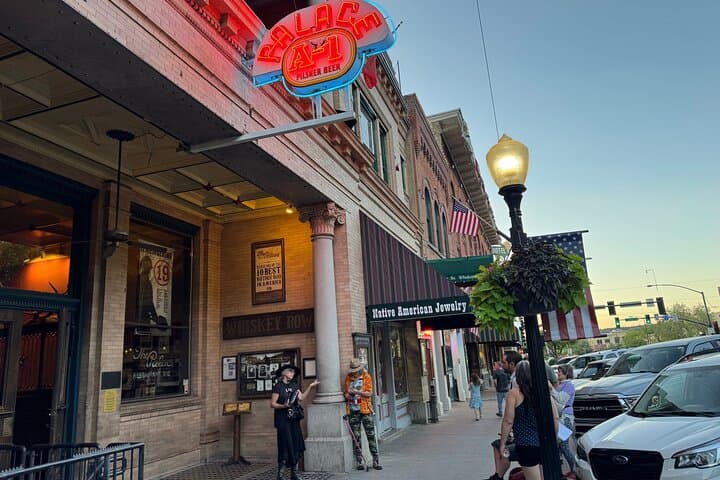


You step onto Courthouse Plaza and the square answers: flags snapping, the Rough Rider statue watching. The guide leads down the north side toward Whiskey Row, where brick facades and gaps in the streetscape mark the places the 1900 fire burned hottest. Voices and footsteps fill the open plaza; the town's age is not hidden, it's on the pavement beneath your boots.
You step onto Courthouse Plaza and the square answers: flags snapping, the Rough Rider statue watching. The guide leads down the north side toward Whiskey Row, where brick facades and gaps in the streetscape mark the places the 1900 fire burned hottest. Voices and footsteps fill the open plaza; the town's age is not hidden, it's on the pavement beneath your boots.
Prescott was Arizona’s territorial capital and this short, focused walk threads local history with built form. Expect accounts of the Great Whiskey Row Fire of 1900, the territorial courthouse politics, and the Victorian mansions on Nob Hill that followed economic booms and busts. Geologically, you’re on granite foothills peeled from the Bradshaw Mountains; local quarries fed the town’s early buildings. Culturally, Prescott carries an Old West civic identity — parades, rodeos, and a downtown that still trades in memory as much as commerce.
This tour is 1.5 miles over mostly flat, paved surfaces and lasts about two hours. Guides stop often to tell first-person stories and point to architectural details, so bring a water bottle and plan for frequent pauses. Wear comfortable walking shoes; shade is limited on summer afternoons. The route is wheelchair- and stroller-accessible and keeps groups small to preserve conversation.
Timing matters: mornings or late afternoons are cooler and quieter. Listen for the guide’s cues if you want to photograph storefront plaques or duck into a historic saloon. By the end you’ll understand not only the events that shaped Prescott, but how ordinary streets still carry those choices forward.