THE ADVENTURE COLLECTIVE® · Independent discovery and booking for outdoor travel

Spend half a day moving through Pretoria’s political and botanical highlights: Union Buildings, Freedom Park, Church Square and jacaranda‑lined streets. This accessible private tour blends civic history with shaded green spaces and concise local context.
Spend half a day moving through Pretoria’s political and botanical highlights: Union Buildings, Freedom Park, Church Square and jacaranda‑lined streets. This accessible private tour blends civic history with shaded green spaces and concise local context.
You step from an air‑conditioned vehicle into a city that changes color with the seasons: in spring the jacaranda trees fire violet, in other months sandstone buildings and broad squares take the lead.
Verified experiences and guided adventures in the surrounding area.
Operated by Lets Go Travel and Leisure · Pretoria, Gauteng
You step from an air‑conditioned vehicle into a city that changes color with the seasons: in spring the jacaranda trees fire violet, in other months sandstone buildings and broad squares take the lead.
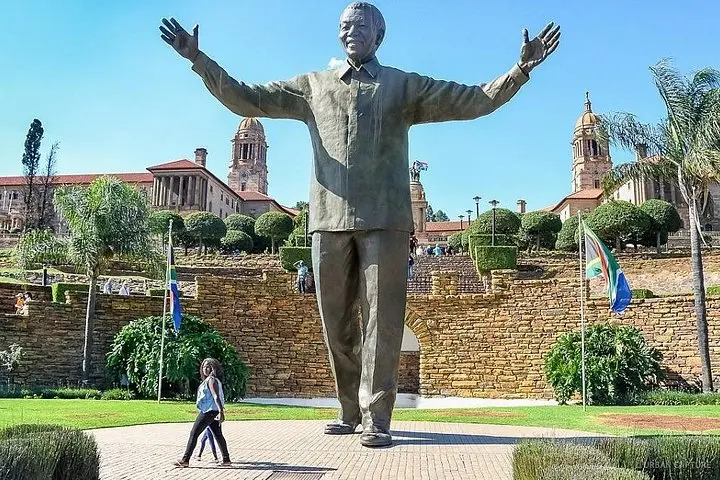
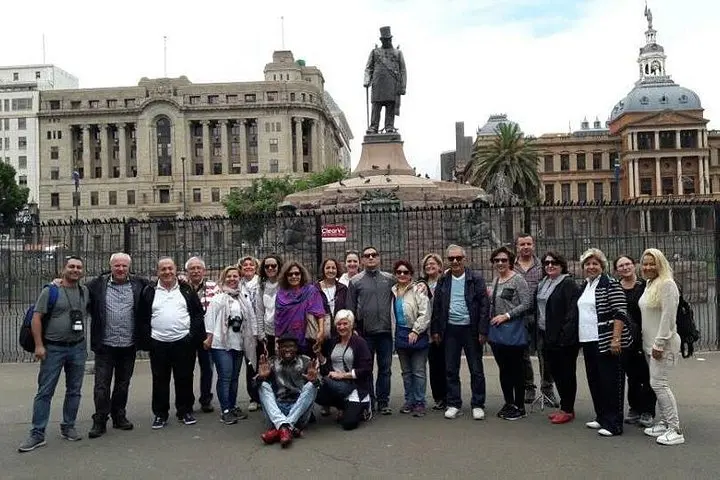
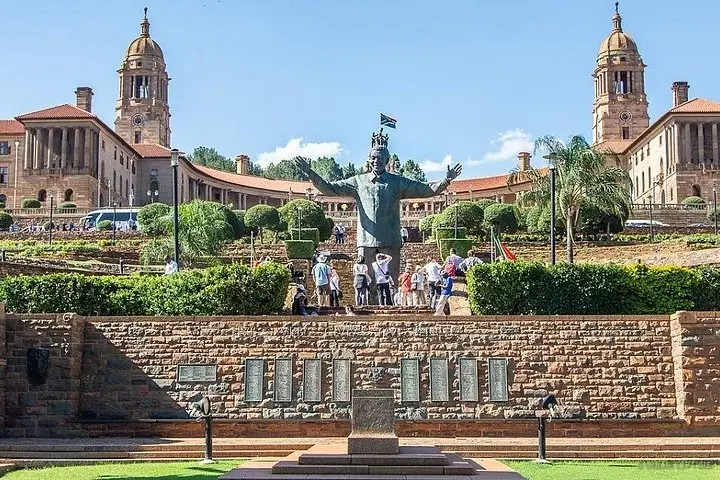
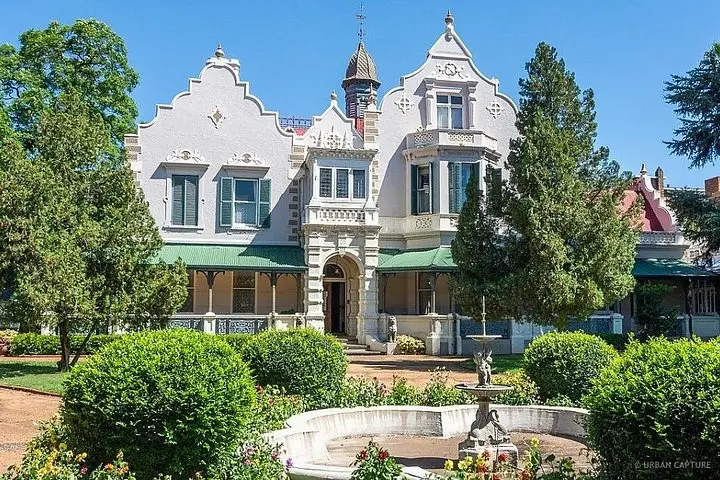
A guided Pretoria City Tour moves from the Union Buildings on Meintjieskop—Herbert Baker’s light‑stone composition overlooking the city—to Freedom Park on Salvokop Hill, then past Church Square and the University of South Africa. The Apies River threads through pockets of green; Fountains Valley recalls early settler farms and the Great Trek, while Melrose and Arcadia neighborhoods show an academic, diplomatic face that grew around three major universities.
The city's story is layered: founded by Marthinus Pretorius in the 19th century, shaped by the Anglo‑Boer conflicts and later national government planning. Architecture and memorials record colonial, wartime, and liberation histories; museums and plaques contextualize contested national narratives.
Practical guidance: expect 4–5 hours with frequent stops for photos and short walks—comfortable walking shoes and sun protection matter. Bottled water is provided but carry a refill bottle for the day; mornings are best for cooler light and sparser traffic. Accessibility is good—many stops and transport options are wheelchair friendly—but check museum entry requirements if you need special assistance. Bring ID for some heritage sites, allow time for traffic between dispersed attractions, and leave room in your schedule to linger at viewpoints. In Pretoria the jacarandas will command attention, the city’s stones will remind you of history, and the green corridors dare you to explore beyond the formal squares.
Yes—transport and many stops are wheelchair accessible; inform the operator of needs at booking to ensure appropriate arrangements.
Admission is not uniformly included; check the itinerary and bring cash or card for optional museum entries like Freedom Park exhibits.
Guides typically speak English; request another language when booking but availability may vary.
Pickup is usually arranged from central Pretoria hotels or a Johannesburg pickup can be requested—confirm your specific pickup point at booking.
Lets Go Travel and Leisure operates guided outdoor trips and adventures with an emphasis on safety, stewardship, and memorable experiences.
You step from an air‑conditioned vehicle into a city that changes color with the seasons: in spring the jacaranda trees fire violet, in other months sandstone buildings and broad squares take the lead.
You step from an air‑conditioned vehicle into a city that changes color with the seasons: in spring the jacaranda trees fire violet, in other months sandstone buildings and broad squares take the lead.
A guided Pretoria City Tour moves from the Union Buildings on Meintjieskop—Herbert Baker’s light‑stone composition overlooking the city—to Freedom Park on Salvokop Hill, then past Church Square and the University of South Africa. The Apies River threads through pockets of green; Fountains Valley recalls early settler farms and the Great Trek, while Melrose and Arcadia neighborhoods show an academic, diplomatic face that grew around three major universities.
The city's story is layered: founded by Marthinus Pretorius in the 19th century, shaped by the Anglo‑Boer conflicts and later national government planning. Architecture and memorials record colonial, wartime, and liberation histories; museums and plaques contextualize contested national narratives.
Practical guidance: expect 4–5 hours with frequent stops for photos and short walks—comfortable walking shoes and sun protection matter. Bottled water is provided but carry a refill bottle for the day; mornings are best for cooler light and sparser traffic. Accessibility is good—many stops and transport options are wheelchair friendly—but check museum entry requirements if you need special assistance. Bring ID for some heritage sites, allow time for traffic between dispersed attractions, and leave room in your schedule to linger at viewpoints. In Pretoria the jacarandas will command attention, the city’s stones will remind you of history, and the green corridors dare you to explore beyond the formal squares.