THE ADVENTURE COLLECTIVE® · Independent discovery and booking for outdoor travel

Trace the route of the 1941 Allied evacuation from Kourtaliotiko Gorge to Preveli Monastery on a private history tour led by a licensed historian. Expect vehicle-supported walks, rare archives, a Cretan lunch, and solemn stops at memorials.
Trace the route of the 1941 Allied evacuation from Kourtaliotiko Gorge to Preveli Monastery on a private history tour led by a licensed historian. Expect vehicle-supported walks, rare archives, a Cretan lunch, and solemn stops at memorials.
A wind-driven scent of rosemary and salt meets the minivan as it winds down from Rethymno toward the island’s southern shore. Travelers step out above Kourtaliotiko Gorge where limestone walls drop into a ribbon of water that once guided retreating Allied troops — the guide’s voice folds history into the wind while the gorge seems to dare listeners to imagine the past.
Verified experiences and guided adventures in the surrounding area.
Operated by Proper Cretan Guide · Preveli, Crete
A wind-driven scent of rosemary and salt meets the minivan as it winds down from Rethymno toward the island’s southern shore. Travelers step out above Kourtaliotiko Gorge where limestone walls drop into a ribbon of water that once guided retreating Allied troops — the guide’s voice folds history into the wind while the gorge seems to dare listeners to imagine the past.
The tour threads together sites that mattered in May 1941: Kourtaliotiko’s evacuation route, the fortified terraces and cloister of Preveli Monastery, and the palm grove and river mouth that sheltered vessels bound for Alexandria. Geology is plain here — folded limestone and alluvial fans shaping narrow gorges and sun-scoured beaches — and the landscape explains why certain coves were chosen for evacuation.
Cretan culture appears in small details: austere monastery rooms, villagers’ oral accounts, and a taverna lunch where dakos and grilled fish anchor the present to local tradition. The historian guide uses rare documents to place local episodes inside Operation Mercury and the wider Allied withdrawal.
Practical matters are simple: the day is mostly vehicle-supported with short walks over uneven paths and stairs at the monastery and beach access. Wear sturdy shoes, bring sun protection and water, and expect a full seven-hour loop with photo stops and a tavern break. Respect memorials and fragile palm groves, and allow time at the Australian War Memorial in Rethymno to close the day with reflection.
Yes — the visit to the monastery is included and the guide will explain its wartime role; follow any on-site rules for access.
Walks are short and mostly gentle but include stairs at the monastery and uneven terrain near the gorge and river mouth.
No — the itinerary includes a lunch stop at a traditional Cretan taverna where guests pay for their own food and drinks.
The tour is suitable for families but some sites have stairs and uneven paths; contact the operator about mobility restrictions and pickup arrangements.
Proper Cretan Guide operates guided outdoor trips and adventures with an emphasis on safety, stewardship, and memorable experiences.
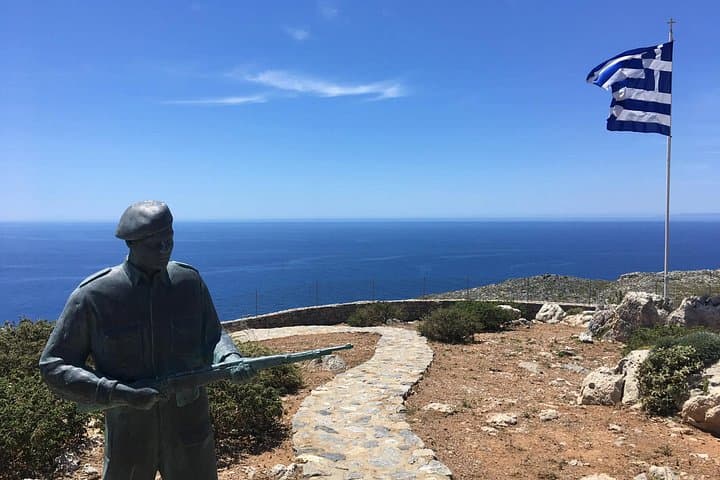


A wind-driven scent of rosemary and salt meets the minivan as it winds down from Rethymno toward the island’s southern shore. Travelers step out above Kourtaliotiko Gorge where limestone walls drop into a ribbon of water that once guided retreating Allied troops — the guide’s voice folds history into the wind while the gorge seems to dare listeners to imagine the past.
A wind-driven scent of rosemary and salt meets the minivan as it winds down from Rethymno toward the island’s southern shore. Travelers step out above Kourtaliotiko Gorge where limestone walls drop into a ribbon of water that once guided retreating Allied troops — the guide’s voice folds history into the wind while the gorge seems to dare listeners to imagine the past.
The tour threads together sites that mattered in May 1941: Kourtaliotiko’s evacuation route, the fortified terraces and cloister of Preveli Monastery, and the palm grove and river mouth that sheltered vessels bound for Alexandria. Geology is plain here — folded limestone and alluvial fans shaping narrow gorges and sun-scoured beaches — and the landscape explains why certain coves were chosen for evacuation.
Cretan culture appears in small details: austere monastery rooms, villagers’ oral accounts, and a taverna lunch where dakos and grilled fish anchor the present to local tradition. The historian guide uses rare documents to place local episodes inside Operation Mercury and the wider Allied withdrawal.
Practical matters are simple: the day is mostly vehicle-supported with short walks over uneven paths and stairs at the monastery and beach access. Wear sturdy shoes, bring sun protection and water, and expect a full seven-hour loop with photo stops and a tavern break. Respect memorials and fragile palm groves, and allow time at the Australian War Memorial in Rethymno to close the day with reflection.