THE ADVENTURE COLLECTIVE® · Independent discovery and booking for outdoor travel

A compact half-day that pairs a short boat ride to Prison Island's tortoise sanctuary and ruins with an atmospheric evening walk through Stone Town and Forodhani Market. Expect 25–30 minute crossings, flat walking on coral and cobbles, and a sensory dive into Zanzibar's layered history.
A compact half-day that pairs a short boat ride to Prison Island's tortoise sanctuary and ruins with an atmospheric evening walk through Stone Town and Forodhani Market. Expect 25–30 minute crossings, flat walking on coral and cobbles, and a sensory dive into Zanzibar's layered history.
The wind off the Indian Ocean strains at the boat's bow as Stone Town recedes and the squat silhouette of Prison Island appears, its coral-stone ruins crouched against a horizon of blinding sea. On arrival the air changes — salt, grill smoke and the low, persistent chatter of peacocks — and the island's giant Aldabra tortoises move with deliberate curiosity, as if counting visitors.
Verified experiences and guided adventures in the surrounding area.
Operated by Zanzibar Crystal Tours & Safaris · Stone Town, Zanzibar
The wind off the Indian Ocean strains at the boat's bow as Stone Town recedes and the squat silhouette of Prison Island appears, its coral-stone ruins crouched against a horizon of blinding sea. On arrival the air changes — salt, grill smoke and the low, persistent chatter of peacocks — and the island's giant Aldabra tortoises move with deliberate curiosity, as if counting visitors.
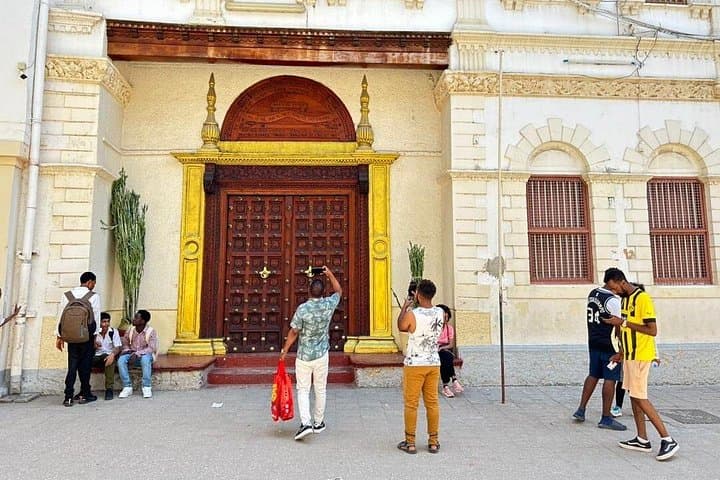
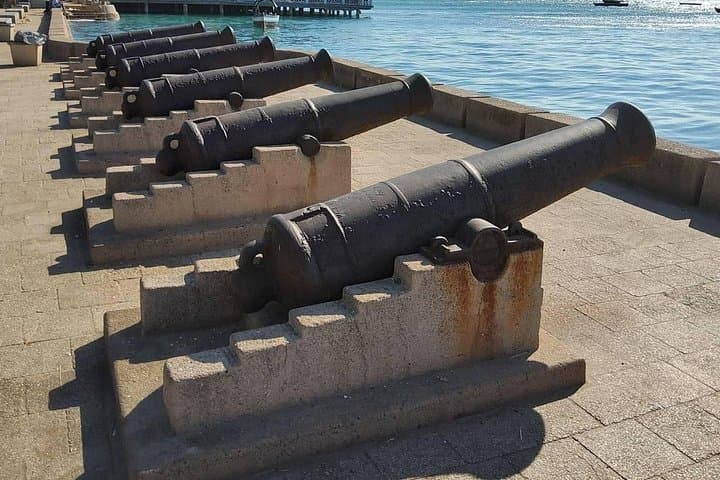
Prison Island (Changuu) carries layers of history: a 1893 detention structure built under General Lloyd Mathews, a later colonial-era tortoise sanctuary stocked from the Seychelles in 1919, and shorelines shaped from coral rag and reef. Back in Stone Town, the streets reveal Persian, Arab, Indian and European influences: carved wooden doors, the House of Wonders' façade and the Old Arab Fort map a mercantile past that remains vivid after dusk.
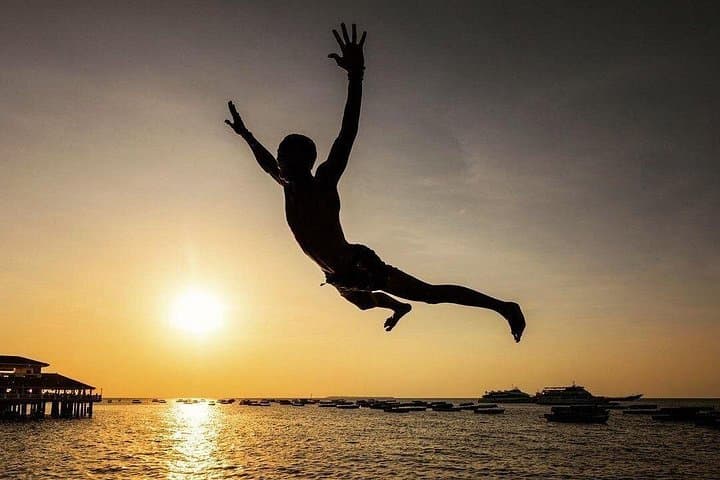
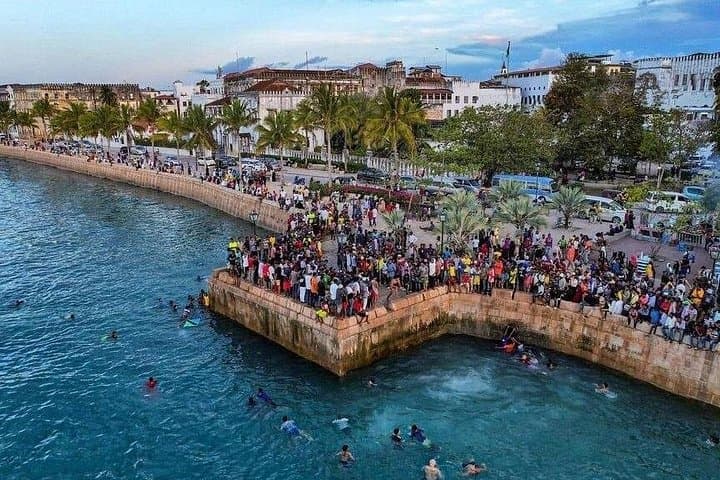
As night falls the Forodhani Open Food Market wakes — charcoal grills, samosas, and freshly flipped Zanzibar octopus — and rooftop bars gather locals and travelers to watch the sun dip behind the harbor. Practicalities are straightforward: the round-trip boat is about 25–30 minutes each way, total tour time runs roughly 5–6 hours, and terrain alternates between flat sandy beach, low coral rock, and cobbled alleys.
Bring reef-safe sunscreen, a swimsuit, cash for market snacks and comfortable flat shoes for walking. If you move slowly through the ruins and keep distance from the tortoises, you’ll get a richer, quieter view. The evening portion is ideal for photographers and anyone wanting a compact introduction to Zanzibar’s culture, history and coastal life.
Yes — the itinerary notes infant seats and stroller accessibility; children enjoy the tortoises and beach activities, though supervision around coral and water is required.
Yes — there are sandy beach areas for swimming in clear Indian Ocean water; bring water shoes for rocky sections and reef-safe sunscreen.
The tour lists wheelchair-accessible transportation and surfaces, but accessibility for boat boarding can vary — confirm specific assistance needs with the operator when booking.
Evening is recommended: temperatures fall, Forodhani Market opens, and rooftop bars offer sunset views; the tour is timed to capture this atmosphere.
Zanzibar Crystal Tours & Safaris operates guided outdoor trips and adventures with an emphasis on safety, stewardship, and memorable experiences.
The wind off the Indian Ocean strains at the boat's bow as Stone Town recedes and the squat silhouette of Prison Island appears, its coral-stone ruins crouched against a horizon of blinding sea. On arrival the air changes — salt, grill smoke and the low, persistent chatter of peacocks — and the island's giant Aldabra tortoises move with deliberate curiosity, as if counting visitors.
The wind off the Indian Ocean strains at the boat's bow as Stone Town recedes and the squat silhouette of Prison Island appears, its coral-stone ruins crouched against a horizon of blinding sea. On arrival the air changes — salt, grill smoke and the low, persistent chatter of peacocks — and the island's giant Aldabra tortoises move with deliberate curiosity, as if counting visitors.
Prison Island (Changuu) carries layers of history: a 1893 detention structure built under General Lloyd Mathews, a later colonial-era tortoise sanctuary stocked from the Seychelles in 1919, and shorelines shaped from coral rag and reef. Back in Stone Town, the streets reveal Persian, Arab, Indian and European influences: carved wooden doors, the House of Wonders' façade and the Old Arab Fort map a mercantile past that remains vivid after dusk.
As night falls the Forodhani Open Food Market wakes — charcoal grills, samosas, and freshly flipped Zanzibar octopus — and rooftop bars gather locals and travelers to watch the sun dip behind the harbor. Practicalities are straightforward: the round-trip boat is about 25–30 minutes each way, total tour time runs roughly 5–6 hours, and terrain alternates between flat sandy beach, low coral rock, and cobbled alleys.
Bring reef-safe sunscreen, a swimsuit, cash for market snacks and comfortable flat shoes for walking. If you move slowly through the ruins and keep distance from the tortoises, you’ll get a richer, quieter view. The evening portion is ideal for photographers and anyone wanting a compact introduction to Zanzibar’s culture, history and coastal life.