THE ADVENTURE COLLECTIVE® · Independent discovery and booking for outdoor travel

Explore Sarajevo’s 1984 Winter Olympic sites on a private 3–4 hour drive—visit the Olympic Museum, the war-damaged Trebević bobsleigh track, Igman’s ski jumps and views toward Bjelašnica. This compact tour pairs sports history with raw landscape and practical logistics.
Explore Sarajevo’s 1984 Winter Olympic sites on a private 3–4 hour drive—visit the Olympic Museum, the war-damaged Trebević bobsleigh track, Igman’s ski jumps and views toward Bjelašnica. This compact tour pairs sports history with raw landscape and practical logistics.
You arrive from Sarajevo into a landscape where 1984’s winter pageantry still sits beside scars of the 1990s—rusted concrete of a bobsleigh trough, grassy ski jump approaches, and a museum that catalogs both triumph and rupture.
Verified experiences and guided adventures in the surrounding area.
Operated by Torus Tours · Sarajevo, Federation of Bosnia and Herzegovina
You arrive from Sarajevo into a landscape where 1984’s winter pageantry still sits beside scars of the 1990s—rusted concrete of a bobsleigh trough, grassy ski jump approaches, and a museum that catalogs both triumph and rupture.
The morning begins at the Olympic Museum in the city, where medals, posters and archival footage introduce the Games’ brief bright chapter. From there the road climbs to Trebević, the mountain overlooking Sarajevo; at ~1,627 m the derelict bobsleigh track leans into history, pitted by shelling and now reclaimed by brush and graffiti. A short drive continues to Igman (~1,500 m) for the ski-jump complexes and a panoramic sweep of the valley. On the way you’ll pass views of Bjelašnica (peak ~2,067 m), the highest Olympic mountain in Bosnia and Herzegovina, its slopes still threaded with ski runs and chairlift pylons.
Geology here is karst-influenced limestone and flysch, shaping steep ridgelines and broad alpine meadows. Culturally, the route stitches Ottoman and Austro-Hungarian Sarajevo with 20th-century Olympic optimism and wartime memory—local guides often blend sport history with neighborhood tales.
Practically: expect 3–4 hours, curb-to-curb private transport in an air-conditioned vehicle, and short, mostly paved or packed-earth walks to viewpoints and installations. Wear layers—mountain air can be 10–15°C cooler than the city—good shoes for uneven surfaces, and bring water, a camera, and respect for fragile wartime sites. The tour is suitable for most fitness levels and gives a compact, windowed look at Sarajevo’s Olympic legacy and mountain panoramas.
Yes — the tour includes entrance to the Olympic Museum as listed in the inclusions.
The tour is rated easy: most time is in the vehicle with short walks to viewpoints and the ski-jump approaches.
Yes — sites are commonly visited by tourists; guides keep guests away from unstable structures and focus on safe vantage points.
Guides typically speak English; confirm language preference at booking to ensure availability.
Torus Tours operates guided outdoor trips and adventures with an emphasis on safety, stewardship, and memorable experiences.
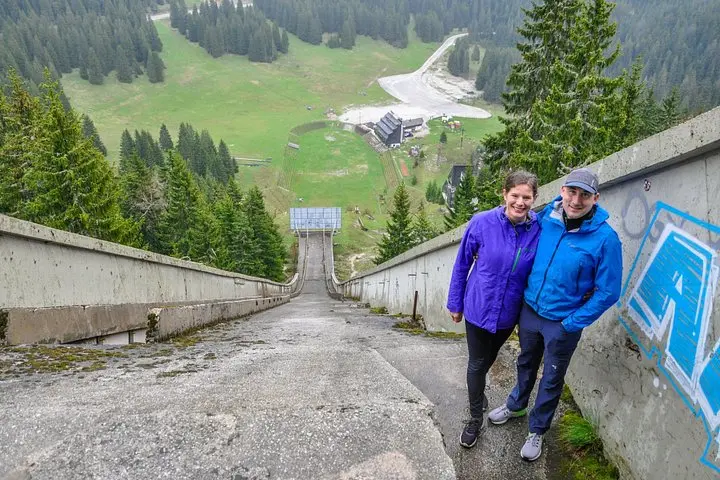
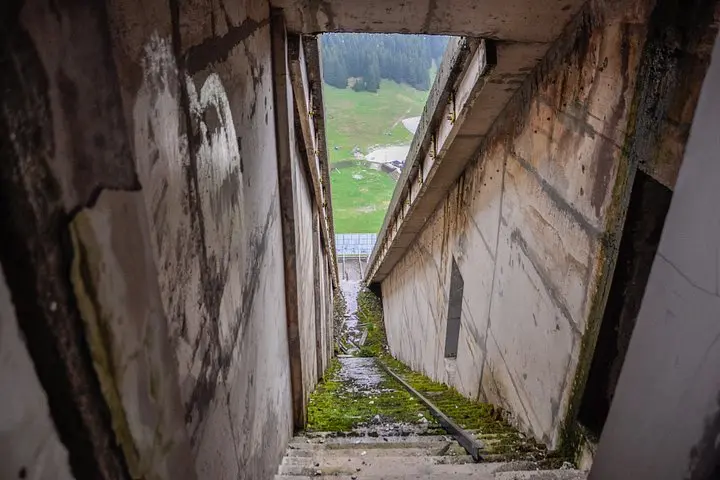
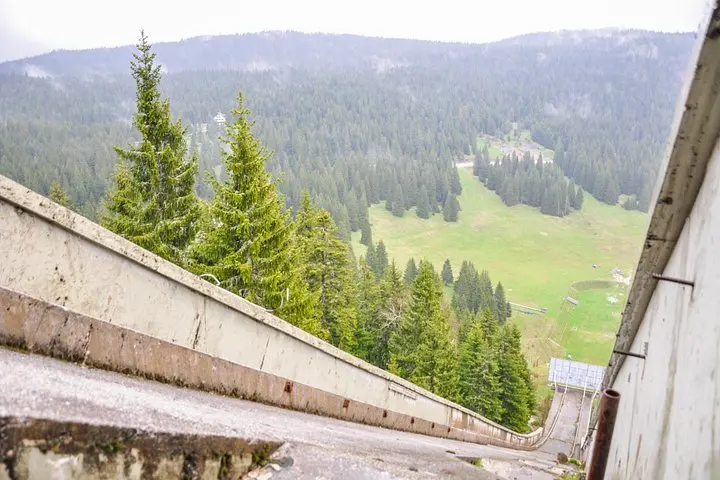
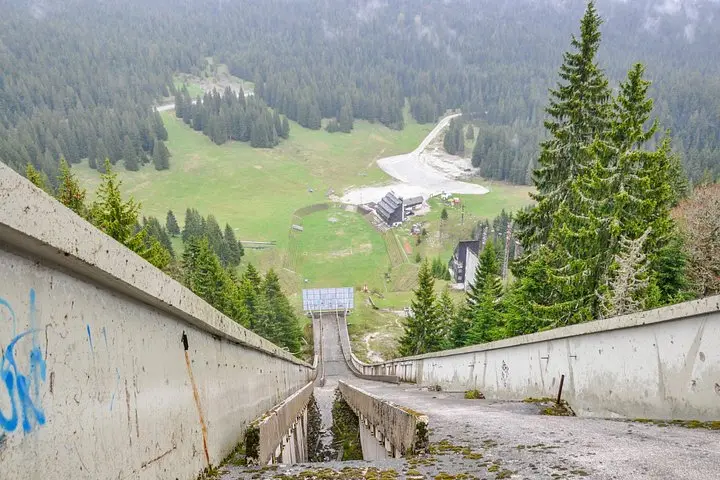
You arrive from Sarajevo into a landscape where 1984’s winter pageantry still sits beside scars of the 1990s—rusted concrete of a bobsleigh trough, grassy ski jump approaches, and a museum that catalogs both triumph and rupture.
You arrive from Sarajevo into a landscape where 1984’s winter pageantry still sits beside scars of the 1990s—rusted concrete of a bobsleigh trough, grassy ski jump approaches, and a museum that catalogs both triumph and rupture.
The morning begins at the Olympic Museum in the city, where medals, posters and archival footage introduce the Games’ brief bright chapter. From there the road climbs to Trebević, the mountain overlooking Sarajevo; at ~1,627 m the derelict bobsleigh track leans into history, pitted by shelling and now reclaimed by brush and graffiti. A short drive continues to Igman (~1,500 m) for the ski-jump complexes and a panoramic sweep of the valley. On the way you’ll pass views of Bjelašnica (peak ~2,067 m), the highest Olympic mountain in Bosnia and Herzegovina, its slopes still threaded with ski runs and chairlift pylons.
Geology here is karst-influenced limestone and flysch, shaping steep ridgelines and broad alpine meadows. Culturally, the route stitches Ottoman and Austro-Hungarian Sarajevo with 20th-century Olympic optimism and wartime memory—local guides often blend sport history with neighborhood tales.
Practically: expect 3–4 hours, curb-to-curb private transport in an air-conditioned vehicle, and short, mostly paved or packed-earth walks to viewpoints and installations. Wear layers—mountain air can be 10–15°C cooler than the city—good shoes for uneven surfaces, and bring water, a camera, and respect for fragile wartime sites. The tour is suitable for most fitness levels and gives a compact, windowed look at Sarajevo’s Olympic legacy and mountain panoramas.