THE ADVENTURE COLLECTIVE® · Independent discovery and booking for outdoor travel

Explore Egypt’s oldest royal complexes and Alexandria’s Mediterranean heritage in a compact private itinerary. Two full days of guided visits to Giza, Saqqara, Dahshur and Alexandria deliver layered history with private transport and local insight.
Explore Egypt’s oldest royal complexes and Alexandria’s Mediterranean heritage in a compact private itinerary. Two full days of guided visits to Giza, Saqqara, Dahshur and Alexandria deliver layered history with private transport and local insight.
Stand at the edge of the Giza Plateau and the desert seems to pull you forward, dunes of stone rising into millennia-old geometry. On this private two-day route you move from the thunderous scale of the Great Pyramid to the low, layered steps of Djoser, then trade sand and sunlight for the breeze of the Mediterranean in Alexandria.
Verified experiences and guided adventures in the surrounding area.
Operated by Emo Tours Swiss · Cairo, Cairo Governorate
Stand at the edge of the Giza Plateau and the desert seems to pull you forward, dunes of stone rising into millennia-old geometry. On this private two-day route you move from the thunderous scale of the Great Pyramid to the low, layered steps of Djoser, then trade sand and sunlight for the breeze of the Mediterranean in Alexandria.
The first day follows Egypt’s Old Kingdom spine: Giza’s trio of pyramids and the Sphinx, the open-air remains of Memphis and the stepped innovation at Saqqara, then older experiments in form at Dahshur. Geology here is visible—soft limestone cut into modular blocks, calcite and sand cemented by time—while cities grew around tomb-fields that recorded changing royal ritual and construction technique.
Day two shifts to Hellenistic and Roman Alexandria: the modern Bibliotheca Alexandrina honoring a lost intellectual center, the sea-facing Qaitbay Citadel, Kom El‑Shoqafa catacombs and a compact Roman theater. The port city’s culture layers Ottoman, Coptic and Greco-Roman traces along waterfront corniches and mosque courtyards.
Practical guidance: expect long days with multiple short site stops; comfortable, closed shoes and sun protection are essential. Many sites are uneven stone and open to sun; carry refillable water and pace photography time at major monuments. Bookings usually include private transfers and a guide; confirm which museum or pyramid interior tickets are included. Respect roped-off areas and follow your guide to minimize impact on fragile masonry.
The tour listing shows admissions included for specific sites—confirm which interiors (e.g., pyramid chambers, museums) are covered when you book as some entries may require additional fees.
Private pickup is provided from hotels in Cairo or Giza as stated; confirm your exact pickup point when completing booking details.
The modern library is generally open most days but closures or restricted access can occur; note that the historic Library of Alexandria is long gone and the new complex may have variable hours.
Dress modestly: shoulders and knees covered; women may need a headscarf (often provided at major mosques) and everyone should remove shoes where required.
Emo Tours Swiss operates guided outdoor trips and adventures with an emphasis on safety, stewardship, and memorable experiences.
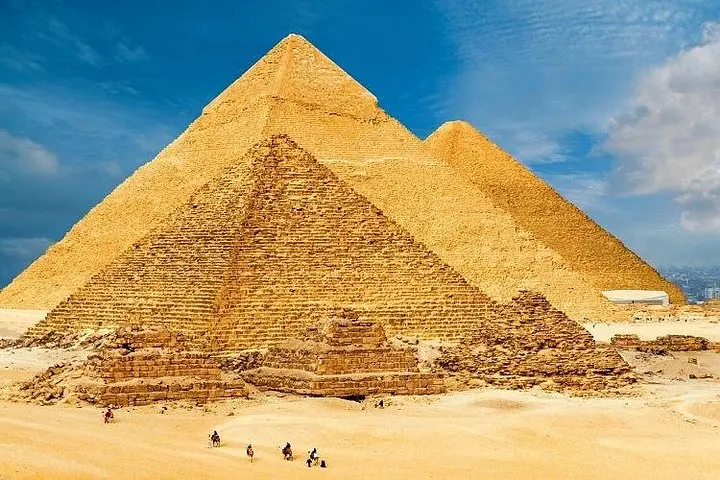
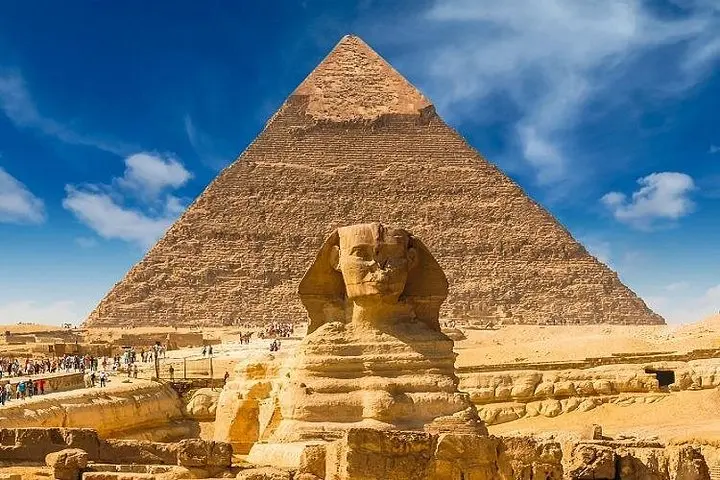
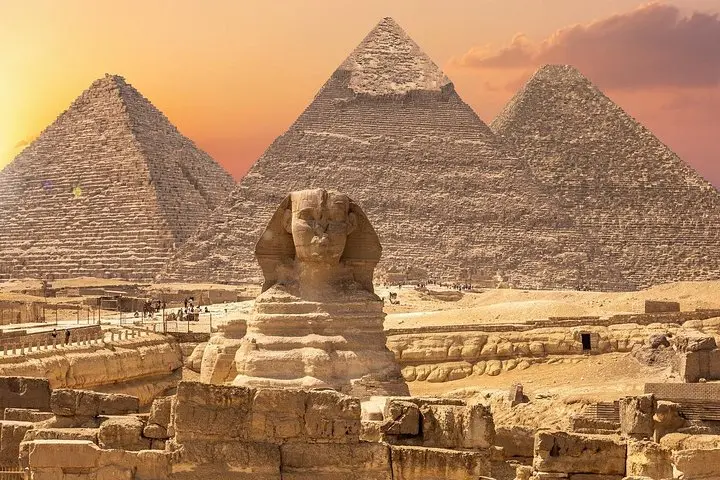
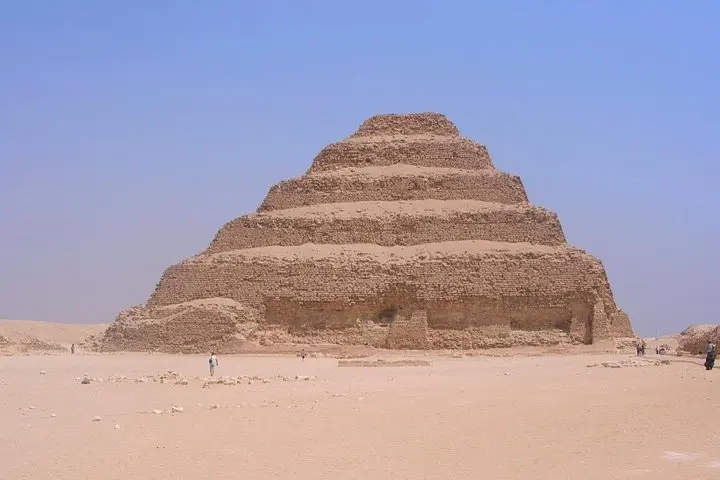
Stand at the edge of the Giza Plateau and the desert seems to pull you forward, dunes of stone rising into millennia-old geometry. On this private two-day route you move from the thunderous scale of the Great Pyramid to the low, layered steps of Djoser, then trade sand and sunlight for the breeze of the Mediterranean in Alexandria.
Stand at the edge of the Giza Plateau and the desert seems to pull you forward, dunes of stone rising into millennia-old geometry. On this private two-day route you move from the thunderous scale of the Great Pyramid to the low, layered steps of Djoser, then trade sand and sunlight for the breeze of the Mediterranean in Alexandria.
The first day follows Egypt’s Old Kingdom spine: Giza’s trio of pyramids and the Sphinx, the open-air remains of Memphis and the stepped innovation at Saqqara, then older experiments in form at Dahshur. Geology here is visible—soft limestone cut into modular blocks, calcite and sand cemented by time—while cities grew around tomb-fields that recorded changing royal ritual and construction technique.
Day two shifts to Hellenistic and Roman Alexandria: the modern Bibliotheca Alexandrina honoring a lost intellectual center, the sea-facing Qaitbay Citadel, Kom El‑Shoqafa catacombs and a compact Roman theater. The port city’s culture layers Ottoman, Coptic and Greco-Roman traces along waterfront corniches and mosque courtyards.
Practical guidance: expect long days with multiple short site stops; comfortable, closed shoes and sun protection are essential. Many sites are uneven stone and open to sun; carry refillable water and pace photography time at major monuments. Bookings usually include private transfers and a guide; confirm which museum or pyramid interior tickets are included. Respect roped-off areas and follow your guide to minimize impact on fragile masonry.