THE ADVENTURE COLLECTIVE® · Independent discovery and booking for outdoor travel

Move through Cappadocia’s surreal rockscape on a private two-day tour that combines Göreme viewpoints, cave churches and an underground city. Practical logistics and a local guide make it possible to see the region’s geological and cultural highlights without hurrying.
Move through Cappadocia’s surreal rockscape on a private two-day tour that combines Göreme viewpoints, cave churches and an underground city. Practical logistics and a local guide make it possible to see the region’s geological and cultural highlights without hurrying.
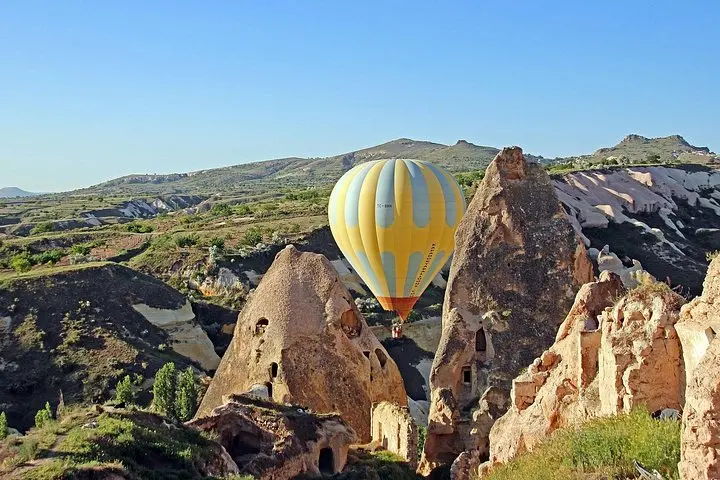
The van eases onto a dusty track just before dawn and the valley wakes in stages: a smear of cold light, a slow plume of balloon envelopes inflating like sleeping giants, and the wind reshaping the soft rock into yet another improbable silhouette. On a private two-day tour of Cappadocia, travelers move through that slow reveal with a guide who sets the pace — pausing where the land has a story to tell and driving where the distances demand it.
Verified experiences and guided adventures in the surrounding area.
Operated by Los Picos Travel · Göreme, Nevşehir
The van eases onto a dusty track just before dawn and the valley wakes in stages: a smear of cold light, a slow plume of balloon envelopes inflating like sleeping giants, and the wind reshaping the soft rock into yet another improbable silhouette. On a private two-day tour of Cappadocia, travelers move through that slow reveal with a guide who sets the pace — pausing where the land has a story to tell and driving where the distances demand it.
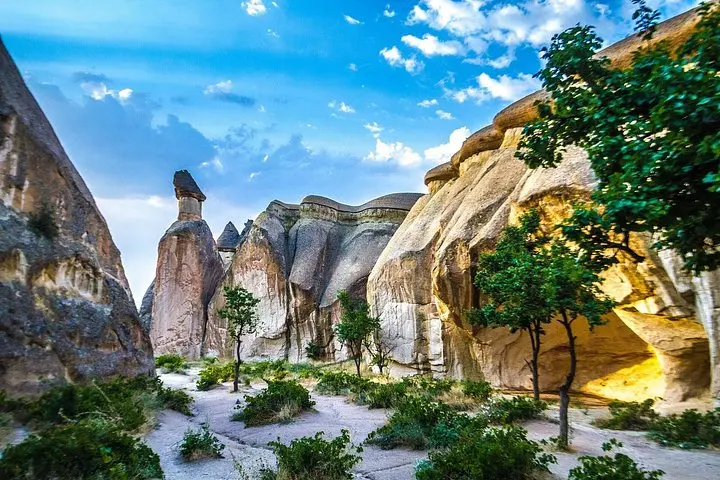
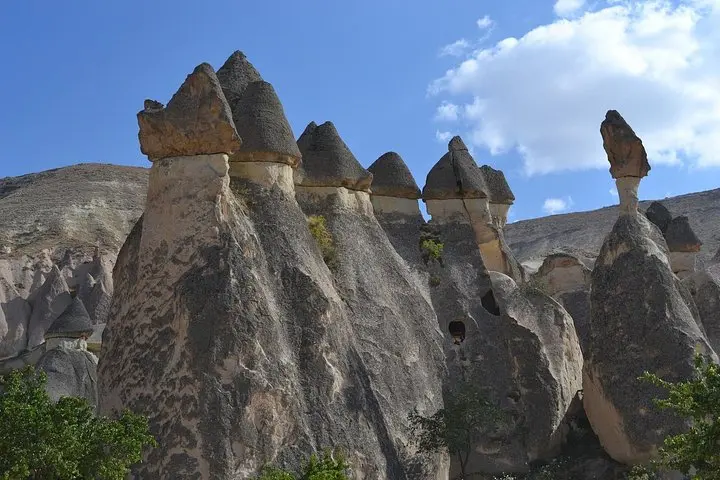
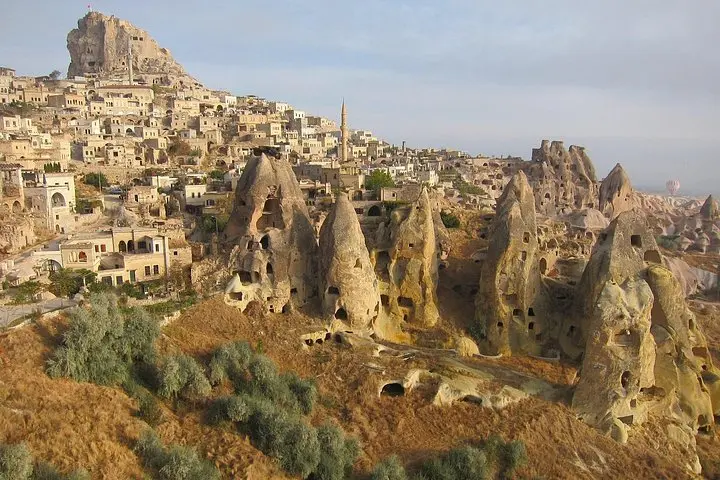
Cappadocia’s landscape is geological theater. Millions of years of volcanic ash hardened into tuff, then wind and water carved it into pinnacles and cones now called “fairy chimneys.” People answered the rock’s invitation, hollowing homes, wineries and churches into the soft stone. Byzantine frescoes still guard narrow cave interiors, their colors muted but legible, while entire underground cities — hewn for refuge during invasions — run three or more storeys beneath the surface.
Culture here is tactile: potters in Avanos spin red-clay wares that echo the red riverbeds; shepherds still lead flocks across plateaus; and pigeon-houses scored into cliffs tell of centuries of small, practical rituals. The tour stitches together north and south circuits — imaginative valleys with oddly anthropomorphic spires, the sweeping panorama from Uçhisar’s natural citadel, carved churches dotted with iconography, and the cool hush of Derinkuyu or Kaymaklı underground.
Beyond the sights, the best moments are sensory and small: the dry rasp of tuff underfoot, the smell of strong Turkish tea in a village teahouse, and the way morning light gives the chimneys a honeyed translucence. Guides here balance context and logistics — explaining how erosion works, pointing out fresco details, and negotiating narrow village streets.
Practicalities matter. Expect uneven walking, steep stairs in caves and confined passages in underground cities; comfortable, broken-in footwear and a modest fitness baseline make the difference between curiosity and exhaustion. Temperatures swing: mornings and evenings are cool year-round; midday can be hot in summer. Bring layered clothing, water, sunscreen and a small daypack. Most private tours include hotel pickup and transport between sites, which makes covering both the north and south highlights in two days realistic without feeling rushed.
For photographers, early morning light and late afternoon shadows best reveal the rock’s textures. For those who want a quieter experience, ask to shift visits to less popular viewpoints or to include a pottery workshop in Avanos. In two days, Cappadocia reveals itself as both raw geology and human adaptation — a region where the landscape seems to be listening and occasionally answering back.
Yes—children can join but must be accompanied by an adult; some underground passages and stairways may be tight for very young kids.
This tour description notes admissions are generally not included; confirm with the operator for specific sites like underground cities or museumed churches.
Expect multiple short to moderate walks at viewpoints and inside cave sites—roughly a few miles total per day, with periods of driving between locations.
It’s a private tour, so most operators will adjust stops or pacing—request specific interests like pottery workshops or longer photo stops in advance.
Spring (April–June) and fall (September–October) offer mild temperatures and fewer crowds; summer can be very hot and winter cold with occasional snow.
Many sites have uneven ground and stairs; people with significant mobility limitations should discuss accessibility with the supplier before booking.
Los Picos Travel operates guided outdoor trips and adventures with an emphasis on safety, stewardship, and memorable experiences.
The van eases onto a dusty track just before dawn and the valley wakes in stages: a smear of cold light, a slow plume of balloon envelopes inflating like sleeping giants, and the wind reshaping the soft rock into yet another improbable silhouette. On a private two-day tour of Cappadocia, travelers move through that slow reveal with a guide who sets the pace — pausing where the land has a story to tell and driving where the distances demand it.
The van eases onto a dusty track just before dawn and the valley wakes in stages: a smear of cold light, a slow plume of balloon envelopes inflating like sleeping giants, and the wind reshaping the soft rock into yet another improbable silhouette. On a private two-day tour of Cappadocia, travelers move through that slow reveal with a guide who sets the pace — pausing where the land has a story to tell and driving where the distances demand it.
Cappadocia’s landscape is geological theater. Millions of years of volcanic ash hardened into tuff, then wind and water carved it into pinnacles and cones now called “fairy chimneys.” People answered the rock’s invitation, hollowing homes, wineries and churches into the soft stone. Byzantine frescoes still guard narrow cave interiors, their colors muted but legible, while entire underground cities — hewn for refuge during invasions — run three or more storeys beneath the surface.
Culture here is tactile: potters in Avanos spin red-clay wares that echo the red riverbeds; shepherds still lead flocks across plateaus; and pigeon-houses scored into cliffs tell of centuries of small, practical rituals. The tour stitches together north and south circuits — imaginative valleys with oddly anthropomorphic spires, the sweeping panorama from Uçhisar’s natural citadel, carved churches dotted with iconography, and the cool hush of Derinkuyu or Kaymaklı underground.
Beyond the sights, the best moments are sensory and small: the dry rasp of tuff underfoot, the smell of strong Turkish tea in a village teahouse, and the way morning light gives the chimneys a honeyed translucence. Guides here balance context and logistics — explaining how erosion works, pointing out fresco details, and negotiating narrow village streets.
Practicalities matter. Expect uneven walking, steep stairs in caves and confined passages in underground cities; comfortable, broken-in footwear and a modest fitness baseline make the difference between curiosity and exhaustion. Temperatures swing: mornings and evenings are cool year-round; midday can be hot in summer. Bring layered clothing, water, sunscreen and a small daypack. Most private tours include hotel pickup and transport between sites, which makes covering both the north and south highlights in two days realistic without feeling rushed.
For photographers, early morning light and late afternoon shadows best reveal the rock’s textures. For those who want a quieter experience, ask to shift visits to less popular viewpoints or to include a pottery workshop in Avanos. In two days, Cappadocia reveals itself as both raw geology and human adaptation — a region where the landscape seems to be listening and occasionally answering back.