THE ADVENTURE COLLECTIVE® · Independent discovery and booking for outdoor travel

Overnight train from Hanoi, a 6–10km day of trekking through Muong Hoa valley and an early-morning visit to Coc Ly market make this private 2-day Sapa tour a compact cultural-and-hike experience. Expect terraces, riverside villages and a short boat trip to caves and waterfalls.
Overnight train from Hanoi, a 6–10km day of trekking through Muong Hoa valley and an early-morning visit to Coc Ly market make this private 2-day Sapa tour a compact cultural-and-hike experience. Expect terraces, riverside villages and a short boat trip to caves and waterfalls.
You step off the overnight train into a cool, thin air and the town of Sapa opens like a map of terraces and mist. Morning light slides down Muong Hoa valley as you begin a largely downhill trek—first a 6km descent to Y Linh Ho, then another 2km to Lao Chai and Ta Van—through carved rice benches and scattered minority villages where livestock and conversations set the rhythm.
Verified experiences and guided adventures in the surrounding area.
Operated by Vietnam Blue Tours · Sapa, Lao Cai
You step off the overnight train into a cool, thin air and the town of Sapa opens like a map of terraces and mist. Morning light slides down Muong Hoa valley as you begin a largely downhill trek—first a 6km descent to Y Linh Ho, then another 2km to Lao Chai and Ta Van—through carved rice benches and scattered minority villages where livestock and conversations set the rhythm.
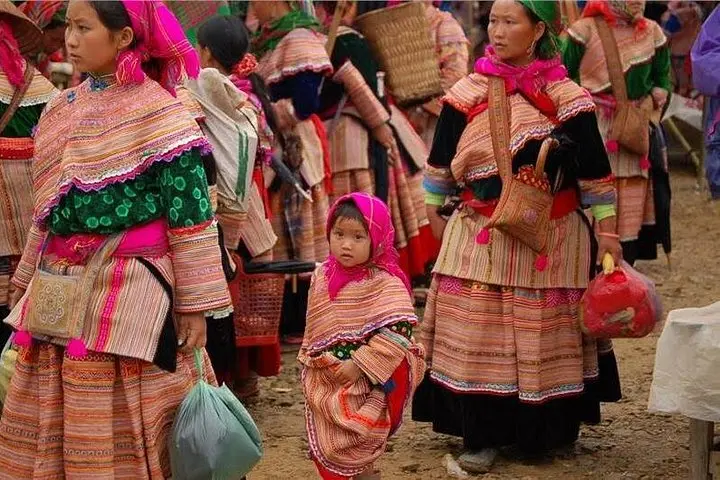
This corner of northern Vietnam sits on the Hoang Lien range with Sapa itself around 1,500–1,600m elevation; geology here is folded metamorphic rock cut by rivers that create narrow valleys and dramatic limestone karsts near Coc Ly. The Coc Ly market, held early on specific days, is a living subsistence economy: Flower H’Mong, Black Dzao, Tay and others trade textiles, produce and stories. Later a boat trip on the Chay River threads you between sheer limestone walls toward waterfalls and the Fairy Cave, and a stop in a Tay riverside village offers a direct look at vernacular riverside life.
Practically, expect about 8–10km of walking on mixed dirt and stone trails with short steep sections and roughly 300–600m cumulative descent on day two. Nights are on soft-sleeper trains and a basic Sapa hotel; guides speak English or French and local transport includes shared tourist buses and a private return transfer for parts of the route. Bring layered clothing, waterproofs and cash for market purchases; start early at Coc Ly to catch the busiest market hours and calmer light for photos.
This is a compact cultural-trek combo—part trail, part market theatre—best for travelers who want active walks tied to direct encounters with highland communities.
Expect roughly 8–10 km total across the Y Linh Ho–Lao Chai–Ta Van route, mostly downhill on well-trodden village trails.
Coc Ly is held on specific market days (often early morning); confirm the tour date since markets rotate by village schedule and day of week.
Soft-sleeper cabins with 4 berths are common; they are basic but suitable for most travelers—book early if you prefer more privacy or a lower berth.
ATMs are available in larger towns like Sapa and Lao Cai, but not at rural markets—bring sufficient Vietnamese dong for purchases and tips.
Vietnam Blue Tours operates guided outdoor trips and adventures with an emphasis on safety, stewardship, and memorable experiences.
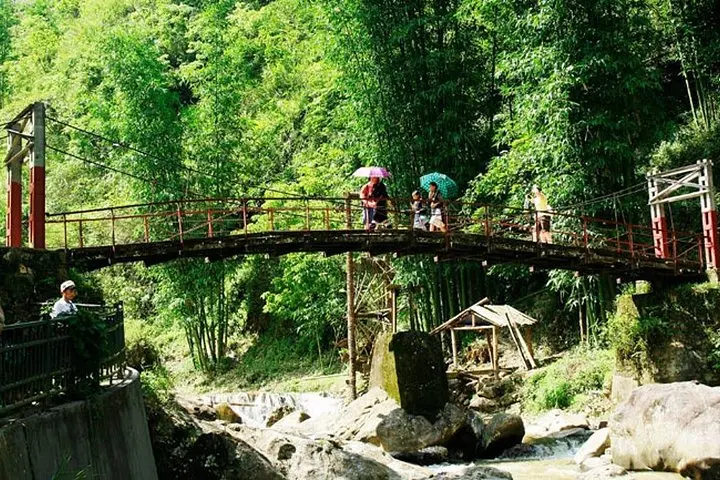
You step off the overnight train into a cool, thin air and the town of Sapa opens like a map of terraces and mist. Morning light slides down Muong Hoa valley as you begin a largely downhill trek—first a 6km descent to Y Linh Ho, then another 2km to Lao Chai and Ta Van—through carved rice benches and scattered minority villages where livestock and conversations set the rhythm.
You step off the overnight train into a cool, thin air and the town of Sapa opens like a map of terraces and mist. Morning light slides down Muong Hoa valley as you begin a largely downhill trek—first a 6km descent to Y Linh Ho, then another 2km to Lao Chai and Ta Van—through carved rice benches and scattered minority villages where livestock and conversations set the rhythm.
This corner of northern Vietnam sits on the Hoang Lien range with Sapa itself around 1,500–1,600m elevation; geology here is folded metamorphic rock cut by rivers that create narrow valleys and dramatic limestone karsts near Coc Ly. The Coc Ly market, held early on specific days, is a living subsistence economy: Flower H’Mong, Black Dzao, Tay and others trade textiles, produce and stories. Later a boat trip on the Chay River threads you between sheer limestone walls toward waterfalls and the Fairy Cave, and a stop in a Tay riverside village offers a direct look at vernacular riverside life.
Practically, expect about 8–10km of walking on mixed dirt and stone trails with short steep sections and roughly 300–600m cumulative descent on day two. Nights are on soft-sleeper trains and a basic Sapa hotel; guides speak English or French and local transport includes shared tourist buses and a private return transfer for parts of the route. Bring layered clothing, waterproofs and cash for market purchases; start early at Coc Ly to catch the busiest market hours and calmer light for photos.
This is a compact cultural-trek combo—part trail, part market theatre—best for travelers who want active walks tied to direct encounters with highland communities.