THE ADVENTURE COLLECTIVE® · Independent discovery and booking for outdoor travel

A compact, private 3-day loop from Delhi that delivers the Taj Mahal, Agra Fort, Fatehpur Sikri and Jaipur’s Amber Fort with private transfers and a guide. Early starts and comfort-focused logistics make this ideal for short stays.
A compact, private 3-day loop from Delhi that delivers the Taj Mahal, Agra Fort, Fatehpur Sikri and Jaipur’s Amber Fort with private transfers and a guide. Early starts and comfort-focused logistics make this ideal for short stays.
You step out of a private air‑conditioned car onto a sun-baked plaza and the Taj Mahal’s white marble seems to breathe in the morning light — a hush that belongs to centuries of arrival and departure. Over three days you’ll move from Delhi’s organized chaos onto the Yamuna floodplain, across the red-sandstone plains of Fatehpur Sikri, and into Jaipur’s rose-colored streets, tracing the arc of Mughal and Rajput power.
Verified experiences and guided adventures in the surrounding area.
Operated by Travel Creators Of India · New Delhi, Delhi
You step out of a private air‑conditioned car onto a sun-baked plaza and the Taj Mahal’s white marble seems to breathe in the morning light — a hush that belongs to centuries of arrival and departure. Over three days you’ll move from Delhi’s organized chaos onto the Yamuna floodplain, across the red-sandstone plains of Fatehpur Sikri, and into Jaipur’s rose-colored streets, tracing the arc of Mughal and Rajput power.
The route maps Mughal ambition and Rajput craftsmanship: the Taj Mahal’s inlaid pietra dura, Agra Fort’s artillery-ready bastions, Fatehpur Sikri’s red-sandstone palaces, and Amber Fort’s hilltop courtyards. Geology is simple and practical here — alluvial plains rising to ochre sandstone outcrops — which shaped trade routes and palace sites. Culturally, these cities pulse with markets, street food, and living craft traditions from marble inlay to block printing.
Practical guidance: Expect long drives (Delhi–Agra ~3 hours, Agra–Jaipur ~4 hours), early starts to avoid heat and crowds, and timed monument access (Taj closed Fridays). Your private guide handles tickets and logistics; bring bottled water, wear comfortable walking shoes, and carry modest clothing for mosque and palace entry. Plan for intense sun in summer and pleasantly cool mornings in winter; mornings and late afternoons are the best light for photos.
Local interactions are brisk — rikshaw rides through Old Delhi, a golf-cart transfer at the Taj, and bargaining at local bazaars. This itinerary is low on technical difficulty but high on sensory detail: chanting azaan, vendors calling, peacocks slipping through garden shade. With simple preparation, the Golden Triangle becomes a compact, three-day primer on North India’s history and living culture.
The Taj Mahal is closed on Fridays for prayer; plan your visit on another day or adjust the itinerary accordingly.
Expect roughly 3 hours from Delhi to Agra and about 4 hours from Agra to Jaipur, traffic dependent; the itinerary schedules these as full travel segments.
This tour typically handles logistics but check your booking details — some options include hotel and admissions, others provide guide and transfers only.
Yes — the operator allows customization for interests, pickup/drop locations, and timing; confirm any additions at booking.
Travel Creators Of India operates guided outdoor trips and adventures with an emphasis on safety, stewardship, and memorable experiences.
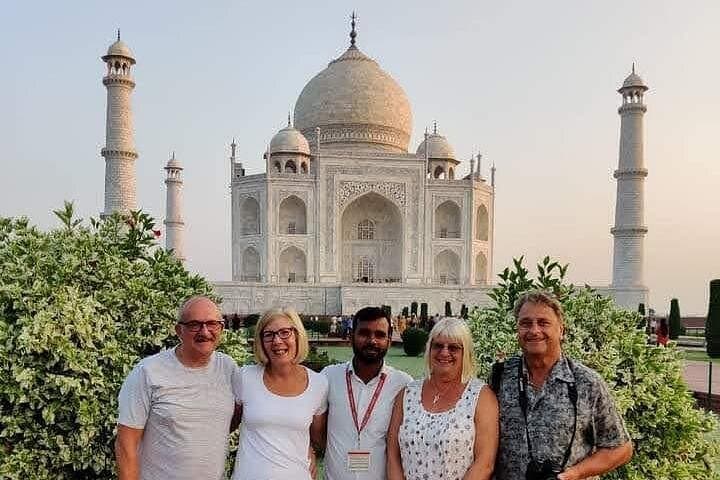


You step out of a private air‑conditioned car onto a sun-baked plaza and the Taj Mahal’s white marble seems to breathe in the morning light — a hush that belongs to centuries of arrival and departure. Over three days you’ll move from Delhi’s organized chaos onto the Yamuna floodplain, across the red-sandstone plains of Fatehpur Sikri, and into Jaipur’s rose-colored streets, tracing the arc of Mughal and Rajput power.
You step out of a private air‑conditioned car onto a sun-baked plaza and the Taj Mahal’s white marble seems to breathe in the morning light — a hush that belongs to centuries of arrival and departure. Over three days you’ll move from Delhi’s organized chaos onto the Yamuna floodplain, across the red-sandstone plains of Fatehpur Sikri, and into Jaipur’s rose-colored streets, tracing the arc of Mughal and Rajput power.
The route maps Mughal ambition and Rajput craftsmanship: the Taj Mahal’s inlaid pietra dura, Agra Fort’s artillery-ready bastions, Fatehpur Sikri’s red-sandstone palaces, and Amber Fort’s hilltop courtyards. Geology is simple and practical here — alluvial plains rising to ochre sandstone outcrops — which shaped trade routes and palace sites. Culturally, these cities pulse with markets, street food, and living craft traditions from marble inlay to block printing.
Practical guidance: Expect long drives (Delhi–Agra ~3 hours, Agra–Jaipur ~4 hours), early starts to avoid heat and crowds, and timed monument access (Taj closed Fridays). Your private guide handles tickets and logistics; bring bottled water, wear comfortable walking shoes, and carry modest clothing for mosque and palace entry. Plan for intense sun in summer and pleasantly cool mornings in winter; mornings and late afternoons are the best light for photos.
Local interactions are brisk — rikshaw rides through Old Delhi, a golf-cart transfer at the Taj, and bargaining at local bazaars. This itinerary is low on technical difficulty but high on sensory detail: chanting azaan, vendors calling, peacocks slipping through garden shade. With simple preparation, the Golden Triangle becomes a compact, three-day primer on North India’s history and living culture.