THE ADVENTURE COLLECTIVE® · Independent discovery and booking for outdoor travel

Three days traversing Tarangire’s baobab-studded plains and the vast bowl of Ngorongoro, with luxury lodges and private 4x4 game drives. Expect dense elephant herds, prolific birdlife and a high chance to see the Big Five.
Three days traversing Tarangire’s baobab-studded plains and the vast bowl of Ngorongoro, with luxury lodges and private 4x4 game drives. Expect dense elephant herds, prolific birdlife and a high chance to see the Big Five.
You arrive before dawn, the Land Cruiser’s engine a soft promise as you roll past baobabs silhouetted against pale sky. Dust lifts in sheets and the first elephants of the day move like weather—slow, inevitable—through the Tarangire plain. The vehicle’s pop-up roof lets you feel the air and hear the park: grasshoppers, distant hoots, and the low rumble of a herd.
Verified experiences and guided adventures in the surrounding area.
Operated by Safaris Africa United · Arusha, Arusha Region
You arrive before dawn, the Land Cruiser’s engine a soft promise as you roll past baobabs silhouetted against pale sky. Dust lifts in sheets and the first elephants of the day move like weather—slow, inevitable—through the Tarangire plain. The vehicle’s pop-up roof lets you feel the air and hear the park: grasshoppers, distant hoots, and the low rumble of a herd.
This circuit stitches two of northern Tanzania’s defining landscapes. Tarangire National Park covers roughly 2,600 km² and is famed for its concentrated elephant herds and giant baobab stand; nearby the Ngorongoro Crater is the world’s largest unbroken caldera—about 265 km² with rims rising up to 600 m—formed when a prehistoric volcano collapsed. Local Maasai culture threads the route; you’ll pass small bomas and grazing cattle, reminders that conservation and community share this land.
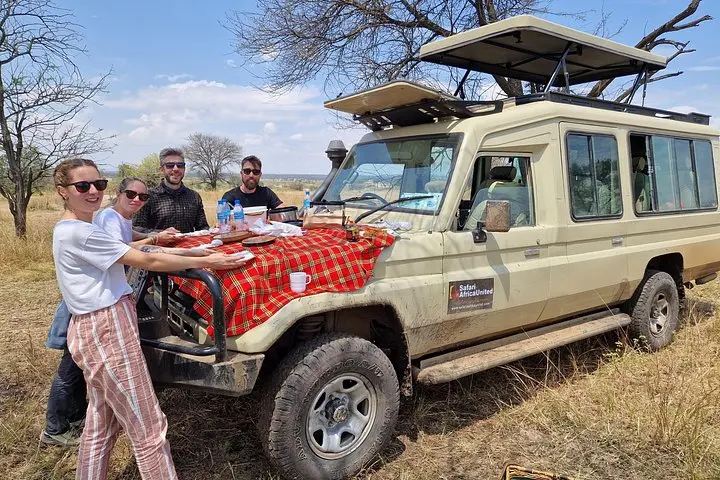
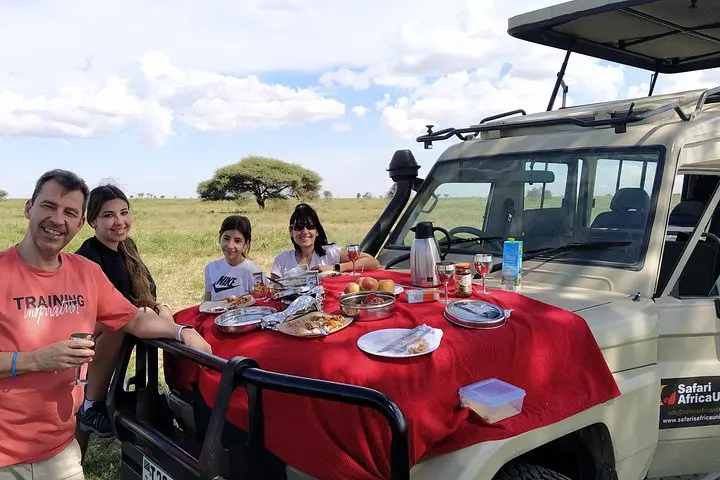
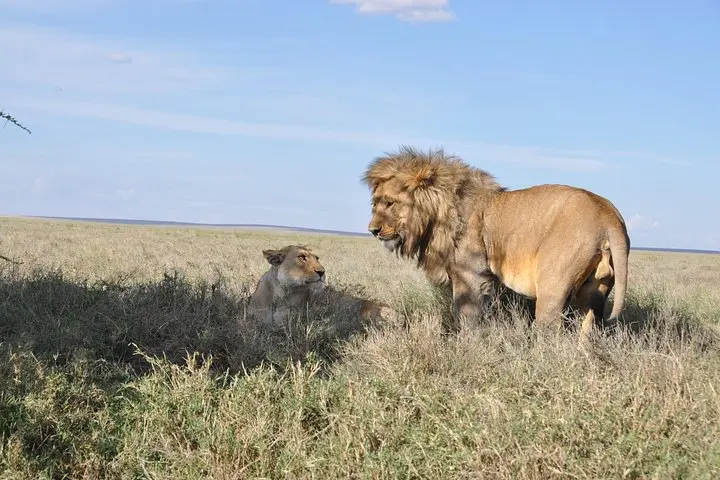
Expect full-day game drives from a private 4x4 with pop-up roof, picnic lunches, and stops at scenic viewpoints before descending into Ngorongoro’s bowl where black rhino, lion, buffalo and hippo are regularly seen. Luxury lodges in Karatu and Arusha serve as comfortable bookends to long days in the field.
Practical side: book the dry season (June–Oct) for the best visibility, pack sun protection, binoculars and a good zoom lens, and bring malaria precautions. Follow guides’ instructions—staying in the vehicle preserves both safety and wildlife behavior—and budget for park fees and tipping. Hydrate early and often; the land demands attention and rewards patience.
The dry season (June–October) concentrates animals around water and offers the clearest roads and visibility, though birding is excellent in the wetter months.
Consult your travel clinic for recommended vaccinations and malaria prophylaxis; insect repellent and bed nets are also advised in this region.
Expect multi-hour drives between Arusha, Tarangire (about 2–3 hours) and Ngorongoro, plus full-day game drives inside parks—plan for long days in the vehicle with frequent stops.
Many operators provide child seats and wheelchair-accessible transfers; check specifics with the operator and note some crater areas require stepping into uneven ground.
Safaris Africa United operates guided outdoor trips and adventures with an emphasis on safety, stewardship, and memorable experiences.
You arrive before dawn, the Land Cruiser’s engine a soft promise as you roll past baobabs silhouetted against pale sky. Dust lifts in sheets and the first elephants of the day move like weather—slow, inevitable—through the Tarangire plain. The vehicle’s pop-up roof lets you feel the air and hear the park: grasshoppers, distant hoots, and the low rumble of a herd.
You arrive before dawn, the Land Cruiser’s engine a soft promise as you roll past baobabs silhouetted against pale sky. Dust lifts in sheets and the first elephants of the day move like weather—slow, inevitable—through the Tarangire plain. The vehicle’s pop-up roof lets you feel the air and hear the park: grasshoppers, distant hoots, and the low rumble of a herd.
This circuit stitches two of northern Tanzania’s defining landscapes. Tarangire National Park covers roughly 2,600 km² and is famed for its concentrated elephant herds and giant baobab stand; nearby the Ngorongoro Crater is the world’s largest unbroken caldera—about 265 km² with rims rising up to 600 m—formed when a prehistoric volcano collapsed. Local Maasai culture threads the route; you’ll pass small bomas and grazing cattle, reminders that conservation and community share this land.
Expect full-day game drives from a private 4x4 with pop-up roof, picnic lunches, and stops at scenic viewpoints before descending into Ngorongoro’s bowl where black rhino, lion, buffalo and hippo are regularly seen. Luxury lodges in Karatu and Arusha serve as comfortable bookends to long days in the field.
Practical side: book the dry season (June–Oct) for the best visibility, pack sun protection, binoculars and a good zoom lens, and bring malaria precautions. Follow guides’ instructions—staying in the vehicle preserves both safety and wildlife behavior—and budget for park fees and tipping. Hydrate early and often; the land demands attention and rewards patience.