THE ADVENTURE COLLECTIVE® · Independent discovery and booking for outdoor travel

A private, three-day road journey from Marrakech to the dunes of Merzouga combining High Atlas passes, UNESCO sites, dramatic gorges and a sunset camel trek to a private desert camp. Expect long drives, layered climates, and hands-on Berber hospitality.
A private, three-day road journey from Marrakech to the dunes of Merzouga combining High Atlas passes, UNESCO sites, dramatic gorges and a sunset camel trek to a private desert camp. Expect long drives, layered climates, and hands-on Berber hospitality.
Dust and light move like two companions as the road climbs out of Marrakech, the High Atlas folding behind you at Tizi n’Tichka where air thins and views sharpen.
Verified experiences and guided adventures in the surrounding area.
Operated by Travel On Morocco Way · Merzouga, Drâa-Tafilalet
Dust and light move like two companions as the road climbs out of Marrakech, the High Atlas folding behind you at Tizi n’Tichka where air thins and views sharpen.
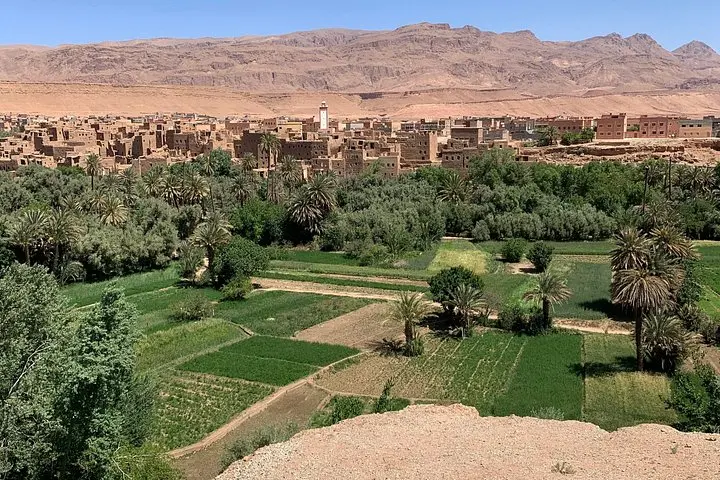
By day one the drive opens into kasbahs and red-earth villages; Ait Ben Haddou stands like an age-worn fortress—UNESCO-listed mud-brick architecture that has watched caravans and film crews pass for centuries. The mountains give way to the Valley of Roses and the sculpted rocks of Dades Gorge, where water still dares to cut through stone.
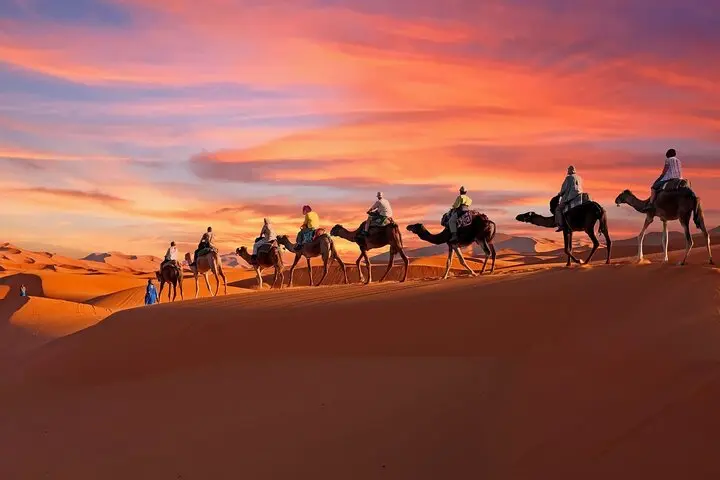
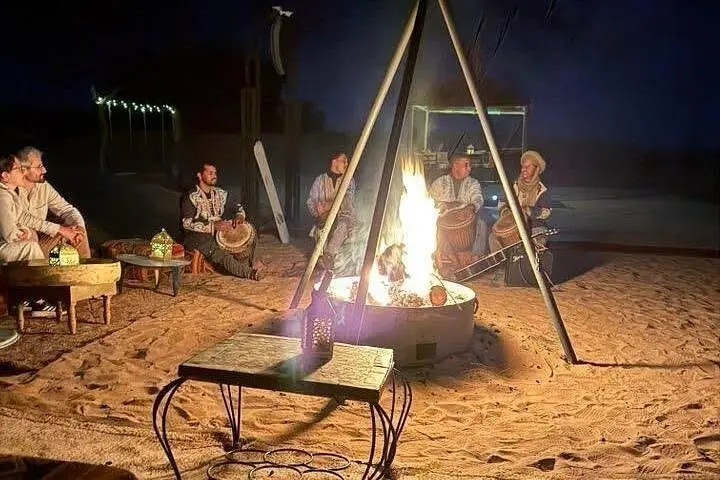
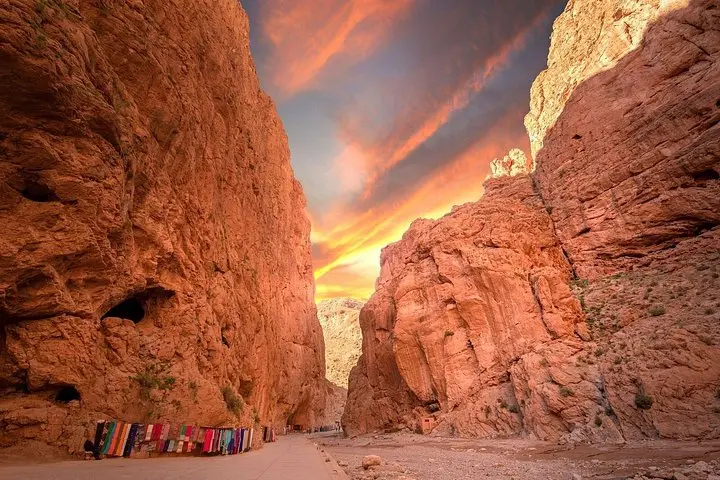
Day two widens into desert: Todra Gorge’s limestone walls rise abruptly—sheer, cool faces above a slender river—then the landscape flattens to pale plains and palm oases near Erfoud. Merzouga’s Erg Chebbi appears as dunes that breathe, ridges that shift with the wind; some reach roughly 100–150 meters high. Here you mount camels for a sunset crossing, arrive at a private camp, eat local cuisine, and listen to Berber rhythms under an immense sky.
Practical guidance: plan for long drives (Marrakech–Merzouga ≈ 8–10 hours with stops, ~550–580 km), pack sun protection and warm layers for very cool desert nights, and carry reusable water—one bottle per person is provided but extras help on walks. Expect moderate physical demands: short canyon walks and dune climbs, not technical but requiring steady footing. Bring cash for local purchases and gratuities, and book in spring or fall for milder temperatures. The trip balances cultural stops, geology, and quiet desert time—an immersive route for travelers seeking private, unrushed Saharan experience.
Pick-up is provided from Marrakech accommodations; exact morning time is given at booking—expect an early departure to maximize stops along the route.
Camel rides are generally safe; animals are led by handlers and the pace is gentle, but notify the operator about mobility or health concerns—those with back issues should consider alternatives.
This tour provides a professional English-speaking driver/guide; many guides also speak French and basic Arabic or Berber depending on the guide.
Local hosts can usually adapt meals for common dietary needs—inform the operator during booking to ensure appropriate arrangements.
Travel On Morocco Way operates guided outdoor trips and adventures with an emphasis on safety, stewardship, and memorable experiences.
Dust and light move like two companions as the road climbs out of Marrakech, the High Atlas folding behind you at Tizi n’Tichka where air thins and views sharpen.
Dust and light move like two companions as the road climbs out of Marrakech, the High Atlas folding behind you at Tizi n’Tichka where air thins and views sharpen.
By day one the drive opens into kasbahs and red-earth villages; Ait Ben Haddou stands like an age-worn fortress—UNESCO-listed mud-brick architecture that has watched caravans and film crews pass for centuries. The mountains give way to the Valley of Roses and the sculpted rocks of Dades Gorge, where water still dares to cut through stone.
Day two widens into desert: Todra Gorge’s limestone walls rise abruptly—sheer, cool faces above a slender river—then the landscape flattens to pale plains and palm oases near Erfoud. Merzouga’s Erg Chebbi appears as dunes that breathe, ridges that shift with the wind; some reach roughly 100–150 meters high. Here you mount camels for a sunset crossing, arrive at a private camp, eat local cuisine, and listen to Berber rhythms under an immense sky.
Practical guidance: plan for long drives (Marrakech–Merzouga ≈ 8–10 hours with stops, ~550–580 km), pack sun protection and warm layers for very cool desert nights, and carry reusable water—one bottle per person is provided but extras help on walks. Expect moderate physical demands: short canyon walks and dune climbs, not technical but requiring steady footing. Bring cash for local purchases and gratuities, and book in spring or fall for milder temperatures. The trip balances cultural stops, geology, and quiet desert time—an immersive route for travelers seeking private, unrushed Saharan experience.