THE ADVENTURE COLLECTIVE® · Independent discovery and booking for outdoor travel

Skip the timetable and let a local driver do the navigating. A private 4x4 transfer in the Rupununi turns transport into an on-the-ground primer on savannah life — rugged tracks, river crossings, and unexpected cultural stops between Lethem and Orinduik Falls.
Skip the timetable and let a local driver do the navigating. A private 4x4 transfer in the Rupununi turns transport into an on-the-ground primer on savannah life — rugged tracks, river crossings, and unexpected cultural stops between Lethem and Orinduik Falls.
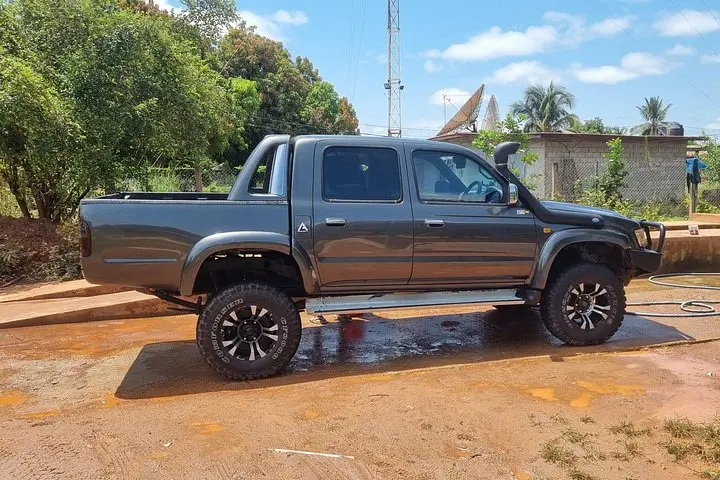
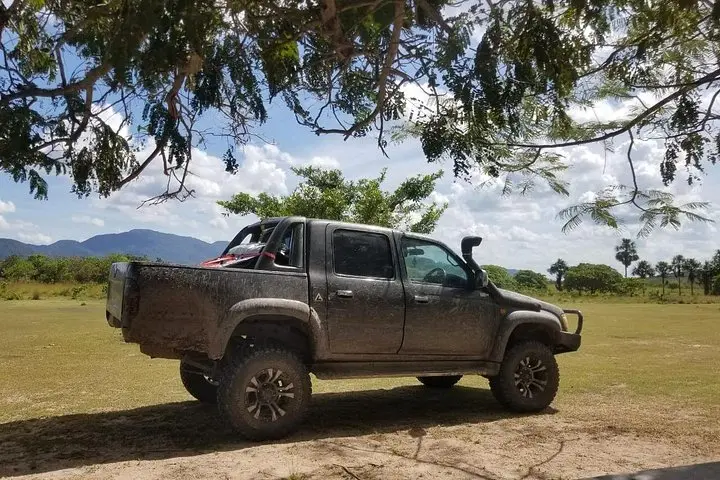
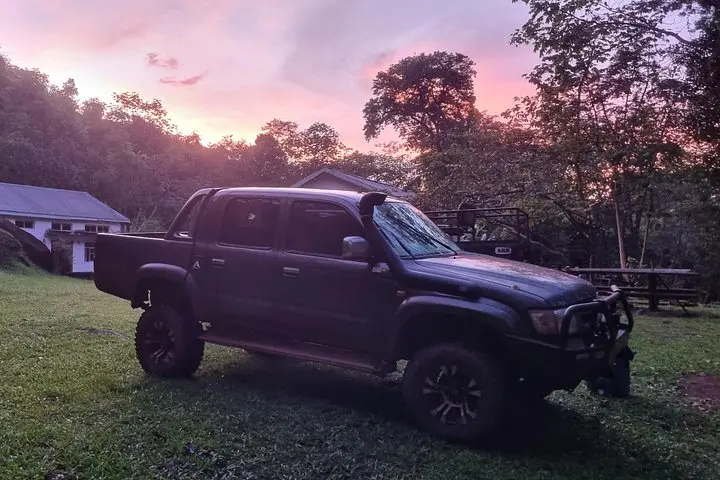
Dust lifts in a long, soft sheet as the 4x4 engages low range and the road gives way to savannah. The driver — part guide, part mechanic, part local ambassador — checks the straps and nods. Ahead, the horizon flattens into sun-baked grass punctuated by the ridges of the Kanuku Mountains and the silver thread of rivers daring you to cross. A private 4x4 transfer through the Rupununi is less a ride than a slow negotiation with the landscape: corrugated tracks, seasonal fords, and the occasional roadside cattle herd that has claimed the road as its own.
Verified experiences and guided adventures in the surrounding area.
Operated by The Wild tales Inc. · Lethem, Upper Takutu-Upper Essequibo
Dust lifts in a long, soft sheet as the 4x4 engages low range and the road gives way to savannah. The driver — part guide, part mechanic, part local ambassador — checks the straps and nods. Ahead, the horizon flattens into sun-baked grass punctuated by the ridges of the Kanuku Mountains and the silver thread of rivers daring you to cross. A private 4x4 transfer through the Rupununi is less a ride than a slow negotiation with the landscape: corrugated tracks, seasonal fords, and the occasional roadside cattle herd that has claimed the road as its own.
The Rupununi is a borderland where Makushi and Wapishana communities meet cattle ranches and protected forest. Geologically the region sits on ancient Precambrian shield with pockets of sandstone and eroded outcrops; hydrologically it drains into the Essequibo and Branco systems, producing dramatic waterfalls like Orinduik at the Brazil border. For centuries indigenous communities managed this place with fire and movement; in the 20th century ranching and cross-border trade reshaped routes and settlements, leaving a pattern of airstrips, stilt houses and corrugated-roof lodges where drivers now meet guests.
Culturally the transfer is also a corridor. Drivers are often from local villages and can translate a geography of medicinal plants, seasonal bird migrations, and the best roadside snacks. The experience gives travelers a window into ranch life, traditional Makushi craft, and the pragmatic hospitality of river towns: if there’s no restaurant for miles, someone will share food, or point to a shady tree where the world slows.
Practicalities shape the trip. Vehicles are off-road ready with high clearance and AC for the long, heated stretches; expect a wide duration range — short village hops of 30 minutes to full-day transfers of five hours or more. Roads are negotiable rather than guaranteed: dry-season trips are faster, while rainy season can demand patience and detours. Carry water, sunscreen, and a light rain shell; keep essential documents and a charged phone in a dry bag. Ask your driver about stops — they’ll recommend viewpoints at the Kanuku foothills or a quiet fishing bend on the Rupununi River.
Safety is straightforward: follow the driver’s directions, secure luggage, and allow buffer time for border formalities if you’re heading toward Orinduik Falls. For photographers the payoff comes in long grasses backlit at golden hour, roadside bird flocks, and the sudden intimacy of a village market. A private 4x4 transfer in the Rupununi isn’t just transport — it’s the slow opening of a rugged, living country where the road reveals stories as much as destinations.
Border crossings require paperwork; ask ahead — some transfers can include Orinduik Falls but you must have valid travel documents and allow time for customs.
Meals are not included; drivers can stop at local eateries when available or coordinate packed lunches if requested in advance.
Yes — vehicles are typically air-conditioned, though AC may be turned off during river fords to avoid water ingestion.
They can be challenging — expect slower travel, potential detours, and short delays; operators may cancel if conditions become unsafe.
Service animals are allowed; check with the operator for space and comfort considerations on longer transfers.
Many drivers speak English and local indigenous languages; some also speak Portuguese or Spanish near the Brazil border.
The Wild tales Inc. operates guided outdoor trips and adventures with an emphasis on safety, stewardship, and memorable experiences.
Dust lifts in a long, soft sheet as the 4x4 engages low range and the road gives way to savannah. The driver — part guide, part mechanic, part local ambassador — checks the straps and nods. Ahead, the horizon flattens into sun-baked grass punctuated by the ridges of the Kanuku Mountains and the silver thread of rivers daring you to cross. A private 4x4 transfer through the Rupununi is less a ride than a slow negotiation with the landscape: corrugated tracks, seasonal fords, and the occasional roadside cattle herd that has claimed the road as its own.
Dust lifts in a long, soft sheet as the 4x4 engages low range and the road gives way to savannah. The driver — part guide, part mechanic, part local ambassador — checks the straps and nods. Ahead, the horizon flattens into sun-baked grass punctuated by the ridges of the Kanuku Mountains and the silver thread of rivers daring you to cross. A private 4x4 transfer through the Rupununi is less a ride than a slow negotiation with the landscape: corrugated tracks, seasonal fords, and the occasional roadside cattle herd that has claimed the road as its own.
The Rupununi is a borderland where Makushi and Wapishana communities meet cattle ranches and protected forest. Geologically the region sits on ancient Precambrian shield with pockets of sandstone and eroded outcrops; hydrologically it drains into the Essequibo and Branco systems, producing dramatic waterfalls like Orinduik at the Brazil border. For centuries indigenous communities managed this place with fire and movement; in the 20th century ranching and cross-border trade reshaped routes and settlements, leaving a pattern of airstrips, stilt houses and corrugated-roof lodges where drivers now meet guests.
Culturally the transfer is also a corridor. Drivers are often from local villages and can translate a geography of medicinal plants, seasonal bird migrations, and the best roadside snacks. The experience gives travelers a window into ranch life, traditional Makushi craft, and the pragmatic hospitality of river towns: if there’s no restaurant for miles, someone will share food, or point to a shady tree where the world slows.
Practicalities shape the trip. Vehicles are off-road ready with high clearance and AC for the long, heated stretches; expect a wide duration range — short village hops of 30 minutes to full-day transfers of five hours or more. Roads are negotiable rather than guaranteed: dry-season trips are faster, while rainy season can demand patience and detours. Carry water, sunscreen, and a light rain shell; keep essential documents and a charged phone in a dry bag. Ask your driver about stops — they’ll recommend viewpoints at the Kanuku foothills or a quiet fishing bend on the Rupununi River.
Safety is straightforward: follow the driver’s directions, secure luggage, and allow buffer time for border formalities if you’re heading toward Orinduik Falls. For photographers the payoff comes in long grasses backlit at golden hour, roadside bird flocks, and the sudden intimacy of a village market. A private 4x4 transfer in the Rupununi isn’t just transport — it’s the slow opening of a rugged, living country where the road reveals stories as much as destinations.