THE ADVENTURE COLLECTIVE® · Independent discovery and booking for outdoor travel

An eight-day private loop through eastern Sicily: hike around Etna’s craters, wander UNESCO baroque towns, sample Etna wines and Modica chocolate, and explore Syracuse’s ancient heart. This tour pairs geology, history and hands-on tastings with private guides and transfers.
An eight-day private loop through eastern Sicily: hike around Etna’s craters, wander UNESCO baroque towns, sample Etna wines and Modica chocolate, and explore Syracuse’s ancient heart. This tour pairs geology, history and hands-on tastings with private guides and transfers.
Arrival in Catania gives way to a ribbon of coastal road and the first view of Mount Etna — a black-shouldered giant that seems to inhale smoke and exhale vineyards. The group settles into Taormina, where cobbled Corso Umberto leads toward cliffside views of the Ionian Sea and a Greek theater that still rings with history.
Verified experiences and guided adventures in the surrounding area.
Operated by Prestelli Sicily Tours · Taormina, Sicily
Arrival in Catania gives way to a ribbon of coastal road and the first view of Mount Etna — a black-shouldered giant that seems to inhale smoke and exhale vineyards. The group settles into Taormina, where cobbled Corso Umberto leads toward cliffside views of the Ionian Sea and a Greek theater that still rings with history.
Across eight days the itinerary threads Sicily’s eastern spine: Taormina, volcanic slopes of Etna (Rifugio Sapienza ~1,900–2,000 m), the cinematic Godfather villages of Savoca and Forza d'Agrò, the limestone glow of Noto’s baroque facades, Ortigia and Syracuse’s Neapolis Park, Ragusa Ibla and Modica with its ancient chocolate craft, finishing with Palermo’s markets and monuments.
Geology and culture arrive hand in hand: Etna’s lava fields sculpt terraces and rich soils that local wineries have turned into distinctive Etna DOC bottles; earthquake-and-rebuild cycles in the 17th–18th centuries gave towns like Noto and Ragusa their flamboyant baroque architecture. Guides layer local lore with practical timelines — when to sip a nero d'Avola, where to sample fresh honey, and how ancient Greek temples survive in limestone that the sun slowly bleaches.
Practical edge: expect daily walking tours of 1–3 hours on mixed urban stone and uneven volcanic trails, a full-day ascent-and-tasting on Etna, and private air-conditioned transfers. Bring sturdy walking shoes, sun protection for coastal and high-elevation sun, a light layer for cool evenings near Etna, and a reusable water bottle. Early starts avoid crowds at major sites and give the best light for photography.
Yes — the tour is private and paced, but you should disclose mobility needs at booking; some sites have uneven surfaces and stairs.
A private English-speaking licensed guide is included; local guides at museums may use multiple languages depending on availability.
Most meals as listed and specified admissions (e.g., Etna winery tasting, chocolate museum) are included; check the itinerary for specifics and any optional extras.
Standard European travel insurance is recommended for trip interruption and medical coverage; no special vaccinations are required for Sicily beyond routine immunizations.
Prestelli Sicily Tours operates guided outdoor trips and adventures with an emphasis on safety, stewardship, and memorable experiences.
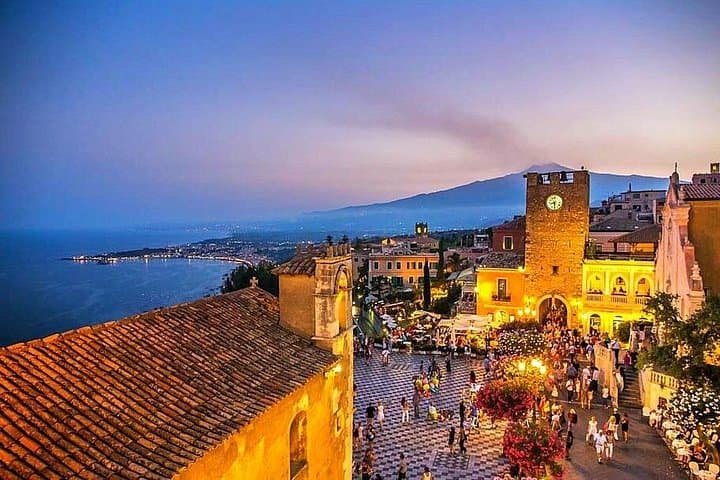
Arrival in Catania gives way to a ribbon of coastal road and the first view of Mount Etna — a black-shouldered giant that seems to inhale smoke and exhale vineyards. The group settles into Taormina, where cobbled Corso Umberto leads toward cliffside views of the Ionian Sea and a Greek theater that still rings with history.
Arrival in Catania gives way to a ribbon of coastal road and the first view of Mount Etna — a black-shouldered giant that seems to inhale smoke and exhale vineyards. The group settles into Taormina, where cobbled Corso Umberto leads toward cliffside views of the Ionian Sea and a Greek theater that still rings with history.
Across eight days the itinerary threads Sicily’s eastern spine: Taormina, volcanic slopes of Etna (Rifugio Sapienza ~1,900–2,000 m), the cinematic Godfather villages of Savoca and Forza d'Agrò, the limestone glow of Noto’s baroque facades, Ortigia and Syracuse’s Neapolis Park, Ragusa Ibla and Modica with its ancient chocolate craft, finishing with Palermo’s markets and monuments.
Geology and culture arrive hand in hand: Etna’s lava fields sculpt terraces and rich soils that local wineries have turned into distinctive Etna DOC bottles; earthquake-and-rebuild cycles in the 17th–18th centuries gave towns like Noto and Ragusa their flamboyant baroque architecture. Guides layer local lore with practical timelines — when to sip a nero d'Avola, where to sample fresh honey, and how ancient Greek temples survive in limestone that the sun slowly bleaches.
Practical edge: expect daily walking tours of 1–3 hours on mixed urban stone and uneven volcanic trails, a full-day ascent-and-tasting on Etna, and private air-conditioned transfers. Bring sturdy walking shoes, sun protection for coastal and high-elevation sun, a light layer for cool evenings near Etna, and a reusable water bottle. Early starts avoid crowds at major sites and give the best light for photography.