THE ADVENTURE COLLECTIVE® · Independent discovery and booking for outdoor travel

Walk Kyoto with a government‑licensed English guide for a customized eight‑hour tour of temples, shrines, markets and quiet alleys. Choose 3–6 sites and learn history, etiquette and seasonal highlights while staying mobile and comfortable.
Walk Kyoto with a government‑licensed English guide for a customized eight‑hour tour of temples, shrines, markets and quiet alleys. Choose 3–6 sites and learn history, etiquette and seasonal highlights while staying mobile and comfortable.
You step out into a Kyoto morning where the Kamo River pushes a cool current past stone embankments and the city’s wooden roofs catch early light. Your government-licensed guide leads a compact group on foot through narrow lanes, beneath vermilion torii, and up temple steps where the city’s silence seems to hold its breath.
Verified experiences and guided adventures in the surrounding area.
Operated by Japan Guide Agency · Kyoto, Kyoto Prefecture
You step out into a Kyoto morning where the Kamo River pushes a cool current past stone embankments and the city’s wooden roofs catch early light. Your government-licensed guide leads a compact group on foot through narrow lanes, beneath vermilion torii, and up temple steps where the city’s silence seems to hold its breath.
Kyoto served as Japan’s imperial capital for more than a millennium, and its streets preserve layers of Muromachi, Edo and earlier eras. Geologically the city sits on a flat basin ringed by low hills—Higashiyama and Kitayama—which shape the routes of rivers and the placement of shrines. Culture here is deliberate: tea ceremony forms, Zen gardens and merchant markets evolved alongside court ritual.
Expect to visit 3–6 sites chosen with your guide—Kiyomizu‑dera’s timber stage, the torii tunnels of Fushimi Inari, the lantern-lit alleys of Gion, or the food stalls of Nishiki Market. Distances vary; an 8‑hour custom walk typically covers 6–10 km with intermittent stair climbs and many standing stops for interpretation.
Practical edge: wear broken‑in walking shoes, bring a refillable water bottle, and layer for sudden showers. Temples have dress and photography rules—follow your guide’s cues and remove hats or shoes where requested. Midday and late afternoon are the busiest times at flagship sites; if you prefer quieter moments, schedule early starts or focus on less-visited temples.
Guides are licensed and fluent in English and will tailor the pace to mobility needs. Book at least two weeks ahead for guaranteed planning; carry cash for small shrine fees and market snacks. This tour is a hands-on way to read Kyoto’s architecture, ritual and seasonal personality on a single, grounded day.
This private tour meets on foot and typically does not include separate admission unless arranged in advance—confirm with the guide when booking.
Many central Kyoto streets and selected sites are wheelchair accessible, but some temples have steps; notify the operator of mobility needs and your guide will plan an appropriate route.
Very customizable—choose 3–6 sites or ask the guide for recommendations based on history, architecture, or food interests during pre-tour planning.
Meals and market purchases are not included; guides can recommend or escort you to restaurants and Nishiki Market stalls but expect to pay locally.
Japan Guide Agency operates guided outdoor trips and adventures with an emphasis on safety, stewardship, and memorable experiences.
You step out into a Kyoto morning where the Kamo River pushes a cool current past stone embankments and the city’s wooden roofs catch early light. Your government-licensed guide leads a compact group on foot through narrow lanes, beneath vermilion torii, and up temple steps where the city’s silence seems to hold its breath.
You step out into a Kyoto morning where the Kamo River pushes a cool current past stone embankments and the city’s wooden roofs catch early light. Your government-licensed guide leads a compact group on foot through narrow lanes, beneath vermilion torii, and up temple steps where the city’s silence seems to hold its breath.
Kyoto served as Japan’s imperial capital for more than a millennium, and its streets preserve layers of Muromachi, Edo and earlier eras. Geologically the city sits on a flat basin ringed by low hills—Higashiyama and Kitayama—which shape the routes of rivers and the placement of shrines. Culture here is deliberate: tea ceremony forms, Zen gardens and merchant markets evolved alongside court ritual.
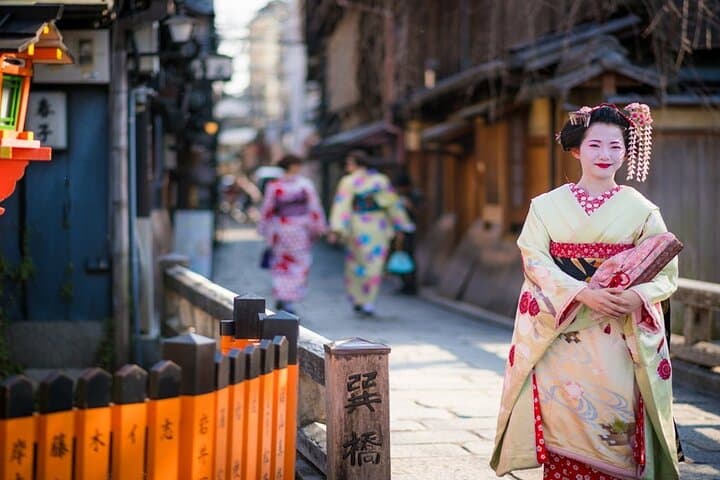
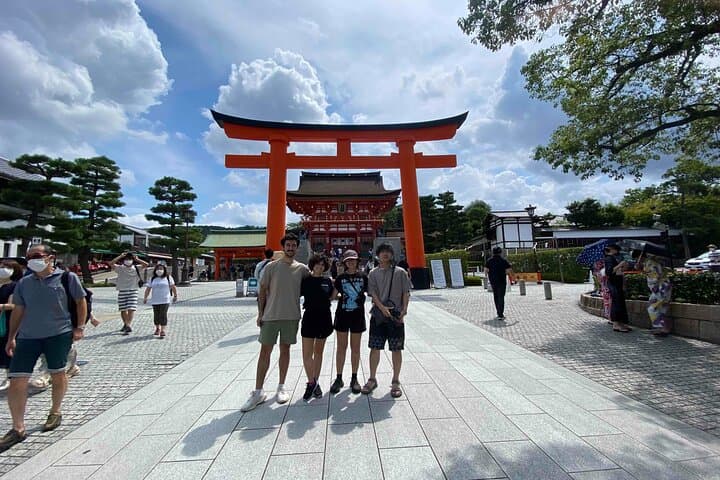
Expect to visit 3–6 sites chosen with your guide—Kiyomizu‑dera’s timber stage, the torii tunnels of Fushimi Inari, the lantern-lit alleys of Gion, or the food stalls of Nishiki Market. Distances vary; an 8‑hour custom walk typically covers 6–10 km with intermittent stair climbs and many standing stops for interpretation.
Practical edge: wear broken‑in walking shoes, bring a refillable water bottle, and layer for sudden showers. Temples have dress and photography rules—follow your guide’s cues and remove hats or shoes where requested. Midday and late afternoon are the busiest times at flagship sites; if you prefer quieter moments, schedule early starts or focus on less-visited temples.
Guides are licensed and fluent in English and will tailor the pace to mobility needs. Book at least two weeks ahead for guaranteed planning; carry cash for small shrine fees and market snacks. This tour is a hands-on way to read Kyoto’s architecture, ritual and seasonal personality on a single, grounded day.