THE ADVENTURE COLLECTIVE® · Independent discovery and booking for outdoor travel

A full‑day private journey from Aswan that pairs the colossal temples of Abu Simbel with the engineering scale of the Aswan High Dam and the island sanctity of Philae. Long drives but high rewards: unrivaled ancient scale and clear Nile views.
A full‑day private journey from Aswan that pairs the colossal temples of Abu Simbel with the engineering scale of the Aswan High Dam and the island sanctity of Philae. Long drives but high rewards: unrivaled ancient scale and clear Nile views.
You begin before sunrise, the minibus rolling away from Aswan as the desert cools and the road stretches toward a horizon of low sandstone ridges. Winds tug at the reeds along Lake Nasser; the highway hums with the promise of monuments that refuse to be small.
Verified experiences and guided adventures in the surrounding area.
Operated by Eyes of Egypt · Aswan, Aswan Governorate
You begin before sunrise, the minibus rolling away from Aswan as the desert cools and the road stretches toward a horizon of low sandstone ridges. Winds tug at the reeds along Lake Nasser; the highway hums with the promise of monuments that refuse to be small.
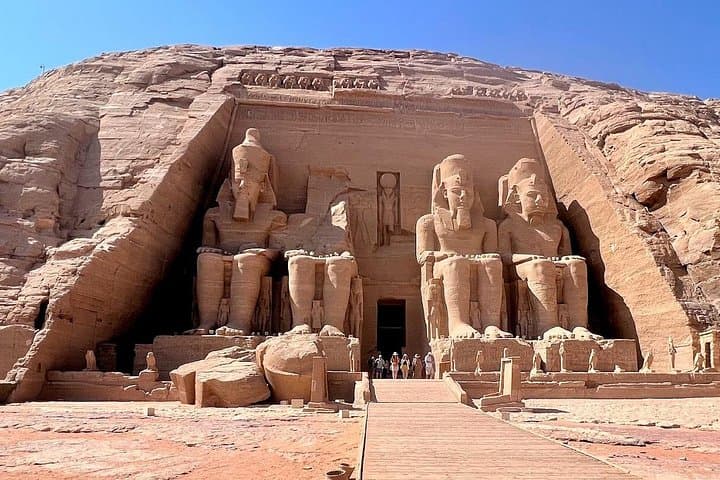
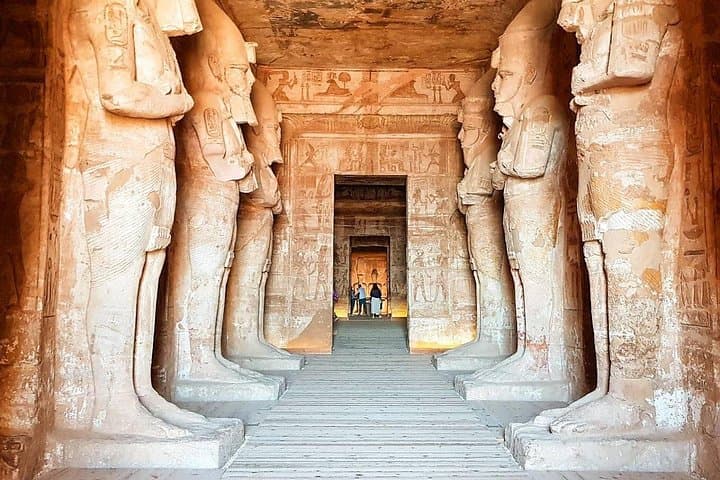
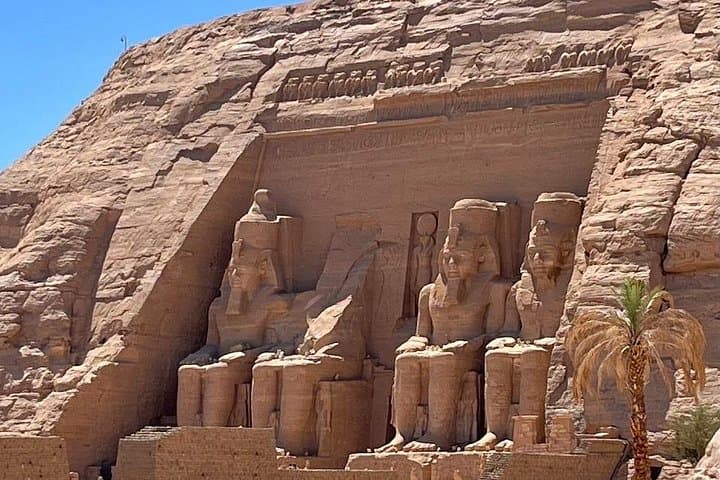
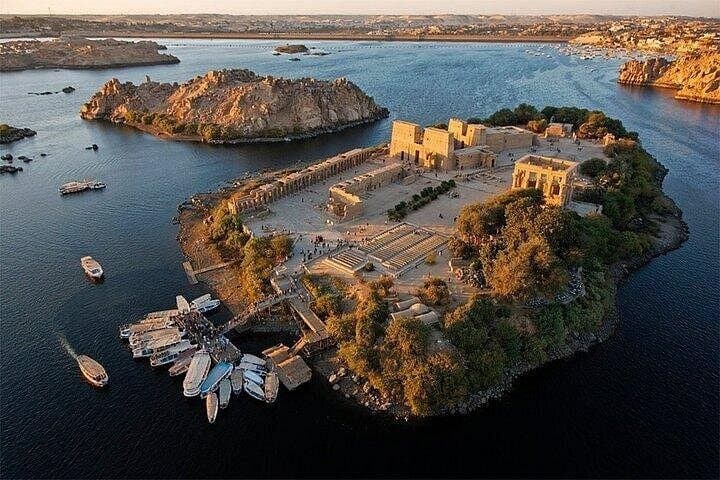
The day links three chapters of Nile history. At Abu Simbel the four 20‑meter colossi of Ramses II command the desert — carved from living rock in the 13th century BCE and relocated in the 1960s to save them from the rising waters of Lake Nasser. The Aswan High Dam is a modern counterpart: a 3.8‑kilometer concrete wall that turned the Nile’s rhythms into managed resources and created the lake itself. Back in Aswan, Philae Temple sits on its island, a compact complex whose pylons, kiosks and Nilometer record centuries of pharaonic, Roman and Coptic use.
Expect long drives (roughly 280 km / 175 miles each way to Abu Simbel), short walks over uneven stone, and powerful moments of scale and relief carving. Photography is excellent early and late; noon light flattens reliefs. Bring sun protection, a refillable water bottle and good walking shoes — some paths are sand and some flagstone. If you choose a licensed Egyptologist guide, you’ll unlock inscriptions and local context; otherwise, a knowledgeable driver and well‑paced schedule still deliver the essentials.
This is a long but accessible day: cultural immersion, engineering history, and island temples all in one route — practical to plan, unforgettable to stand before.
The drive is roughly 280 km (about 3 hours) one way under normal conditions; the round trip is typically planned as a full day.
Admission is often optional depending on the package—check your booking; premium options commonly include entrance fees to Abu Simbel and Philae.
Sites like Philae and the High Dam have accessible areas and transport is accessible, but some temple interiors and uneven surfaces may limit full access—check with the operator beforehand.
Yes. Many operators offer certified Egyptologist guides for deeper interpretation; this is recommended if you want detailed historical context.
Eyes of Egypt operates guided outdoor trips and adventures with an emphasis on safety, stewardship, and memorable experiences.
You begin before sunrise, the minibus rolling away from Aswan as the desert cools and the road stretches toward a horizon of low sandstone ridges. Winds tug at the reeds along Lake Nasser; the highway hums with the promise of monuments that refuse to be small.
You begin before sunrise, the minibus rolling away from Aswan as the desert cools and the road stretches toward a horizon of low sandstone ridges. Winds tug at the reeds along Lake Nasser; the highway hums with the promise of monuments that refuse to be small.
The day links three chapters of Nile history. At Abu Simbel the four 20‑meter colossi of Ramses II command the desert — carved from living rock in the 13th century BCE and relocated in the 1960s to save them from the rising waters of Lake Nasser. The Aswan High Dam is a modern counterpart: a 3.8‑kilometer concrete wall that turned the Nile’s rhythms into managed resources and created the lake itself. Back in Aswan, Philae Temple sits on its island, a compact complex whose pylons, kiosks and Nilometer record centuries of pharaonic, Roman and Coptic use.
Expect long drives (roughly 280 km / 175 miles each way to Abu Simbel), short walks over uneven stone, and powerful moments of scale and relief carving. Photography is excellent early and late; noon light flattens reliefs. Bring sun protection, a refillable water bottle and good walking shoes — some paths are sand and some flagstone. If you choose a licensed Egyptologist guide, you’ll unlock inscriptions and local context; otherwise, a knowledgeable driver and well‑paced schedule still deliver the essentials.
This is a long but accessible day: cultural immersion, engineering history, and island temples all in one route — practical to plan, unforgettable to stand before.