THE ADVENTURE COLLECTIVE® · Independent discovery and booking for outdoor travel

Climb Aburi Hill for a botanically rich half-day: guided walks through the Aburi Botanical Gardens, a visit to Ghana’s early cocoa plots, and stops at local craft hubs. Native guides explain plants, processing and culture while you enjoy sweeping views over Accra.
Climb Aburi Hill for a botanically rich half-day: guided walks through the Aburi Botanical Gardens, a visit to Ghana’s early cocoa plots, and stops at local craft hubs. Native guides explain plants, processing and culture while you enjoy sweeping views over Accra.
A cool breeze climbs the ridge as the van curves up Aburi Hill, and the city below shrinks into a green horizon. The guide—native to Aburi—leads the group down a shaded walkway where palm trunks shoulder sunlight and leaves murmur like pages. Views open toward Accra; the presidential lodge perches nearby like a watchful neighbor.
Verified experiences and guided adventures in the surrounding area.
Operated by Rexford Koranteng · Aburi, Eastern Region
A cool breeze climbs the ridge as the van curves up Aburi Hill, and the city below shrinks into a green horizon. The guide—native to Aburi—leads the group down a shaded walkway where palm trunks shoulder sunlight and leaves murmur like pages. Views open toward Accra; the presidential lodge perches nearby like a watchful neighbor.
The hill’s history is practical: a colonial-era retreat that became home to experimental plantings and Ghana’s pioneering cocoa plots. Geologically the rise is a modest escarpment of weathered Precambrian rock and red lateritic soils that sustain the botanical diversity here. Culturally the area blends Ga and Akan influences—local crafts, medicinal plant lore and cocoa-processing stories form part of everyday life and the tour.
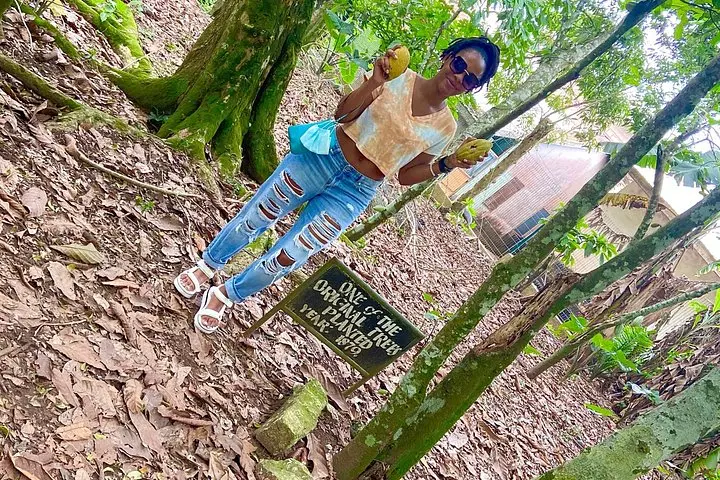
Expect stops at the Aburi Botanical Gardens—roughly 130 acres with cultivated lawns, medicinal trees and research plots—then a working cocoa farm where guides explain fermentation, drying and local processing, followed by an art market with handcrafted textiles and woodwork. An optional quick visit to a small pet enclosure introduces ostriches, tortoise and duiker.
Practical guidance: wear closed-toe walking shoes for uneven pathways, carry sun protection and a refillable water bottle, and bring local currency for market purchases. The tour moves at a steady, conversational pace with photography-friendly pauses; prepare for short uphill sections and intermittent mud in the rainy months. Ideal for travelers who want botanical detail, cultural context and a manageable half-day escape from Accra.
The private tour runs about 4–5 hours and includes entrance fees, bottled water, snacks (including a local chocolate), air-conditioned transport and guidance from a local guide.
Yes—families and older travelers can join, though participants should be able to walk short distances and navigate uneven ground; notify the operator about mobility needs.
Yes—the itinerary includes a stop at one of Ghana’s early cocoa farms where the guide demonstrates fermentation, drying and basic processing steps.
Yes—there is a stop at an art market where travelers can purchase textiles, carvings and other Ghanaian crafts; bring small bills for vendors.
Rexford Koranteng operates guided outdoor trips and adventures with an emphasis on safety, stewardship, and memorable experiences.
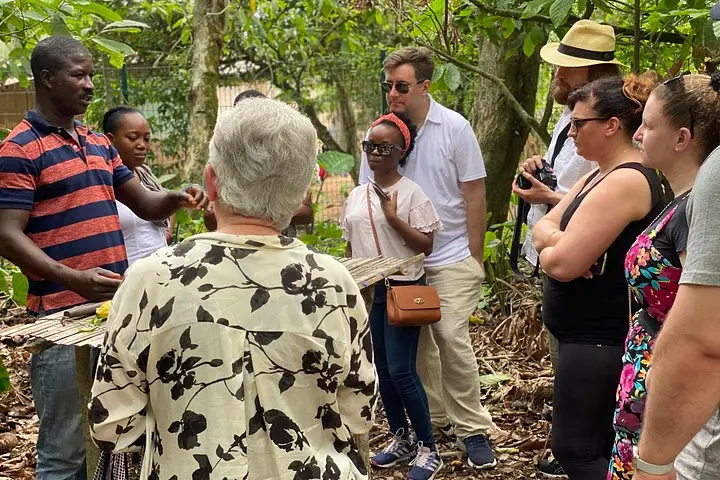
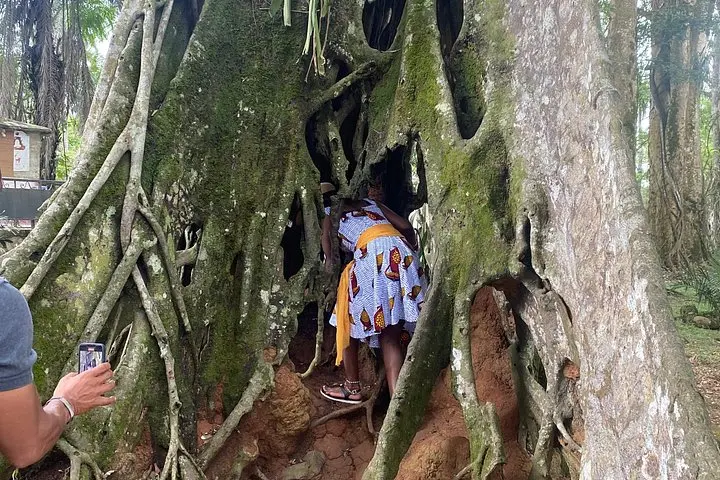
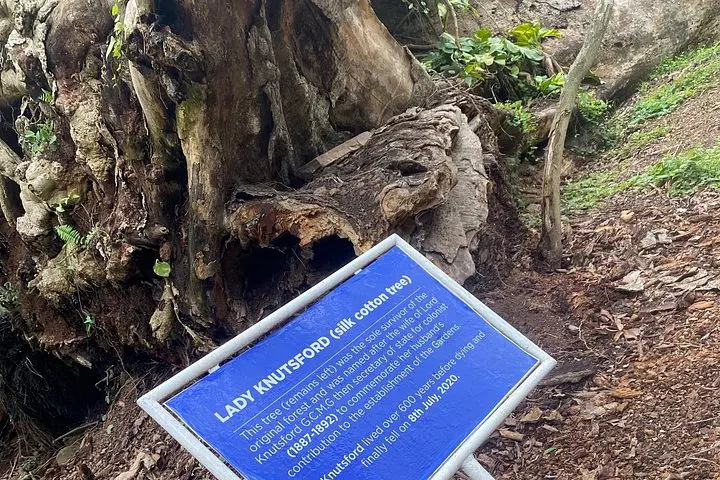
A cool breeze climbs the ridge as the van curves up Aburi Hill, and the city below shrinks into a green horizon. The guide—native to Aburi—leads the group down a shaded walkway where palm trunks shoulder sunlight and leaves murmur like pages. Views open toward Accra; the presidential lodge perches nearby like a watchful neighbor.
A cool breeze climbs the ridge as the van curves up Aburi Hill, and the city below shrinks into a green horizon. The guide—native to Aburi—leads the group down a shaded walkway where palm trunks shoulder sunlight and leaves murmur like pages. Views open toward Accra; the presidential lodge perches nearby like a watchful neighbor.
The hill’s history is practical: a colonial-era retreat that became home to experimental plantings and Ghana’s pioneering cocoa plots. Geologically the rise is a modest escarpment of weathered Precambrian rock and red lateritic soils that sustain the botanical diversity here. Culturally the area blends Ga and Akan influences—local crafts, medicinal plant lore and cocoa-processing stories form part of everyday life and the tour.
Expect stops at the Aburi Botanical Gardens—roughly 130 acres with cultivated lawns, medicinal trees and research plots—then a working cocoa farm where guides explain fermentation, drying and local processing, followed by an art market with handcrafted textiles and woodwork. An optional quick visit to a small pet enclosure introduces ostriches, tortoise and duiker.
Practical guidance: wear closed-toe walking shoes for uneven pathways, carry sun protection and a refillable water bottle, and bring local currency for market purchases. The tour moves at a steady, conversational pace with photography-friendly pauses; prepare for short uphill sections and intermittent mud in the rainy months. Ideal for travelers who want botanical detail, cultural context and a manageable half-day escape from Accra.