THE ADVENTURE COLLECTIVE® · Independent discovery and booking for outdoor travel

Explore the Swaminarayan Akshardham in East Delhi with a private guide and air-conditioned transfer. This 2–3 hour tour highlights the temple’s carved stonework, the Yagnapurush Kund step-well and the cultural exhibitions while outlining practical tips for a respectful visit.
Explore the Swaminarayan Akshardham in East Delhi with a private guide and air-conditioned transfer. This 2–3 hour tour highlights the temple’s carved stonework, the Yagnapurush Kund step-well and the cultural exhibitions while outlining practical tips for a respectful visit.
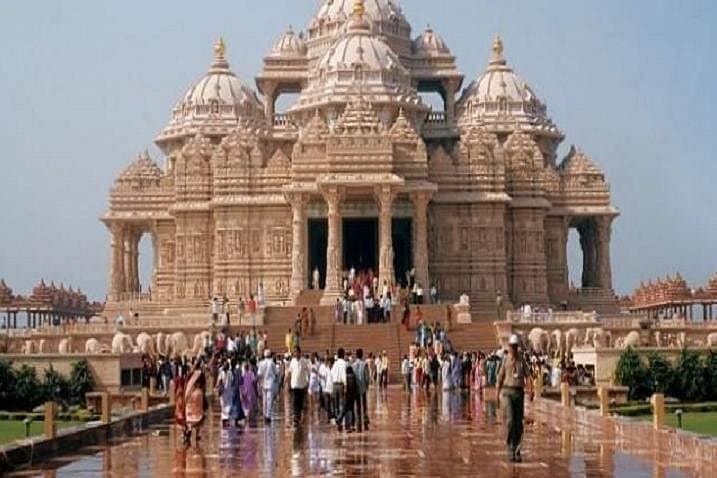
A river-edge morning sets the scene: the Yamuna threads past East Delhi and the Akshardham complex rises in pale stone, its carved surfaces catching light like pages. On arrival visitors step from air-conditioned transport into a precinct defined by precise stonework — long colonnades, carved elephants, and a central sanctum that holds both silence and ritual movement.
Verified experiences and guided adventures in the surrounding area.
Operated by SITA World Tours · New Delhi, Delhi
A river-edge morning sets the scene: the Yamuna threads past East Delhi and the Akshardham complex rises in pale stone, its carved surfaces catching light like pages. On arrival visitors step from air-conditioned transport into a precinct defined by precise stonework — long colonnades, carved elephants, and a central sanctum that holds both silence and ritual movement.
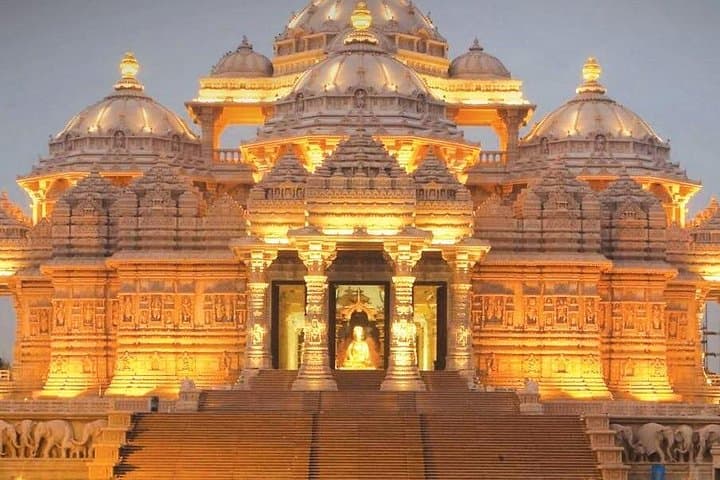
Opened in 2005 and dedicated to Bhagwan Swaminarayan, Akshardham is a modern temple built in traditional style. The main mandir (141 ft high; roughly 316 x 356 ft) is cut in Rajasthani sandstone and Italian marble and includes some 20,000 statues, 234 carved pillars and nine domes. Nearby, Yagnapurush Kund reproduces a historic step-well design with concentric steps and small shrines around a lotus-shaped pool.
Culturally the complex is both a place of worship and a curated introduction to Hindu philosophy: exhibitions, sculptural programs and ritual spaces emphasize stories, craftsmen’s techniques and devotional practices. The site enforces a strict dress code and bans phones, cameras and food to preserve the sanctity and protect the stone carvings.
Practical guidance: plan 2–3 hours for a focused visit; bring modest, breathable clothing that covers shoulders and knees (a sarong is available for a refundable deposit). Expect security screening and a guided walking route — minimal technical skill is required but the site involves steps and walking on stone floors. Morning visits avoid heat and crowds; winter mornings are crisp and clearer for photographs outside the complex. Use the provided bottled water and respect the no-electronics rule inside the mandir to fully experience the site.
No — mobile phones, cameras and all electronic devices are prohibited inside the mandir and exhibition halls; use lockers or keep them on your vehicle.
Yes — shoulders, chest, navel and upper arms must be covered and shorts/skirts must be below knee length; sarongs are available for a refundable deposit if needed.
The complex is partially wheelchair accessible and the tour provider notes partial access; however there are stone steps and some areas that may be difficult for full mobility access.
Plan 2–3 hours for pickup, the guided visit through the mandir and step-well areas, and return transport; exhibitions can add time if you wish to linger.
SITA World Tours operates guided outdoor trips and adventures with an emphasis on safety, stewardship, and memorable experiences.


A river-edge morning sets the scene: the Yamuna threads past East Delhi and the Akshardham complex rises in pale stone, its carved surfaces catching light like pages. On arrival visitors step from air-conditioned transport into a precinct defined by precise stonework — long colonnades, carved elephants, and a central sanctum that holds both silence and ritual movement.
A river-edge morning sets the scene: the Yamuna threads past East Delhi and the Akshardham complex rises in pale stone, its carved surfaces catching light like pages. On arrival visitors step from air-conditioned transport into a precinct defined by precise stonework — long colonnades, carved elephants, and a central sanctum that holds both silence and ritual movement.
Opened in 2005 and dedicated to Bhagwan Swaminarayan, Akshardham is a modern temple built in traditional style. The main mandir (141 ft high; roughly 316 x 356 ft) is cut in Rajasthani sandstone and Italian marble and includes some 20,000 statues, 234 carved pillars and nine domes. Nearby, Yagnapurush Kund reproduces a historic step-well design with concentric steps and small shrines around a lotus-shaped pool.
Culturally the complex is both a place of worship and a curated introduction to Hindu philosophy: exhibitions, sculptural programs and ritual spaces emphasize stories, craftsmen’s techniques and devotional practices. The site enforces a strict dress code and bans phones, cameras and food to preserve the sanctity and protect the stone carvings.
Practical guidance: plan 2–3 hours for a focused visit; bring modest, breathable clothing that covers shoulders and knees (a sarong is available for a refundable deposit). Expect security screening and a guided walking route — minimal technical skill is required but the site involves steps and walking on stone floors. Morning visits avoid heat and crowds; winter mornings are crisp and clearer for photographs outside the complex. Use the provided bottled water and respect the no-electronics rule inside the mandir to fully experience the site.