THE ADVENTURE COLLECTIVE® · Independent discovery and booking for outdoor travel

Cycle three of Angkor’s signature temples on a private seven‑hour tour that weaves jungle tracks, ancient causeways and local villages. Expect sandstone galleries, giant root-claimed ruins and practical guidance on passes, dress code and timing.
Cycle three of Angkor’s signature temples on a private seven‑hour tour that weaves jungle tracks, ancient causeways and local villages. Expect sandstone galleries, giant root-claimed ruins and practical guidance on passes, dress code and timing.
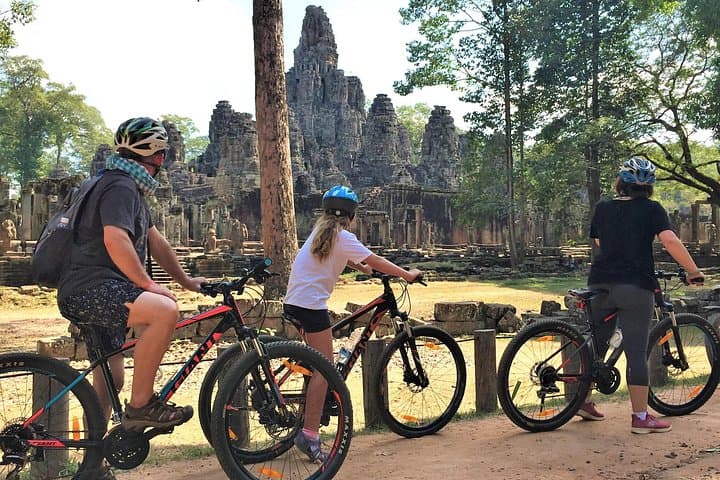
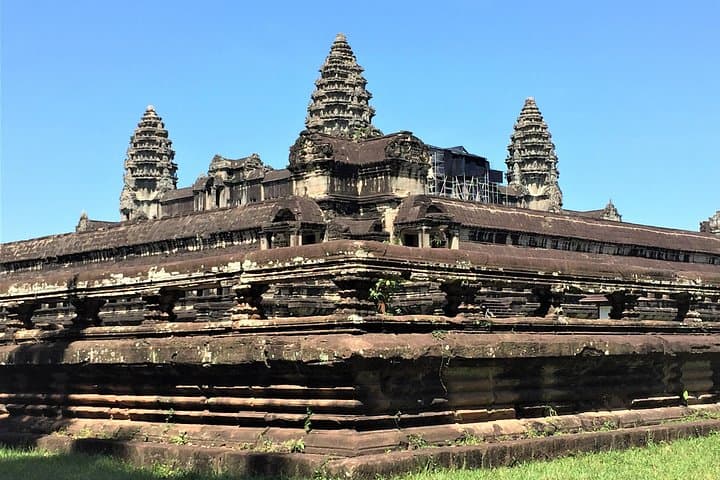
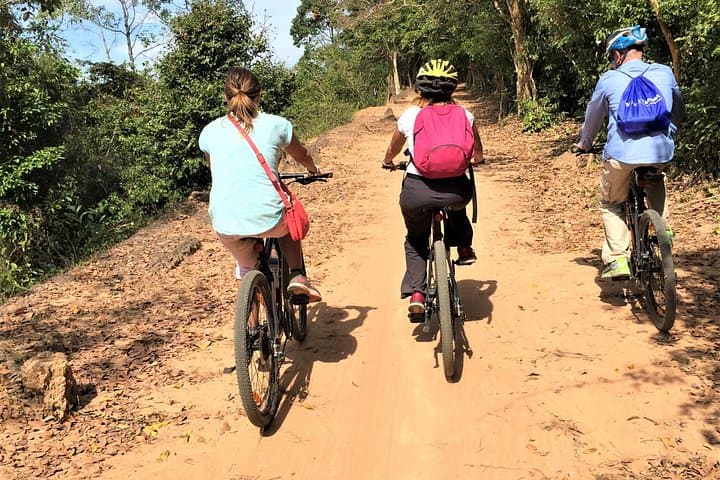
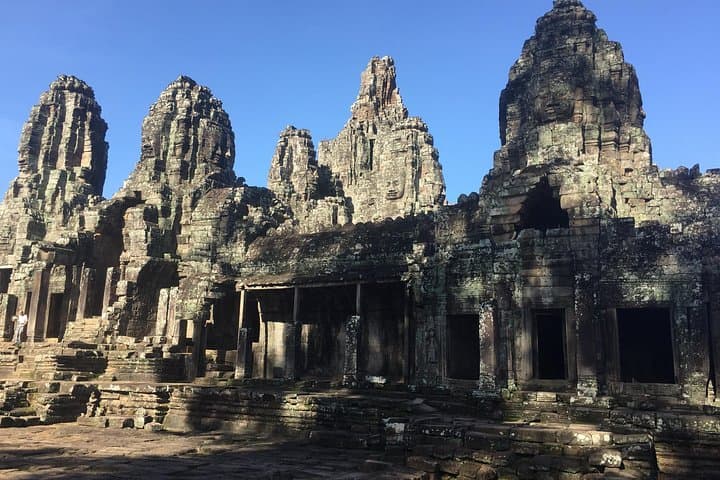
You lift your pedal and the jungle answers — roots tangle across the path like fingers that won’t let go, and the moat glints as if daring you to cross. Starting from Siem Reap, this private day ride threads jungle tracks, ancient causeways and quiet village corners on a seven‑hour loop that puts Angkor Wat, Ta Prohm and Bayon within reach of a steady cyclist.
Verified experiences and guided adventures in the surrounding area.
Operated by Naga Angkor Tour · Siem Reap, Siem Reap Province
You lift your pedal and the jungle answers — roots tangle across the path like fingers that won’t let go, and the moat glints as if daring you to cross. Starting from Siem Reap, this private day ride threads jungle tracks, ancient causeways and quiet village corners on a seven‑hour loop that puts Angkor Wat, Ta Prohm and Bayon within reach of a steady cyclist.
Angkor Archaeological Park was the political heart of the Khmer Empire from the 9th to 15th centuries; Angkor Wat’s sandstone galleries still show detailed bas‑reliefs and lintels carved in the 12th century, while Bayon’s many-faced towers reflect later statecraft and devotional shifts. Geologically the temples sit on an alluvial plain with sandstone blocks layered over laterite foundations, and the forest aggressively reclaims masonry—roots pry at roofs and trunks frame doorways like living columns.
Culture here is tactile: monks walk the paths, market vendors sell mango and palm sugar, and village life clusters beside ancient reservoirs. Ta Nei and the Tomb Raider–famous Ta Prohm are quieter in the afternoon when cicadas and birds take over the soundtrack.
Practical notes: carry an Angkor pass (buy at the ticket office and be ready for ID photos), dress modestly—shoulders and knees covered—and start early to avoid mid‑day heat. Expect mixed terrain: short stretches of packed dirt, rutted jungle trail and paved causeway. Guides handle logistics and a tuk‑tuk follows for support; bring a well‑tuned bike, sun protection, and at least 2 liters of water. Pace yourself — the temples are best seen slowly, and the jungle will insist you pay attention.
Yes — all visitors 12 and older must show a valid Angkor pass at the ticket office; the guide can help with the purchase but allow time for the photo.
Yes — the operator lists the outing as physically easy, but expect up to seven hours with short off‑road sections; basic cycling ability and comfort with uneven paths are recommended.
A professional English‑speaking guide, a support tuk‑tuk, a standard bike and helmet, cold bottled water and towels are included; temple admission is not included unless specified.
Heavy rains may shift some jungle traces to paved routes and the guide can adjust the itinerary; bring a rain jacket and be prepared for mud on trails.
Naga Angkor Tour operates guided outdoor trips and adventures with an emphasis on safety, stewardship, and memorable experiences.
You lift your pedal and the jungle answers — roots tangle across the path like fingers that won’t let go, and the moat glints as if daring you to cross. Starting from Siem Reap, this private day ride threads jungle tracks, ancient causeways and quiet village corners on a seven‑hour loop that puts Angkor Wat, Ta Prohm and Bayon within reach of a steady cyclist.
You lift your pedal and the jungle answers — roots tangle across the path like fingers that won’t let go, and the moat glints as if daring you to cross. Starting from Siem Reap, this private day ride threads jungle tracks, ancient causeways and quiet village corners on a seven‑hour loop that puts Angkor Wat, Ta Prohm and Bayon within reach of a steady cyclist.
Angkor Archaeological Park was the political heart of the Khmer Empire from the 9th to 15th centuries; Angkor Wat’s sandstone galleries still show detailed bas‑reliefs and lintels carved in the 12th century, while Bayon’s many-faced towers reflect later statecraft and devotional shifts. Geologically the temples sit on an alluvial plain with sandstone blocks layered over laterite foundations, and the forest aggressively reclaims masonry—roots pry at roofs and trunks frame doorways like living columns.
Culture here is tactile: monks walk the paths, market vendors sell mango and palm sugar, and village life clusters beside ancient reservoirs. Ta Nei and the Tomb Raider–famous Ta Prohm are quieter in the afternoon when cicadas and birds take over the soundtrack.
Practical notes: carry an Angkor pass (buy at the ticket office and be ready for ID photos), dress modestly—shoulders and knees covered—and start early to avoid mid‑day heat. Expect mixed terrain: short stretches of packed dirt, rutted jungle trail and paved causeway. Guides handle logistics and a tuk‑tuk follows for support; bring a well‑tuned bike, sun protection, and at least 2 liters of water. Pace yourself — the temples are best seen slowly, and the jungle will insist you pay attention.