THE ADVENTURE COLLECTIVE® · Independent discovery and booking for outdoor travel

Two days exploring Angkor’s iconic temples and Kulen Mountain: sunrise at Angkor Wat, Bayon’s carved faces, Ta Prohm’s jungle ruins, plus waterfalls, riverbed lingas and a floating village. Practical, private, and paced for photographers and history fans.
Two days exploring Angkor’s iconic temples and Kulen Mountain: sunrise at Angkor Wat, Bayon’s carved faces, Ta Prohm’s jungle ruins, plus waterfalls, riverbed lingas and a floating village. Practical, private, and paced for photographers and history fans.
You stand at the east causeway as pale light lifts off the moat and Angkor Wat’s towers sharpen against the sky. The guide points out bas-reliefs that read like a carved history; the morning breeze off the moat cools the heat already building for the day.
Verified experiences and guided adventures in the surrounding area.
Operated by Mak Adventure · Siem Reap, Siem Reap Province
You stand at the east causeway as pale light lifts off the moat and Angkor Wat’s towers sharpen against the sky. The guide points out bas-reliefs that read like a carved history; the morning breeze off the moat cools the heat already building for the day.
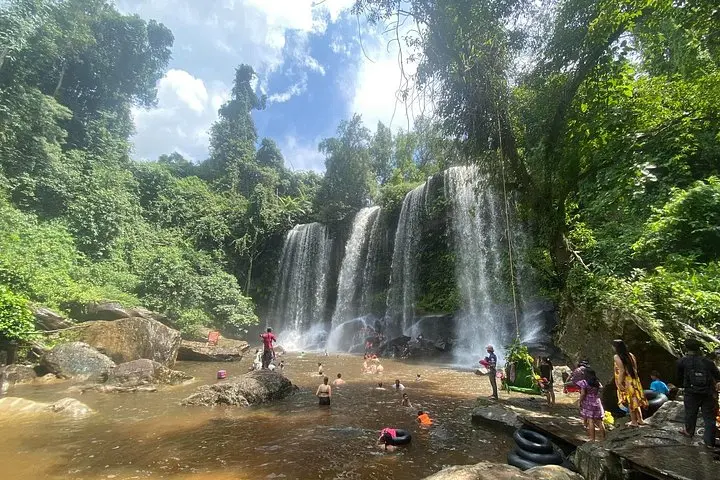
This private two-day itinerary mixes the high points of the Angkor Archaeological Park with the broader Khmer landscape: dawn at Angkor Wat, the stone faces of Bayon, Ta Prohm’s roots threading through galleries, then a second day up Kulen Mountain to see the 1,000 lingas carved into the riverbed, a reclining Buddha hewn in natural rock, and the floating villages of Tonle Sap.
Geology here is sandstone and laterite: temples were built from quarried blocks set on raised platforms. Historically, Angkor was the heart of the Khmer Empire (9th–15th centuries), a hydraulic civilization whose canals and reservoirs shaped the region. Locally, Siem Reap remains a gateway town where markets, cuisine, and tuk-tuk rhythms meet temple etiquette—cover knees and shoulders, and carry cash for the Angkor pass the guide will help you buy.
Practical edge: expect uneven steps, dusty paths, and midday heat; start early each day to beat crowds and heat, bring plenty of water, and allow time for photography and short pauses to read inscriptions. With private transport and an English-speaking guide included, this tour balances efficient logistics with room to absorb the scale, craft, and daily life that still surrounds these ancient stones.
The guide will assist you to purchase your Angkor admission on the morning of the tour; bring photo ID and cash or card for the fee.
Expect several hours of walking each day across uneven temple steps and paths; short hikes on Kulen Mountain include rocky and slippery sections.
Meals are not listed as included—breaks for local restaurants or packed lunches are typically scheduled around touring times.
Private pacing helps, but it’s not recommended for anyone with serious spinal, heart, or mobility issues; children should be supervised on steps and near water.
Mak Adventure operates guided outdoor trips and adventures with an emphasis on safety, stewardship, and memorable experiences.
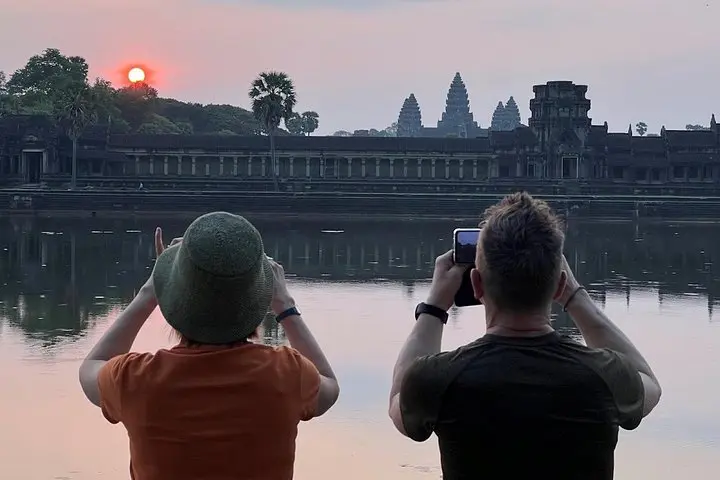
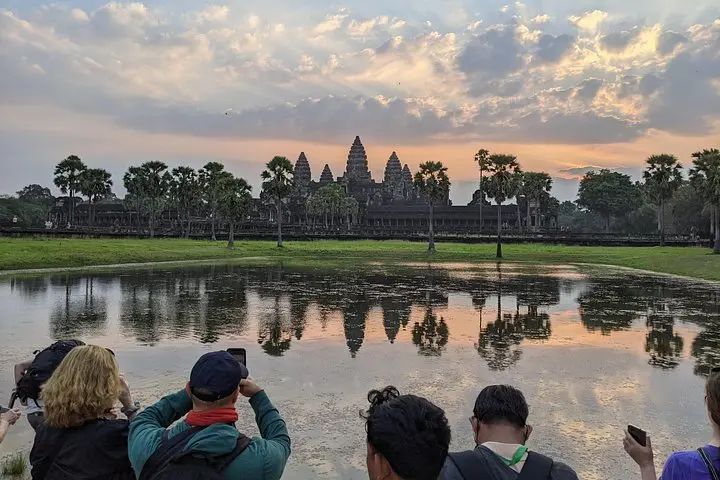
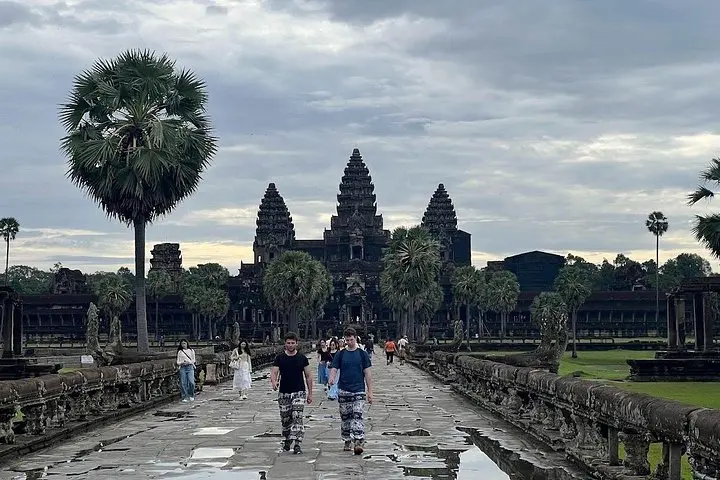
You stand at the east causeway as pale light lifts off the moat and Angkor Wat’s towers sharpen against the sky. The guide points out bas-reliefs that read like a carved history; the morning breeze off the moat cools the heat already building for the day.
You stand at the east causeway as pale light lifts off the moat and Angkor Wat’s towers sharpen against the sky. The guide points out bas-reliefs that read like a carved history; the morning breeze off the moat cools the heat already building for the day.
This private two-day itinerary mixes the high points of the Angkor Archaeological Park with the broader Khmer landscape: dawn at Angkor Wat, the stone faces of Bayon, Ta Prohm’s roots threading through galleries, then a second day up Kulen Mountain to see the 1,000 lingas carved into the riverbed, a reclining Buddha hewn in natural rock, and the floating villages of Tonle Sap.
Geology here is sandstone and laterite: temples were built from quarried blocks set on raised platforms. Historically, Angkor was the heart of the Khmer Empire (9th–15th centuries), a hydraulic civilization whose canals and reservoirs shaped the region. Locally, Siem Reap remains a gateway town where markets, cuisine, and tuk-tuk rhythms meet temple etiquette—cover knees and shoulders, and carry cash for the Angkor pass the guide will help you buy.
Practical edge: expect uneven steps, dusty paths, and midday heat; start early each day to beat crowds and heat, bring plenty of water, and allow time for photography and short pauses to read inscriptions. With private transport and an English-speaking guide included, this tour balances efficient logistics with room to absorb the scale, craft, and daily life that still surrounds these ancient stones.