THE ADVENTURE COLLECTIVE® · Independent discovery and booking for outdoor travel

Explore Angkor’s greatest temples at your own pace with an English-speaking driver to ferry you between highlights. This private day tour puts architectural giants—Angkor Wat, Angkor Thom, the Bayon and Ta Prohm—within reach while you control the itinerary.
Explore Angkor’s greatest temples at your own pace with an English-speaking driver to ferry you between highlights. This private day tour puts architectural giants—Angkor Wat, Angkor Thom, the Bayon and Ta Prohm—within reach while you control the itinerary.
You step from the tuk-tuk into a wide moat that still smells faintly of wet stone and lotus; the five towers of Angkor Wat rise like a carved mountain against a clear sky. The driver leaves you with a map, bottle of cold water and the day to move at your own pace—exploring causeways, bas-reliefs and shaded galleries without a guide’s timetable.
Verified experiences and guided adventures in the surrounding area.
Operated by Green Era Travel · Siem Reap, Siem Reap Province
You step from the tuk-tuk into a wide moat that still smells faintly of wet stone and lotus; the five towers of Angkor Wat rise like a carved mountain against a clear sky. The driver leaves you with a map, bottle of cold water and the day to move at your own pace—exploring causeways, bas-reliefs and shaded galleries without a guide’s timetable.
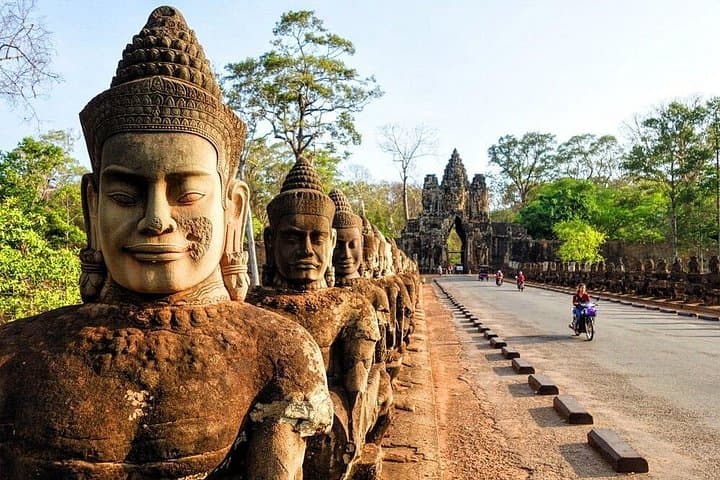
Angkor’s monuments span centuries of Khmer ambition: Angkor Wat (built c.1113–1150) dedicated to Vishnu, the fortified Angkor Thom from Jayavarman VII’s late-12th-century city plan, the enigmatic smiling faces of the Bayon, and Ta Prohm where strangler figs have claimed corridors. Geologically the site sits on flat sedimentary plains with seasonal wetlands—stone blocks settled into soft soils, which explains the leaning galleries and the need for ongoing conservation.
Local layers—Buddhist practice atop Hindu iconography, French-era archaeology, and contemporary preservation efforts—are visible in carved narratives and the patchwork of restoration techniques.
Practical side: buy your Angkor Pass at the park entrance before disembarking. Expect uneven sandstone steps, sticky heat between March and May, and muddy trails in the rainy season. Wear long pants or skirts for temple etiquette, bring plenty of water, and plan key stops: Angkor Wat first for scale, Bayon for faces, Ta Prohm for atmosphere. A mid-day pause at a park-side restaurant lets stone cool and crowds thin.
This private-driver, self-guided format gives flexibility—arrive early for soft light, linger in quieter galleries, and use the driver to hop between sites rather than strict walking loops.
No, the Angkor Pass is purchased separately at the ticket office before entry; the driver will stop for you to buy it.
No—this option provides an English-speaking driver and transportation; you explore the temples independently.
Yes, children are permitted but must be accompanied by an adult; plan for sun protection and breaks.
For 1–2 guests transport is typically by tuk-tuk; groups of three or more generally use an air-conditioned minivan.
Green Era Travel operates guided outdoor trips and adventures with an emphasis on safety, stewardship, and memorable experiences.
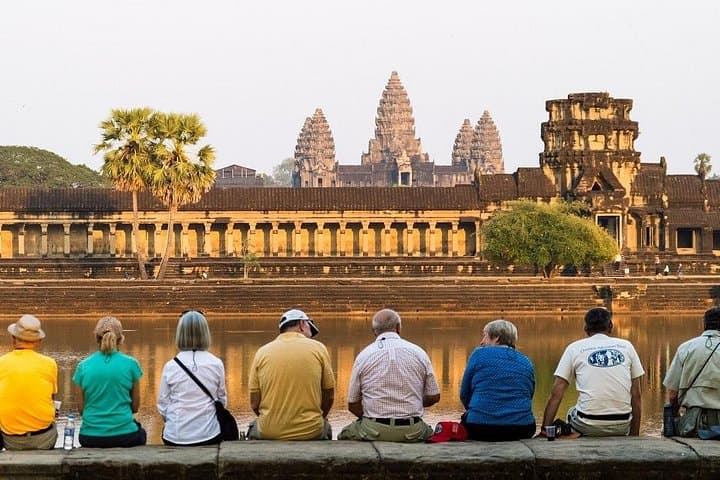
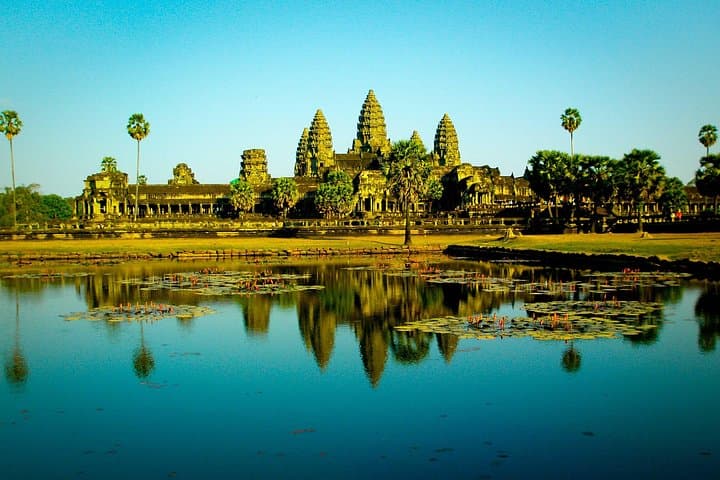
You step from the tuk-tuk into a wide moat that still smells faintly of wet stone and lotus; the five towers of Angkor Wat rise like a carved mountain against a clear sky. The driver leaves you with a map, bottle of cold water and the day to move at your own pace—exploring causeways, bas-reliefs and shaded galleries without a guide’s timetable.
You step from the tuk-tuk into a wide moat that still smells faintly of wet stone and lotus; the five towers of Angkor Wat rise like a carved mountain against a clear sky. The driver leaves you with a map, bottle of cold water and the day to move at your own pace—exploring causeways, bas-reliefs and shaded galleries without a guide’s timetable.
Angkor’s monuments span centuries of Khmer ambition: Angkor Wat (built c.1113–1150) dedicated to Vishnu, the fortified Angkor Thom from Jayavarman VII’s late-12th-century city plan, the enigmatic smiling faces of the Bayon, and Ta Prohm where strangler figs have claimed corridors. Geologically the site sits on flat sedimentary plains with seasonal wetlands—stone blocks settled into soft soils, which explains the leaning galleries and the need for ongoing conservation.
Local layers—Buddhist practice atop Hindu iconography, French-era archaeology, and contemporary preservation efforts—are visible in carved narratives and the patchwork of restoration techniques.
Practical side: buy your Angkor Pass at the park entrance before disembarking. Expect uneven sandstone steps, sticky heat between March and May, and muddy trails in the rainy season. Wear long pants or skirts for temple etiquette, bring plenty of water, and plan key stops: Angkor Wat first for scale, Bayon for faces, Ta Prohm for atmosphere. A mid-day pause at a park-side restaurant lets stone cool and crowds thin.
This private-driver, self-guided format gives flexibility—arrive early for soft light, linger in quieter galleries, and use the driver to hop between sites rather than strict walking loops.